Professional solutions on concrete addtives, Concrete Foaming Agent, Superplasticizer, CLC Blocks Additives, and foaming machine

Stop Guessing: The Concrete Foaming Agent Showdown You Actually Need
The Hard Truth 90% of Contractors Miss
Here’s a number that stopped me cold: over 60% of lightweight concrete failures trace back to one bad decision — choosing the wrong concrete foaming agent. Not the mix design. Not the equipment. The foaming agent. I’ve seen it on job sites for twenty-plus years. Guys blame the weather, the cement batch, even the foam generator. But nine times out of ten, the culprit is a surfactant that couldn’t handle the job.
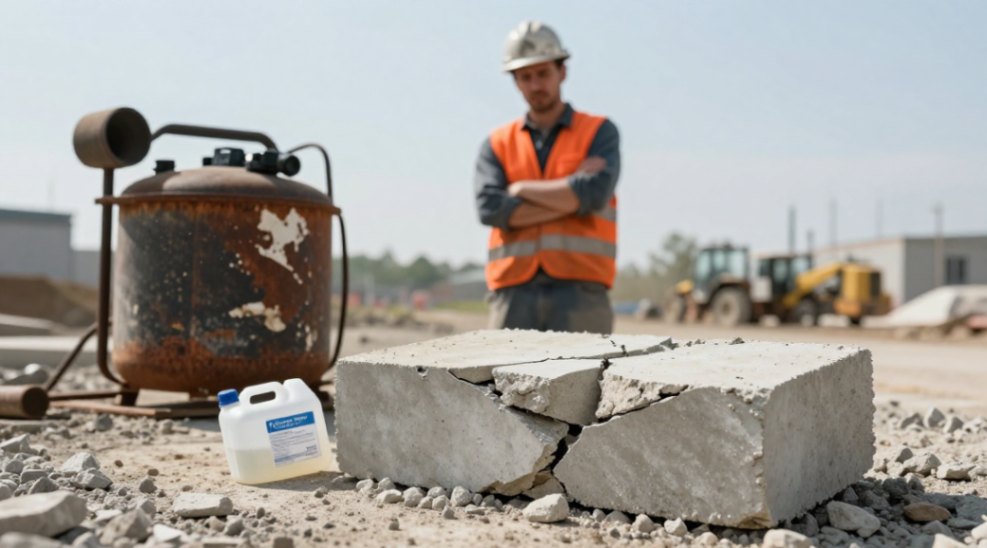
So let’s cut the guesswork. This isn’t a theory lecture. We’re going head-to-head on synthetic versus protein-based foaming agents. You’ll get the real trade-offs, the exact dosage logic, and the common traps that cost time and money. By the end, you’ll know which agent fits your pour, and why.
1. What Exactly Is a Concrete Foaming Agent?
Simply put, a concrete foaming agent is a surfactant concentrate that, when diluted with water and pushed through a foam generator, produces stable foam. That foam gets blended into a cement slurry — sometimes with special cement, superplasticizer, or concrete water reducer — to create light weight concrete (also called foamed concrete). The foam replaces the heavy aggregate, dropping density while keeping volume.
No magic. Just chemistry and mechanical shear.
1.1. How It Creates Foamed Concrete
The process is straightforward. You mix your base slurry — cement, water, maybe fiber for crack control, early strength agent if you need fast turnaround, and a touch of concrete defoamer if things get too bubbly. Separately, you dilute the foaming agent with water at a precise ratio. Then you pump that solution through a foam generator that injects compressed air to create a dense, stable foam. Finally, you fold that foam into the slurry until it’s uniform.
Get the ratios wrong, and you end up with a collapsed mess. Get them right, and you get foamed concrete that insulates, fires, and floats.
2. Synthetic vs. Protein-Based: The Core Comparison
These two families dominate the market. Each behaves differently. Here’s the no-nonsense breakdown.
2.1. Synthetic Foaming Agents
Made from man-made surfactants (often alkyl ether sulfates). They’re the workhorses for most applications.
- Pros: High foam volume per liter of concentrate. Good compatibility with concrete water reducer and superplasticizer. Stable across a wide temperature range. They don’t stink during mixing.
- Cons: Foam can be less resilient to mechanical mixing — overmix and you lose bubbles. They can be sensitive to certain special cement chemistries, especially high-alkali blends.
2.2. Protein-Based Foaming Agents
Derived from hydrolyzed animal proteins (hooves, horns, feathers). Old-school, but still relevant.
- Pros: Exceptionally stable foam. Tolerates longer mixing cycles and aggressive pumping. Often produces a finer, more uniform cell structure.
- Cons: Lower expansion ratio — you need more concentrate per cubic meter. Pungent odor during mixing (your crew will complain). Can attract pests if not cured quickly. Poor compatibility with some concrete defoamer additives.
2.3. Quick Reference Table
| Property | Synthetic | Protein-Based |
|---|---|---|
| Foam Volume per Liter | High | Moderate |
| Stability Under Shear | Good | Excellent |
| Odor | Neutral | Strong |
| Compatibility with WR & SP | Excellent | Moderate |
| Typical Dosage (concentrate : water) | 1:20 to 1:40 | 1:10 to 1:20 |
| Best For | High-volume, fast pours | Structural fills, thin sections |
3. How to Choose the Right Foaming Agent
Your decision hinges on three factors: mixing process, application, and cost per cubic meter.
3.1. For Floor Screeds and Roof Insulation
Go synthetic. These pours happen fast. You need high foam output from your foam generator, and the foam must survive a short, energetic mix cycle. Synthetic agents handle concrete water reducer well, so you can keep water low without killing the foam. Temperature swings on a roof deck? Synthetic stays consistent.
3.2. For Trench Backfill and Road Embankments
Protein-based shines here. The foam has to survive longer pumping distances and more aggressive mixing with coarse fillers. The finer cell structure also reduces bleed water, which matters when you’re compacting against a trench wall. Yes, it costs more concentrate. But the reduced risk of foam collapse saves you a redo.
3.3. When You Need Both Fire Resistance and Sound Absorption
Both types deliver. The key is density. Lower density (300–600 kg/m³) gives better insulation and sound absorption regardless of foaming agent origin. But if you’re mixing with hydroxypropyl methyl cellulose or redispersible polymer powder to improve bond strength, check compatibility. Some protein agents can destabilize these polymers. Stick with synthetic for polymer-modified mixes.
4. Factors That Destroy Foam Stability
I’ve watched good foam go bad in seconds. Here’s what kills it.
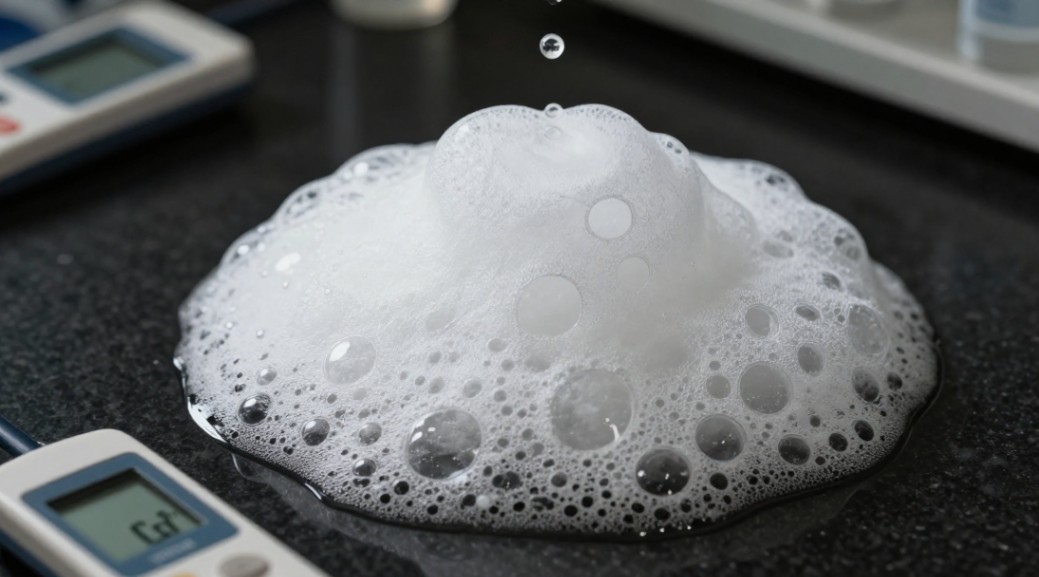
- Water ratio: Too much water in the dilution tank and the foam gets wet and heavy. Too little and the foam is brittle. Target the manufacturer’s dilution range exactly.
- Temperature: Below 5°C, foam collapses. Above 40°C, it can flash-dry and pop. Keep your water and slurry in the 15–30°C sweet spot.
- Mixing time: Overmixing the foam into the slurry breaks the bubbles. Fold it in gently for 30–60 seconds max. Use a high-shear foam generator but a low-shear final blend.
- Surfactant quality: Cheap agents use low-grade surfactants that can’t hold air. Buy from a reputable source — I’ve seen TRUNNANO foam agents perform consistently on multiple job sites.
5. Quality Control: Three Tests You Must Do
Don’t trust the mix design on paper. Test on site.
- Foam density test: Fill a 1-liter container with foam from your generator. Weigh it. Target weight should be 70–90 grams per liter for most applications. If it’s heavier, your dilution is off or your foam generator needs maintenance.
- Bleed water check: Take a 2-liter sample of fresh foamed concrete. Pour it into a clear bucket. After 30 minutes, measure the water that settles on top. More than 5% bleed means your foam is breaking down. Adjust your foaming agent dosage or add a concrete water reducer to tighten the mix.
- Compressive strength cylinder: Cast three 100mm cubes. Cure them alongside your pour. Test at 7 and 28 days. If strength is below spec, your density is too low or your foam distribution is uneven.
6. Common Mistakes We’ve All Made
Here’s the stuff that won’t appear in the glossy brochure.
Over-dilution: I see guys trying to stretch the concentrate by doubling the water. Big mistake. You get weak, unstable foam. Follow the label. If you need more volume, buy more concentrate.
Incorrect foam injection: Don’t dump the foam into the mixer first and then add slurry. The foam sits and collapses. Always add foam to the already-mixed slurry. Inject it at the discharge end of the mixer if possible.
Poor curing: Foamed concrete dries fast because it has high surface area. Spray on a curing compound or cover with plastic within one hour. Otherwise, you get dusting and surface cracking. Add a light dose of early strength agent if you need form stripping in 24 hours.
7. Sourcing and Storage: Keep It Fresh
Concrete foaming agent isn’t forever. Store it in a cool, dry place, ideally between 5°C and 25°C. Direct sunlight kills the surfactants. Frozen agent separates — don’t use it if it looks curdled. Shelf life is typically 12–18 months for synthetic, 6–12 months for protein-based.
When you buy, check the batch number and certificate of analysis. I always ask about long-term stability testing. A good supplier — someone like TRUNNANO who specializes in construction chemicals — will provide that data upfront. Don’t settle for vague assurances.
8. Environmental Edge and Cost Reality
Foamed concrete uses less raw material because foam replaces aggregate. That means lower CO2 per cubic meter. You also reduce dead load on the structure, which can save on foundation costs. Sound good? It is. But don’t over-hype the green angle to a client until you’ve factored in the foaming agent cost. Synthetic agents are cheaper per foam volume; protein agents often cost more. Run the numbers on your specific mix design.
And remember: light weight concrete isn’t a magic bullet. It trades compressive strength for density. If your project needs high load-bearing capacity, foamed concrete isn’t the answer. Use it where it belongs — insulation, fill, leveling.
Your Next Move
You’ve got the honest comparison. Now test it. Start with a small batch using a synthetic agent. Check your foam density and bleed. If it holds, scale up. If not, try a protein-based blend.
I’ve seen contractors waste an entire day on a pour that collapsed because they skimped on agent quality. Don’t be that person. Get a sample, run your tests, and pour with confidence.
For consistent performance, check out TRUNNANO foaming agents. They have both synthetic and protein lines, and their tech support actually answers the phone. That matters when you’re standing in a muddy trench at 6 AM.
We are the global leader in lightweight concrete and advanced engineered foam solutions. Known globally for its commitment to research, innovation, and applied expertise, we have been providing engineered foam solutions since the early 2012’s.
We can supply high-quality concrete admixture and foam concrete related products all over the world.
The company has a professional technical department and quality supervision department, a well-equipped laboratory, and equipped with advanced testing equipment and after-sales customer service center.
If you are interested, please feel free and contact us.