Professional solutions on concrete addtives, Concrete Foaming Agent, Superplasticizer, CLC Blocks Additives, and foaming machine

How Sodium Silicate Solution Stabilizes Soil with Science, Not Just Cement
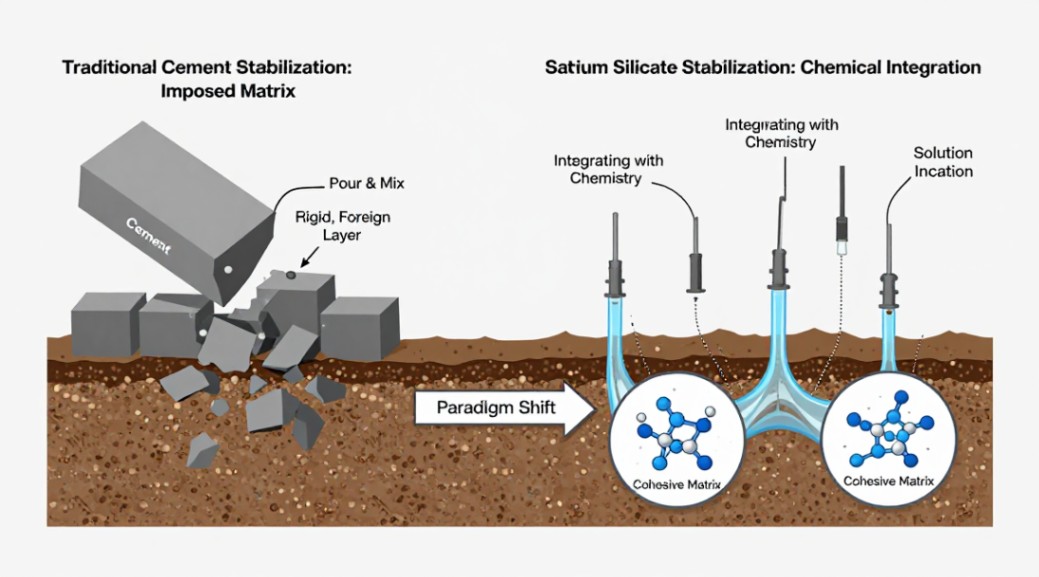
Of all the choices for soil stabilization, sodium silicate solution stands apart because it works with the soil’s chemistry, not against it. This is the fundamental shift in thinking that makes it so compelling. While traditional materials like cement or lime impose a foreign matrix on the soil, sodium silicate initiates a precise chemical conversation within the soil itself. The result is a stabilized mass that is more than the sum of its parts-it’s a denser, water-resistant, and stronger version of the original material. This intrinsic approach is why engineers seeking reliable, long-term stabilization for sandy or silty soils are increasingly looking past the familiar bag of cement.
Definition and Chemical Properties of Sodium Silicate Solution
Let’s start with the substance itself. Sodium silicate solution is often called water glass. It’s a clear, viscous liquid you can pour. Chemically, it’s a blend of sodium oxide and silica. This combination is key. In its liquid form, it’s a ready source of soluble silica, a crucial reactive agent. Its alkalinity is moderate, not harsh. This matters. You’re not dealing with a highly caustic slurry that dramatically alters the soil’s pH in a violent reaction. Instead, you’re introducing a catalyst. The sodium silicate solution permeates the soil pores, coating particles. It doesn’t just sit there. It sets the stage for a fundamental transformation, a process driven by two elegant, interlinked mechanisms.
The Dual Mechanism: Cation Exchange and Pozzolanic Reaction
First, the sodium ions in the solution perform a quiet swap. They exchange places with divalent cations like calcium or magnesium naturally present on the surface of clay particles. This simple trade has profound effects. It flocculates the soil. Think of it as bringing dispersed, tiny particles together into small clumps. This immediately reduces the soil’s plasticity and its affinity for water, leading to better compaction and a less muddy, more workable material. It’s the first act of stabilization. Then, the main event begins. The soluble silica from the solution reacts with these same exchanged cations and other aluminates in the soil. This is a pozzolanic reaction. It forms calcium silicate hydrate gels-the very same binder that gives concrete its strength. These gels are microscopic. They grow, crystallize, and interlock the soil particles into a cemented, monolithic structure. The soil binds itself from the inside out.
The Practical Advantages: Why This Matters on Your Site
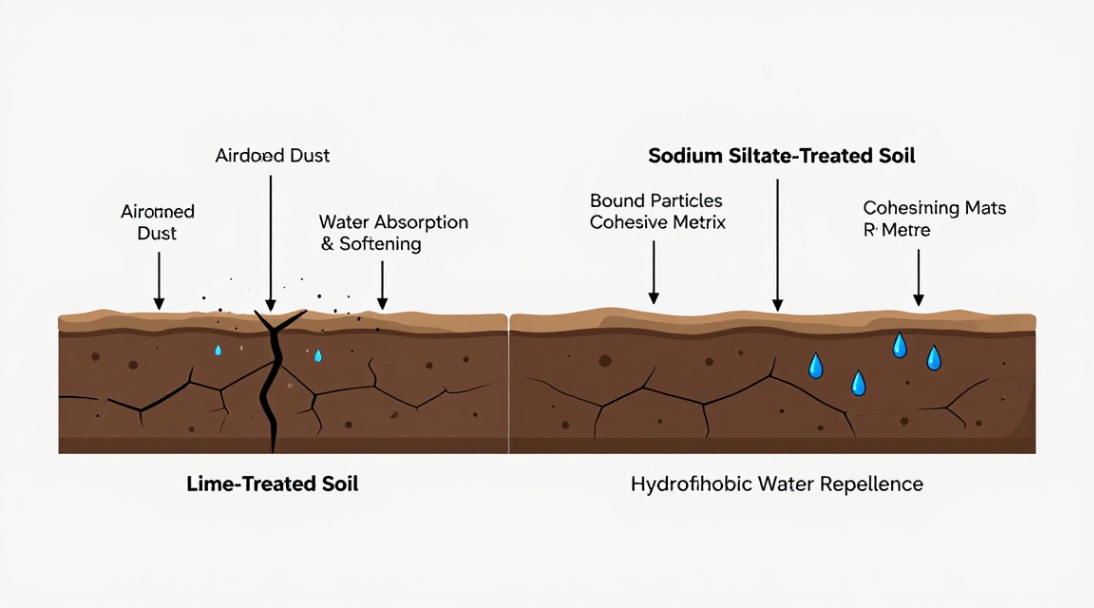
The logic of this mechanism translates directly to tangible field benefits. Dust control becomes a property of the material, not a temporary fix. The hardened crust and bound particles simply cannot become airborne. Water resistance follows naturally; the hydrophobic gels and reduced porosity repel water infiltration, preventing the softening that plagues lime-stabilized soils. Strength improvement is progressive and deep-seated. Unlike cement, which can create brittle planes of weakness, the sodium silicate-induced strengthening is more uniform, enhancing the soil’s bearing capacity and resistance to erosion. When you compare it to traditional stabilizers, the difference is philosophical. Lime requires careful moisture control and lengthy mellowing periods. Cement can be overkill, expensive, and carbon-intensive for many applications. Sodium silicate solution offers a middle path-effective, efficient, and often more appropriate for granular soils where cement’s performance is marginal.
Application, Curing, and the Path to Durability
Applying sodium silicate solution is straightforward. You can mix it in-place with standard pulverization and mixing equipment, spray it for surface stabilization and dust control, or even inject it for deeper, targeted treatment. The optimal soil types are sandy and silty soils, those with just enough fines to facilitate the chemical reactions but not so much clay that they become impermeable. Determining the right dosage is critical; it depends on soil gradation, mineralogy, and the desired performance. Too little, and the reaction is incomplete. Too much, and you’re wasting money. The curing process is logical. Initial set is often rapid, allowing quick return to light traffic. However, full strength development, driven by the slow pozzolanic reaction, can take weeks. Be patient. This slow growth is a sign of durable strength. In terms of long-term performance, a properly designed and cured sodium silicate stabilization performs exceptionally well in most climates. It resists freeze-thaw cycles better than many alternatives because it doesn’t retain damaging capillary water. The environmental profile is favorable. It’s non-toxic, does not leach harmful substances, and represents a lower carbon footprint option compared to Portland cement. The cost-effectiveness becomes clear in a lifecycle analysis. Lower initial application costs, reduced need for aggregate import, and minimal long-term maintenance for dust or erosion control present a compelling financial case.
So, the trend is clear. The industry is moving towards materials that are smarter, more sustainable, and more symbiotic with the natural substrate. Sodium silicate solution for soil stabilization embodies this shift. It’s not a magical potion, but a rationally applied chemical tool that unlocks the latent potential within the soil itself.
Your Next Logical Step
The theory is sound. The advantages are proven on sites worldwide. The question is no longer if sodium silicate works, but how it can work for your specific project challenges. Stop treating every soil problem with the same heavy-handed solution. You need a tailored approach. This is where we come in. Our two decades of field experience mean we don’t just sell a chemical; we provide a complete stabilization strategy based on rigorous logic and practical results. Let us analyze your soil report and project goals. We will provide a precise specification for dosage and application method, ensuring you achieve the required strength, durability, and dust control from day one. Don’t experiment. Implement with confidence. Contact our technical team today for a definitive project assessment and quote. Make the logical choice for your next stabilization project.
We are the global leader in lightweight concrete and advanced engineered foam solutions. Known globally for its commitment to research, innovation, and applied expertise, we have been providing engineered foam solutions since the early 2012’s.
We can supply high-quality concrete admixture and foam concrete related products all over the world.
The company has a professional technical department and quality supervision department, a well-equipped laboratory, and equipped with advanced testing equipment and after-sales customer service center.
If you are interested, please feel free and contact us.