Professional solutions on concrete addtives, Concrete Foaming Agent, Superplasticizer, CLC Blocks Additives, and foaming machine

Precision Over Power: Why Air-Driven Foam Makers Outperform Their Electric Counterparts
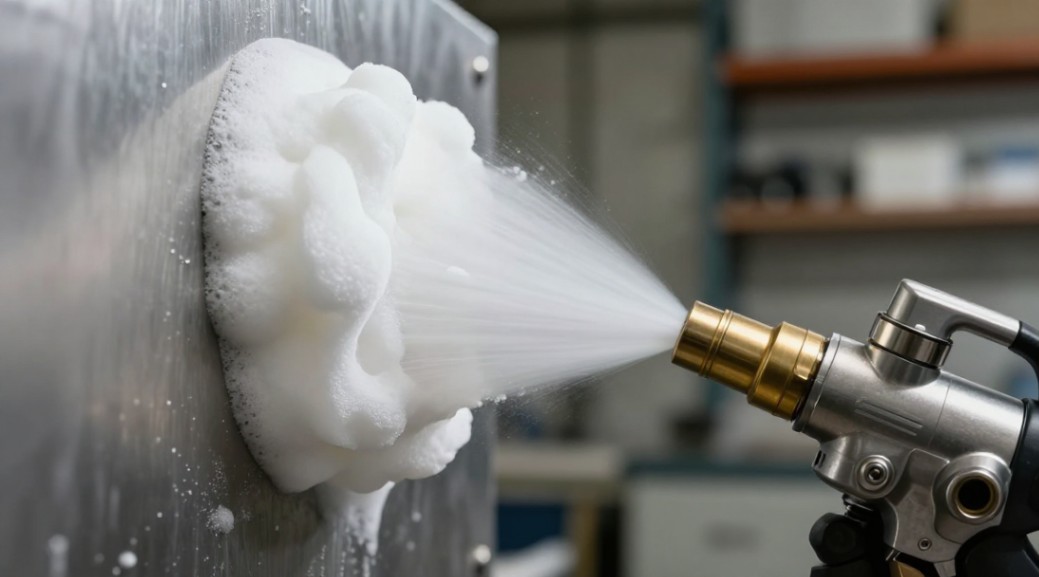
It is a common misconception that more motor wattage equals better foam. In reality, the most critical factor determining the structural integrity and cling of a foam blanket is not raw electrical power, but the precise and consistent introduction of air into the solution. This is the fundamental principle that separates a standard foam gun from a true industrial-grade foam maker with a compressed air system. The difference isn’t subtle; it is the difference between a soapy spray and a thick, shaving-cream-consistency blanket that actively clings to vertical surfaces and penetrates complex geometries.
The Core Mechanism: Air as the Active Ingredient
A foam maker with a compressed air system operates on an elegantly simple principle. It does not rely on an impeller or turbine to entrain air. Instead, it uses an external air compressor to deliver a controlled, high-pressure stream of air directly into a mixing chamber. Within this chamber, the pressurized air forcefully intersects a stream of pre-mixed foam concentrate and water. The violent, turbulent mixing action shears the liquid, encapsulating microscopic air bubbles within a film of surfactant solution. This process, called aspiration, happens under pressure, resulting in foam that is aerated from within the very moment of its creation. The key components are straightforward: a compressed air supply line, a foaming chamber where air and liquid meet, and a discharge nozzle designed to further shape and propel the foam without collapsing its delicate bubble structure.
The Compressed Air Advantage: Consistency Under Pressure
Contrast this with a typical battery or electric motor-powered unit. Those devices use a pump to move liquid and a mechanical fan or venturi to draw in ambient air. Their performance is intrinsically linked to battery charge and motor wear. As voltage drops or internal resistance increases, both liquid pressure and air suction suffer. The foam becomes wet, thin, and inconsistent. An air-driven system eliminates this variable. The air compressor is a dedicated, optimized machine for one task: delivering a specific volume of air at a specific pressure. The foam maker itself has no moving parts to wear out. Its output is governed by two fixed, measurable inputs: the air compressor PSI (pressure) and CFM (cubic feet per minute, or volume). Once you dial in the correct ratio of foam concentrate to water-typically between 0.5% and 6.0% depending on the chemical and soil load-the system will produce identical foam from the first trigger pull to the last. This repeatability is non-negotiable in professional settings.
Applications Dictated by Performance
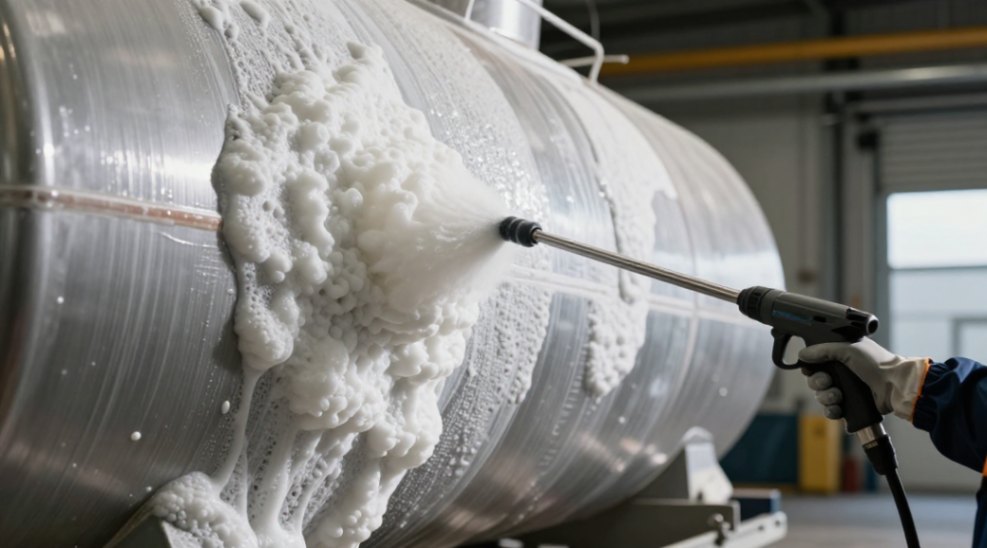
This capability for consistent high-pressure foam generation is not a luxury; it defines the tool’s operational domain. In firefighting, a thick, stable foam blanket must smother fuel vapors and resist radiant heat breakdown-watery foam evaporates instantly and fails. For industrial cleaning, foam must cling to the sides of a chemical tanker or the undercarriage of heavy machinery long enough for the detergents to solubilize grease and grime. In a premium car wash, the foam must be dry enough to sit on a vehicle’s paint without immediately sheeting off, allowing dwell time for safe dirt suspension. These are all scenarios where gravity and environmental factors work against the applicator. A weak foam collapses. A dense, air-charged foam adheres, insulates, and cleans.
System Design: Matching the Compressor to the Task
Implementing this technology requires a logical approach to system design. The foam maker with compressed air system is only as good as the compressor feeding it. Selecting the compressor is the paramount decision. A foam lance designed for vehicle detailing may require a modest 2-4 CFM at 40-90 PSI. A large industrial cleaning wand or a firefighting foam nozzle might demand 10-20 CFM at 100+ PSI. The rule is uncompromising: the compressor’s sustained output must meet or exceed the foam maker’s air consumption rating at the desired operating pressure. Undersizing leads to pressure drop, foam quality degradation, and compressor burnout. The water supply and proportioning system must be equally robust. An electronic or venturi-type proportioner ensures the foam concentrate ratio remains accurate, as even the perfect aeration cannot fix an improperly mixed solution. Maintenance shifts from the foam generator itself to the supporting infrastructure: regularly draining the compressor tank, checking air filters, and verifying the proportioner’s calibration.
Safety is inherent but must be respected. High-pressure air and fluid systems store significant energy. Users must install pressure relief valves, use rated hoses and fittings, and wear appropriate personal protective equipment. The system is pressurized only when in active use. This is standard protocol for any professional compressed air tool.
The Objective Recommendation
For any task where foam quality, adhesion, and process repeatability are critical to the outcome, the choice is clear. A foam maker with a compressed air system provides a level of control and performance that electrically aspirated devices cannot match. It transforms foam from a visual gimmick into a functional, working fluid. If your operation involves cleaning vertical surfaces, applying fire suppression foam, or delivering chemicals with required dwell times, this is not merely an option; it is the correct technical solution. The initial setup requires more consideration than plugging in a device, but the long-term payoff is measured in consistent results, reduced chemical waste, and superior cleaning or firefighting efficacy. Evaluate your air supply, define your foam quality requirements, and source a system built to those specifications. The difference in performance will be immediately and materially apparent.
We are the global leader in lightweight concrete and advanced engineered foam solutions. Known globally for its commitment to research, innovation, and applied expertise, we have been providing engineered foam solutions since the early 2012’s.
We can supply high-quality concrete admixture and foam concrete related products all over the world.
The company has a professional technical department and quality supervision department, a well-equipped laboratory, and equipped with advanced testing equipment and after-sales customer service center.
If you are interested, please feel free and contact us.