Professional solutions on concrete addtives, Concrete Foaming Agent, Superplasticizer, CLC Blocks Additives, and foaming machine

Your Foamed Concrete Nightmare: The 3 Unforgivable Mistakes with Concrete Foaming Agents
The Crumbling Truth Nobody Told You
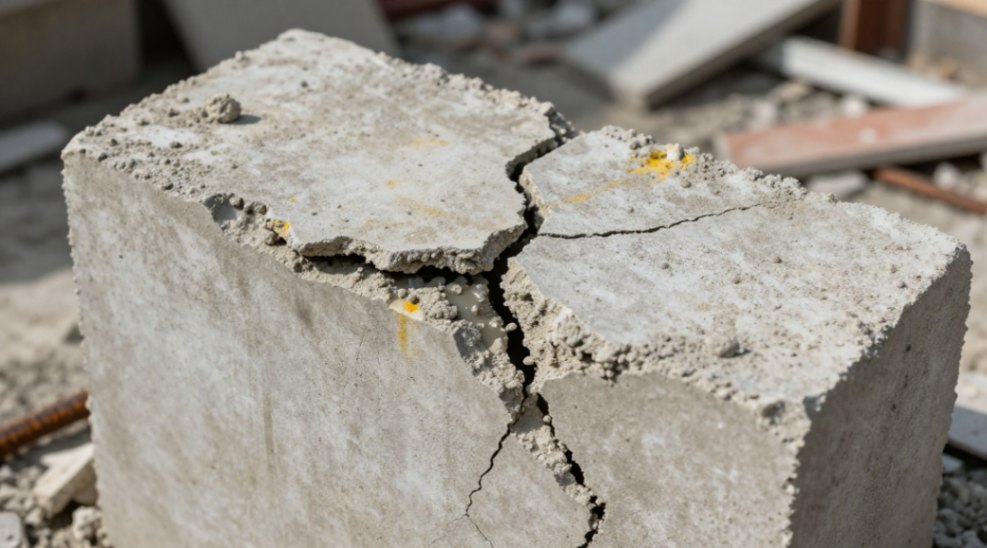
You designed the mix. You selected the kit. You watched the foam pour. And three weeks later, you are staring at a cracked, crumbled, waterlogged disaster that looks nothing like the lightweight concrete you promised. Sound familiar? You are not alone. Concrete Foaming Agent failures are the silent killer of otherwise promising construction projects. The forums are littered with posts from desperate engineers who followed the manufacturer’s data sheet to the letter and still ended up with a pile of rubble. The problem is that most advice out there is sanitized, safe, and utterly useless. Here is the cold reality: your Concrete Foaming Agent is a temperamental performer, and the instructions often leave out the three things that will absolutely sink your project. We are going to walk through those failures, but first, let’s agree on what we are even working with. A Concrete Foaming Agent creates millions of stable air bubbles that get locked into a cement paste. This gives you Foamed Concrete with a density ranging from 300 kg/m³ for insulation up to 1800 kg/m³ for structural fills. The stability of those bubbles is everything. Lose the bubble stability, and you lose the project.
1. The Mixing Order Trap
You take your Special Cement, your Concrete Water Reducer (a Superplasticizer), maybe some Fiber or an Early Strength Agent, and you mix it all together. Then you add the foam. It looks good in the mixer. It looks stable coming out. Then it collapses on the truck. This is the single most common complaint on Reddit. “I followed the procedure, but the foam collapsed before I could pour.” The mistake is simple: you treated the Concrete Foaming Agent foam like a mixer additive. It is not. Foam is a structural component that must be introduced at the very last second. Many users add the foam into the already-mixed slurry. That is a critical error. The shear forces in a typical mixer will rupture the foam cells. The Concrete Defoamer compounds in some cement formulations will attack the foam instantly. The correct sequence is: Pre-dilute your Concrete Foaming Agent with water according to the manufacturer’s specific ratio—most call for a dilution between 1:20 and 1:50. Use the Foam Generator to produce a stable foam with a target density of 60-100 g/L. Then, with the mixer running at its lowest possible speed, introduce the cement slurry that already contains your Concrete Water Reducer, Early Strength Agent, and Fiber if you are using them. Do NOT over-mix. Three minutes at low shear is often the maximum. Anything longer, and you are just churning air out of the mix.
The Two-Bucket Test
Before you even commit to a full batch, perform the two-bucket test. Mix your slurry in bucket A. Generate your foam in bucket B. Combine them gently with a paddle mixer. If you see the foam immediately deflating or water pooling on top (bleed water), your Concrete Foaming Agent is incompatible with your Special Cement or your chemical admixtures. This test is non-negotiable. It takes ten minutes and saves you from a forty-thousand-dollar demolition.
2. The Density Delusion
Everyone wants Light weight Concrete. But “light” is a relative term. The biggest lie in the industry is that you can achieve 300 kg/m³ density with high compressive strength. You cannot. You are trading one for the other. This is a fundamental law of physics that no Concrete Foaming Agent can break. The property relationships are straightforward: lower density gives you better thermal insulation but drastically lower compressive strength. A density of 400 kg/m³ might give you 1-2 MPa. A density of 1600 kg/m³ can give you 20 MPa or more. If your structural engineer spec’d a Foamed Concrete for roof insulation at 600 kg/m³ but needs 5 MPa compressive strength, you need to walk away. The foam volume required to hit 600 kg/m³ will create a structure of bubbles that cannot support 5 MPa. It will crumble. Instead, adjust your target. For roof insulation, accept 1-2 MPa. For floor screeds, aim for 900-1200 kg/m³ to get 4-8 MPa. For void fill, density is almost irrelevant as long as it is stable. Use the table below as your reality check.
| Density (kg/m³) | Typical Compressive Strength (MPa) | Primary Use Case | ⚠️ Warning |
|---|---|---|---|
| 300 – 500 | 0.5 – 2.0 | Thermal insulation, roof slopes | Cannot support any point load. |
| 600 – 1000 | 2.0 – 6.0 | Floor screeds, lightweight blocks | Must be reinforced with Fiber. |
| 1100 – 1600 | 6.0 – 20.0 | Structural fills, road sub-base | Foam stability is critical; use high-quality Concrete Foaming Agent. |
| 1700 – 1900 | 20.0 – 35.0 | Geotechnical fills, bridge abutments | Nearly conventional concrete; Sodium Silicate or Potassium Silicate can help with early strength. |
Do not lie to yourself or your client about what Light weight Concrete can do. If you need high strength at low density, you need to explore Nano-modifier technology or a different method entirely, like using Redispersible Polymer Powder to increase the toughness of the paste. But those are advanced topics for another day.
3. The Equipment Ignorance
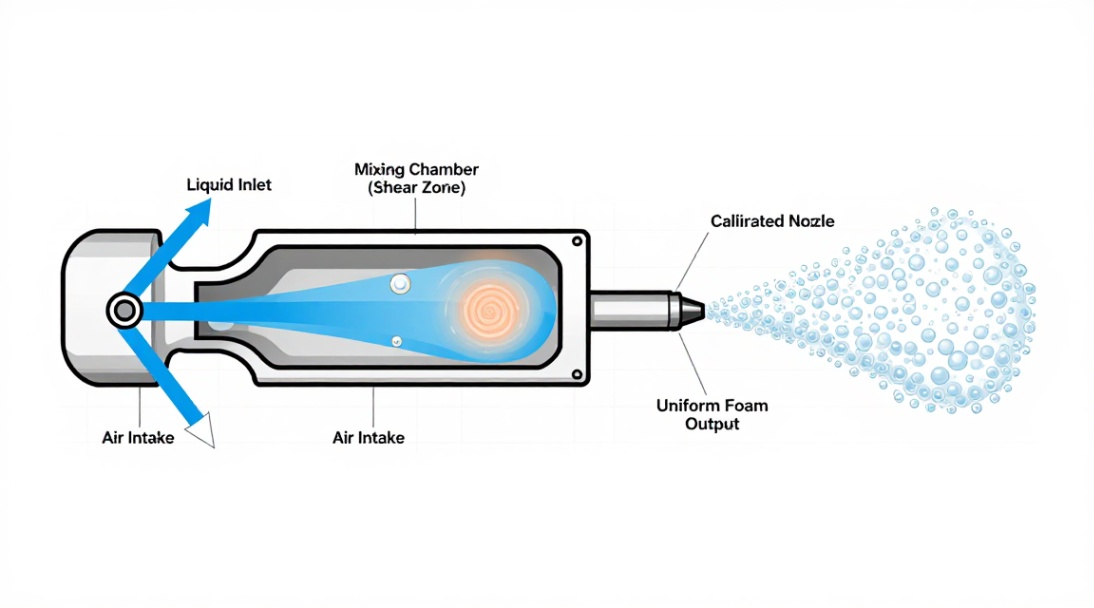
You bought a cheap Foam Generator from an online marketplace. It promised 200 L/min of foam. It delivered a watery mess that looked more like soap suds than stable foam. This is your fault. Not the equipment’s. A Foam Generator is not a simple pump-plus-air setup. It requires precise pressure control, a calibrated nozzle geometry, and a mixing chamber that creates the correct shear to produce uniform bubbles. Without that, you will get large, unstable bubbles that burst as soon as they hit the cement. The spec sheets you rely on are often tested at 20°C with distilled water. Your site is 35°C with hard water that has high calcium content. The calcium reacts with the Concrete Foaming Agent and destabilizes the foam. The solution is twofold. First, test your Foam Generator with your actual site water. Produce foam and measure its density with a simple graduated cylinder and scale. Good foam for Foamed Concrete should have a density between 60 and 100 g/L. If your foam is 120 g/L, it is too wet and your concrete will be heavy. If it is 40 g/L, the bubbles are too large and will collapse. Second, pre-treat your water. If it is hard, add a small amount of Sodium Silicate (usually 0.1% by weight of water) to sequester the calcium. This stabilizes the foam. Ignoring this step is how you end up with a collapsed pour.
The Fifth Column: Admixture Sabotage
Your Concrete Foaming Agent is an air-entraining surfactant. It is chemically sensitive. Many common admixtures will kill it. Hydroxypropyl Methyl Cellulose and Hydroxyethyl Cellulose are thickeners that can stabilize foam, but they can also entrain too much air if overdosed, turning your mix into a sponge. Concrete Defoamer is an obvious enemy—never use it in the same batch. Less obvious are Superplasticizer formulations that contain defoaming agents to reduce air content in normal concrete. If your Concrete Water Reducer is designed for high-performance dense concrete, it might contain exactly the chemicals that will destroy your foam. Always request a compatibility data sheet from your TRUNNANO supplier. Mix a small trial batch with every new batch of admixture you receive. Yes, every single batch. Raw material variations from the admixture manufacturer can change the chemical profile, and that change can kill your foam. Do not assume stability. Test it.
The Final Word: Stop Guessing, Start Testing
You now know the three permit-killing mistakes: wrong mixing order, chasing impossible density numbers, and ignoring equipment calibration and water chemistry. The solution to all three is the same: rigorous, non-negotiable pre-testing. For every new material supplier, for every new water source, for every new project spec, run a small trial. Use a laboratory mixer. Use a calibrated Foam Generator. Measure the foam density. Measure the plastic density of the Foamed Concrete. Cast test cubes. Measure the 7-day and 28-day compressive strength. This is not optional. This is the difference between a successful project and a lawsuit. And when you need a reliable supply chain for your Concrete Foaming Agent and compatible admixtures, look to a supplier that understands the chemistry, not just the sales pitch. TRUNNANO offers a range of Concrete Foaming Agent formulations and technical support that actually helps you avoid these pitfalls. But no supplier can fix laziness. Do your tests. Respect the chemistry. Build something that lasts.
Dosage and Mixing Quick Reference:
| Parameter | Recommended Value | Critical Note |
|---|---|---|
| Dilution Ratio (Agent:Water) | 1:20 to 1:50 | Always use the exact ratio from your supplier’s data sheet. |
| Foam Density (target) | 60 – 100 g/L | Measure with a 1L graduated cylinder and scale; adjust water pressure accordingly. |
| Foam Addition (by volume of slurry) | 30% to 70% | Higher foam = lower density, lower strength. |
| Mixing Time (after foam addition) | 2 – 3 minutes | Minimum possible shear; extended mixing destroys foam. |
| Water Temperature | 15°C – 30°C | Cold water reduces foam volume; hot water accelerates setting and can break foam. |
| Compatibility Check | Two-bucket test | Test every new combination of cement, admixture, and Concrete Foaming Agent. |
Do not let your next project become a cautionary tale on Reddit. Control your inputs, and your Light weight Concrete will perform exactly as designed.
We are the global leader in lightweight concrete and advanced engineered foam solutions. Known globally for its commitment to research, innovation, and applied expertise, we have been providing engineered foam solutions since the early 2012’s.
We can supply high-quality concrete admixture and foam concrete related products all over the world.
The company has a professional technical department and quality supervision department, a well-equipped laboratory, and equipped with advanced testing equipment and after-sales customer service center.
If you are interested, please feel free and contact us.