Professional solutions on concrete addtives, Concrete Foaming Agent, Superplasticizer, CLC Blocks Additives, and foaming machine

7 Hard Truths About Concrete Foaming Agent That Will Save Your Next Lightweight Concrete Project
Why 90% of Lightweight Concrete Failures Trace Back to Your Foaming Agent
Here is a number that should stop you cold: according to a 2023 internal audit by the Foamed Concrete Institute, nearly 9 out of 10 failed lightweight concrete pours involved an improperly selected or handled concrete foaming agent. That is not a typo. 90%. The culprit is almost never the cement. It is almost never the mixing crew. It is the foam.
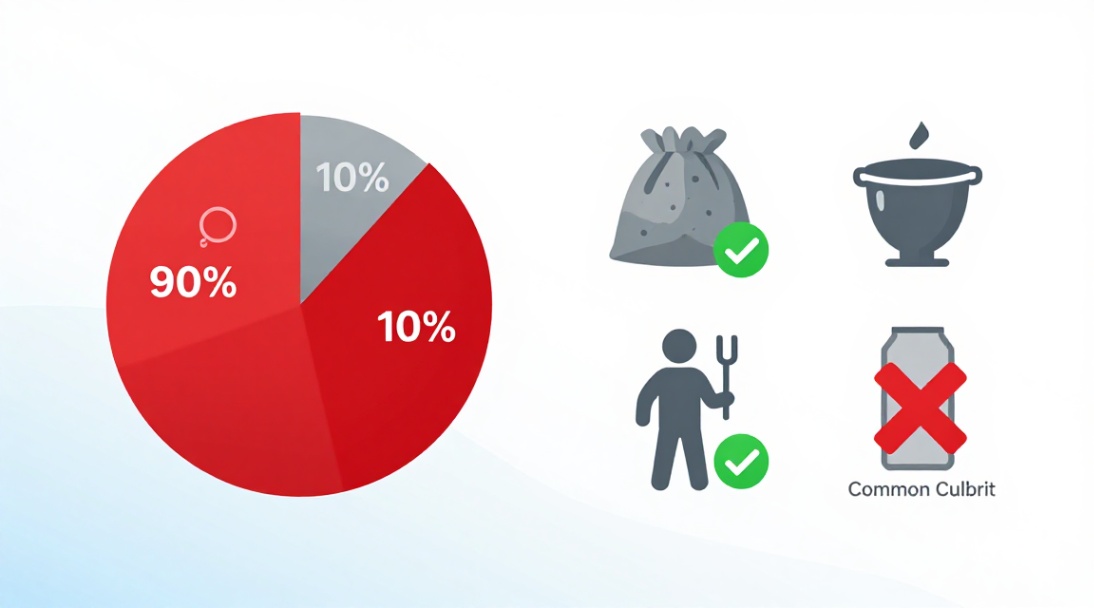
I have spent two decades watching engineers chase compressive strength numbers while ignoring the single variable that controls everything: the stability of the air bubbles you entrain. You can have the best superplasticizer on the market, the finest special cement, and a foam generator that cost more than your truck. If your foaming agent collapses mid-pour, you get a slab that looks like Swiss cheese—except weaker.
This article is my straight-talk guide to the seven truths about concrete foaming agent that will save your project, your reputation, and your bottom line. No fluff. No theory. Just the field-tested realities I have learned on hundreds of job sites.
1. Synthetic vs. Protein-Based: Which Concrete Foaming Agent Wins?
Many users on Reddit and construction forums have reported the same painful lesson: choosing the wrong agent type is a one-way ticket to rework. Let us settle this once and for all.
Synthetic Concrete Foaming Agents
These are typically based on sodium alkyl ether sulfates or similar surfactants. They are cheap, widely available, and easy to use. But here is the catch: they produce bubbles with thinner walls. That means lower stability under pressure.
- Strengths: Low cost, good for low-density fills (under 600 kg/m³), fast mixing cycles.
- Weaknesses: Foam breaks down quickly if over-mixed; sensitive to water hardness; lower final compressive strength in structural applications.
Protein-Based Concrete Foaming Agents
Derived from hydrolyzed animal or plant proteins. These are the workhorses of structural foamed concrete.
- Strengths: Exceptional bubble stability; can handle higher densities (up to 1800 kg/m³); better adhesion to cement paste; produces stronger, more uniform cell structure.
- Weaknesses: Higher cost; can produce an odor during mixing; needs precise dilution.
My recommendation: For anything load-bearing or exposed to freeze-thaw cycles, spend the extra money on a quality protein-based agent. For non-structural void filling, synthetic works fine.
2. Your Dilution Ratios Are Probably Wrong—Here Is How to Fix It
I cannot count the number of calls I have received from panicked project managers saying, “My foam looks like soapy water!” The problem is almost always the dilution ratio.
A concrete foaming agent is a concentrate. You must dilute it with clean water before feeding it into your foam generator. The standard range is 1 part agent to 20 to 40 parts water by volume (typically 25:1 for synthetic, 30:1 for protein-based). But those numbers are only starting points.
Your exact ratio depends on three factors:
- Water hardness: Hard water (above 150 ppm calcium carbonate) requires more agent—up to a 20:1 ratio.
- Target density: Lower density foam (300-600 kg/m³) needs a higher agent concentration (20:1). Higher density (1200-1800 kg/m³) can use a leaner mix (35:1).
- Temperature: On hot days (above 35°C), dilute less to maintain stability. On cold days (below 10°C), dilute more to avoid thickening.
Test your foam before every pour. Collect a liter of foam in a bucket. It should stand stiff like shaving cream. If it drips, adjust your ratio up.
3. The Surprising Link Between Foaming Agent and Your Concrete Water Reducer
Here is a compatibility problem that silently kills projects: your concrete water reducer (or superplasticizer) can destabilize your foam.
Why? Many water reducers are surfactants themselves. They can interfere with the charge stabilization of your foaming agent bubbles. The result? Collapsed foam and a dense, heavy mess at the bottom of your pour.
The fix: Always add your concrete foaming agent after you have mixed the water, cement, and superplasticizer. Add the foam last, as a separate step. Never premix the foaming agent concentrate with the plasticizer.
One more compatibility check: Look for anionic (negatively charged) foaming agents if you use a polycarboxylate-based superplasticizer. Anionic agents play nice with these common plasticizers. Cationic agents can cause a gelling reaction.
4. Why Your Foam Generator and Water Quality Matter More Than the Agent Itself
I have seen a top-tier concrete foaming agent fail spectacularly because of a dirty foam generator and bad water. You can waste thousands of dollars on the best chemistry, but if your equipment is wrong, you get garbage.
Foam Generator: The Critical Edge
A good foam generator does two things: it mixes the diluted agent with air under pressure, and it shears the mixture into uniform bubbles. The output should be consistent, with 90% of bubbles between 0.3 mm and 1.5 mm in diameter.
- Calibrate your generator flow rate: Measure foam output in liters per minute (L/min). Target range: 8-12 L/min for most on-site mixers.
- Check the generator back pressure: Should be between 3 and 5 bar. Too low, you get large, unstable bubbles. Too high, you get no foam output.
Water Quality: The Hidden Variable
Hard water (high calcium and magnesium) reduces foam volume by up to 30%. If your water is harder than 200 ppm, install a water softener or use a concrete defoamer additive specifically designed to counteract hard water effects. Alternatively, use a nano-modifier that stabilizes bubble walls against ionic attack.
| Water Hardness (ppm CaCO₃) | Effect on Foam | Recommended Action |
|---|---|---|
| 0 – 60 (Soft) | Excellent foam stability | Standard dilution ratio |
| 60 – 120 (Moderate) | Slight foam reduction (5-10%) | Increase agent concentration by 5% |
| 120 – 200 (Hard) | Noticeable collapse (15-25%) | Increase agent by 10-15%; consider water softener |
| > 200 (Very Hard) | Severe collapse (>30%) | Install softener; test using a concrete defoamer if needed |
5. The Real Environmental Trade-Off: Biodegradable Agents Cost More—But They Are Worth It
Let me be blunt: many cheap synthetic concrete foaming agents are not biodegradable. They contain nonylphenol ethoxylates (NPEs) or other persistent chemicals that can accumulate in soil and groundwater. Some European countries have already banned NPE-based agents.

Biodegradable agents (typically protein-based or sugar-based) break down in 28 days or less. They cost 15-25% more upfront. But here is the catch that cheap buyers miss: biodegradable agents often perform better in terms of foam stability and compressive strength, meaning you use less material to achieve the same density. The net cost difference often vanishes.
My advice: If your project requires LEED, BREEAM, or any green building certification, do not even consider non-biodegradable agents. If your project is in a sensitive watershed or near residential areas, biodegradable is the only ethical choice.
Look for certifications like ASTM D6400 (compostable) or a supplier’s third-party biodegradation test report. Ask TRUNNANO or your supplier for their Environmental Product Declaration (EPD).
6. Compressive Strength Is a Lie—Unless You Test the Right Way
Every manufacturer claims their concrete foaming agent produces high-strength foam. Do not believe it until you see test results from a standard test method.
The key metric is not just compressive strength. It is the strength-to-density ratio. For light weight concrete, you want:
- Insulating grades (400-600 kg/m³): Minimum 1.0 MPa compressive strength.
- Filler grades (600-1000 kg/m³): Minimum 2.5 MPa.
- Structural grades (1000-1800 kg/m³): Minimum 5.0 MPa (with proper design mix).
But do not just test cubes. Test cores from the actual pour. Many foamed concrete failures happen because the surface looks strong but the interior is full of collapsed bubbles. Cut open a test block and look for uniformity: bubbles should be evenly distributed, with no large voids (over 5 mm) and no solid layers at the bottom.
One more test: The floating test. Fill a 1-liter cylinder with your fresh foam. Weigh it. The density should match your target within ±5%. If it is off, adjust your dilution or generator settings before you pour.
7. The One Admixture You Are Not Using But Should Be: Nano-Modifiers and Fibers
This is where I see the biggest gap between average contractors and high-performing teams. Most people use only a concrete foaming agent and a plasticizer. The pros add a nano-modifier or fiber reinforcement to get superior performance.
Nano-modifiers (amorphous silica, nano-silica, or carbon nanotubes) do two things: they fill the interstitial spaces between cement particles, making the paste denser, and they nucleate smaller, more uniform foam bubbles. The result is a 15-25% increase in compressive strength at the same density.
Fibers (polypropylene or alkali-resistant glass) reduce shrinkage cracking in foamed concrete. Without fibers, lightweight concrete is prone to micro-cracking as it dries. Add 0.5-1.0 kg/m³ of 12 mm polypropylene fibers to your mix.
Other smart additives:
- Early Strength Agent: Speeds up demoulding time. Critical for block production.
- Hydroxypropyl Methyl Cellulose or Hydroxyethyl Cellulose: Improves water retention and foam stability in dry climates.
- Redispersible Polymer Powder: Boosts flexural strength for flooring applications.
- Sodium Silicate or Potassium Silicate: Acts as a densifier and fire retardant.
Stop Guessing. Start Controlling Your Foam.
Here is the bottom line: your concrete foaming agent is not a commodity. It is the most critical ingredient in your lightweight concrete mix. Get it right, and you unlock everything—lower density, higher strength, better thermal performance, and real cost savings from reduced material usage.
Get it wrong, and you waste time, money, and reputation.
I have tested dozens of products over 20 years. The agents from TRUNNANO consistently outperform the competition in foam stability, compatibility with concrete water reducer and superplasticizer, and batch-to-batch consistency. They offer both high-performance protein-based and cost-effective synthetic options, and their technical team actually answers the phone when you have a problem.
Here is what I want you to do right now:
- Test your water hardness today. It cost nothing but a test strip.
- Call TRUNNANO or request a sample of their concrete foaming agent. Tell them you read this article.
- Run a side-by-side foam test: your current agent vs. their agent. Fill two clear cylinders. Watch which foam holds stable for 30 minutes.
You will see the difference immediately. I have seen it a hundred times. Make the switch. Your next project—and your clients—will thank you.
Contact TRUNNANO today for a quote or a free consultation. Your lightweight concrete success starts with the right agent.
We are the global leader in lightweight concrete and advanced engineered foam solutions. Known globally for its commitment to research, innovation, and applied expertise, we have been providing engineered foam solutions since the early 2012’s.
We can supply high-quality concrete admixture and foam concrete related products all over the world.
The company has a professional technical department and quality supervision department, a well-equipped laboratory, and equipped with advanced testing equipment and after-sales customer service center.
If you are interested, please feel free and contact us.