Professional solutions on concrete addtives, Concrete Foaming Agent, Superplasticizer, CLC Blocks Additives, and foaming machine

Optimize Your Foam System: The Complete Maintenance Schedule Guide
The High Cost of Poor Maintenance
Have you ever responded to an emergency only to have your foam system fail? The pump cavitates, the proportioner sticks, and the foam solution is weak. This scenario is not just an operational headache; it’s a critical safety failure. Data from the National Fire Protection Association (NFPA) links over 30% of foam system failures directly to inadequate or undocumented maintenance. Your equipment’s reliability hinges on a disciplined schedule. This guide provides that schedule.
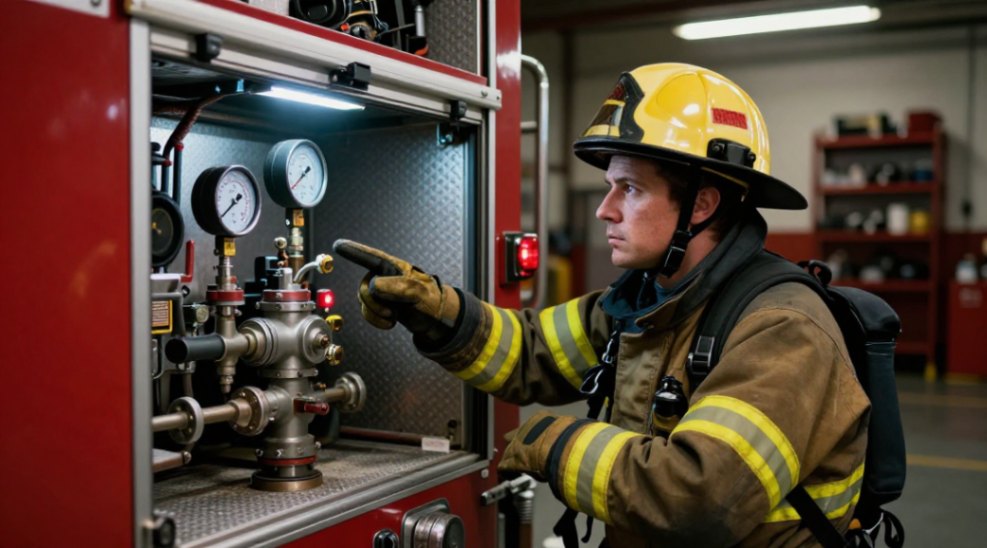
The Pillars of an Effective Maintenance Schedule
A robust maintenance schedule for foam generating equipment must be systematic, documented, and based on usage, not just calendar time. It moves from frequent, simple checks to less frequent, complex tasks. Adherence to this hierarchy prevents over 90% of common system failures. We structure our schedule around four key tiers.
The Four-Tiered Maintenance Hierarchy
| Tier | Frequency | Focus | Key Actions |
|---|---|---|---|
| Operational Readiness | Daily/Pre-Use | Immediate Function & Safety | Visual inspection, pressure checks, quick tests. |
| Preventive Care | Weekly/Monthly | Component Integrity & Performance | Cleaning, lubrication, detailed component inspection. |
| System Assurance | Quarterly/Bi-Annually | System Accuracy & Deep Health | Proportioner calibration, full system flush, valve testing. |
| Comprehensive Validation | Annually | Compliance & Longevity | Professional inspection, major service, documentation audit. |
Step-by-Step: Executing Your Maintenance Schedule
Follow these procedures in sequence. Skipping steps compromises the entire system.
Step 1: Daily or Pre-Use Checks (5-10 Minutes)
This is your first line of defense. Conduct these checks before any planned use or at the start of each shift for stationed equipment.
- Visual Inspection: Walk around the unit. Look for leaks, cracks, or corrosion on tanks, piping, and the pump housing. Check for loose fittings or damaged gauges.
- Fluid Levels: Verify foam concentrate tank level. Check engine oil and coolant levels for motor-driven units. Top up with manufacturer-specified fluids only.
- Power & Pressure: Ensure power sources are connected and secure. For pneumatic systems, check air supply pressure is within the 90-120 psi (6.2-8.3 bar) operating range.
- Quick Operational Test: Engage the system without discharging foam. Listen for unusual pump noises (cavitation sounds like marbles) and observe if pressure builds steadily on the discharge gauge.
Step 2: Weekly Cleaning & Inspection (30-45 Minutes)
Prevent residue buildup and catch wear early.
- Flush the System: Run clean water through the proportioning system and discharge lines for a minimum of two minutes. This prevents concentrate crystallization in valves and lines.
- Clean Strainers & Filters: Locate and clean the concentrate suction strainer and any inline water filters. Use a soft brush and clean water. Inspect for tears or permanent clogging.
- Inspect Nozzles & Foam Makers: Remove nozzles. Check for debris, corrosion, or damage to the orifice. Clean with a soft wooden pick, never metal.
- Check Hoses & Couplings: Inspect discharge hoses for cuts, abrasions, and soft spots. Ensure all couplings spin freely and seals are intact.
Step 3: Monthly Component Service (1-2 Hours)
This is where you maintain core mechanical function.
| Component | Procedure | Acceptance Criteria |
|---|---|---|
| Proportioner (Balanced Pressure) | Exercise all valves through full open/close cycles. Verify calibration by measuring concentrate draw at a set water flow rate. | Proportioning accuracy within +/- 1% of rated value (e.g., 3% for AFFF). |
| Pump Packing/Shaft Seal | Check for leakage. Adjust packing gland nut per manual (typically 1/4 turn max if dripping). For mechanical seals, note any leakage for replacement. | Permissible drip: 1 drop per minute for packing; zero for mechanical seal. |
| Relief Valves | Manually lift the test lever to ensure it operates freely and reseats without leaking. | Valve opens and closes fully with no residual flow. |
| Battery (if applicable) | Check terminals for corrosion. Clean with baking soda/water solution. Load test battery. | Voltage >12.6V DC; holds load for 15 seconds without significant drop. |
Step 4: Quarterly/Bi-Annual Deep Service (2-4 Hours)
Perform a full system verification. This schedule depends on usage: quarterly for high-use or harsh environments, bi-annually otherwise.
- Complete System Flush: Drain and flush the entire system with clean water, including the concentrate tank. For protein-based foams, use a warm water solution as specified.
- Calibrate Proportioning Device: Using a calibrated flow meter and refractometer, perform a full-range calibration check at minimum, rated, and maximum flow.
- Inspect & Lubricate: Lubricate all valve stems, pump bearings (if grease points exist), and moving linkages with manufacturer-approved lubricant. Inspect diaphragm proportioners for cracks or stiffness.
- Conduct a Full Flow Test: Deploy the system to its rated capacity. Verify foam expansion and drainage time meet the concentrate’s specification sheet.
Step 5: Annual Professional Inspection & Major Service
This is non-negotiable. A certified technician must perform these tasks. Their report is your compliance evidence.
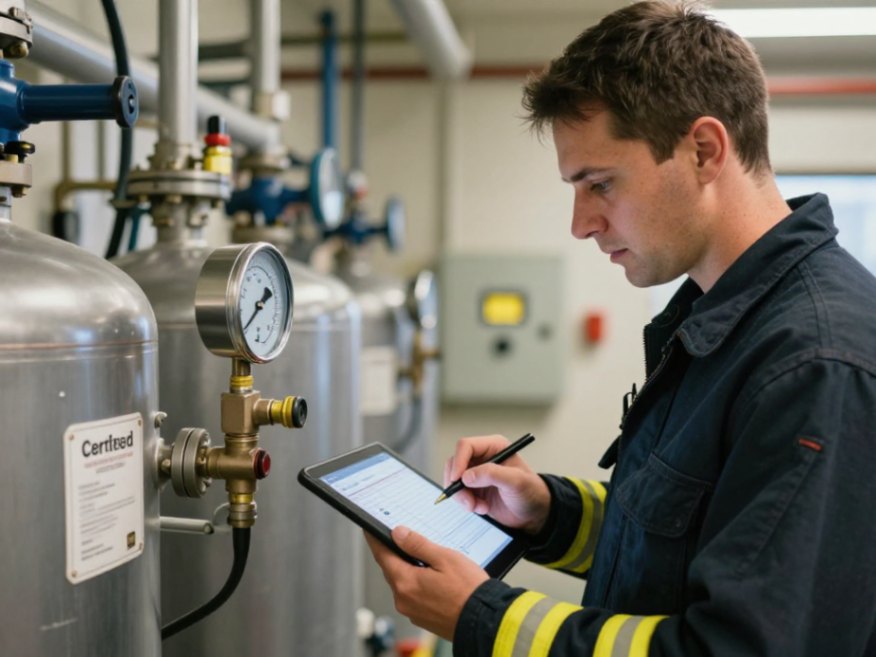
The Professional’s Checklist: Hydrostatic test pump and pressure vessels. Conduct a full performance test with certified measuring equipment. Inspect internal pump wear plates and impellers. Overhaul or replace proportioner control valves and diaphragms. Certify the system to NFPA 11, 16, or 25 standards. Provide a detailed service report with findings and recommendations.
Building Your Customized Schedule
Your environment dictates your schedule. Use this framework to adapt.
- High-Use (Daily/Weekly): Compress the monthly tasks into bi-weekly cycles. Make quarterly deep services monthly.
- Marine/Harsh Environment: Double the frequency of corrosion inspections and flushing. Use corrosion-inhibitive lubricants.
- Low-Use (Standby): Monthly tasks become quarterly. However, you must run the system under load for a minimum of 30 minutes during the quarterly service to prevent seals from setting.
Essential Tools and Documentation
Do not improvise. Use the right tools.
Tool Kit: Manufacturer’s service manuals, non-sparking wrenches, calibrated pressure gauges (0-200 psi and 0-1000 psi), refractometer, flow meter, soft wire brushes, pH-neutral foam system cleaner, manufacturer-approved lubricants, and a digital logbook or CMMS.
Documentation is Your Defense: Log every action: date, task, findings, parts replaced, technician name, and next due date. This log proves due diligence, informs trend analysis, and is required by most insurance and regulatory bodies.
Avoiding the Common Pitfalls
Most failures are predictable.
- Poor Foam Quality: Caused by incorrect proportioning (calibration drift), expired concentrate, or contaminated lines. Fix: Strict calibration schedule and annual concentrate analysis.
- Pump Failure: Caused by running dry, cavitation, or abrasive wear. Fix: Ensure adequate suction supply, maintain proper inlet pressure, and replace wear components during annual service.
- Valve Failure: Caused by crystallization of concentrate or corrosion. Fix: Meticulous flushing after every use and using compatible materials.
A rigorous, documented maintenance schedule for foam generating equipment transforms reactive panic into proactive confidence. It is the single most effective control you have over system reliability and lifecycle cost. Start implementing your tiered schedule today. Your next emergency response depends on it.
We are the global leader in lightweight concrete and advanced engineered foam solutions. Known globally for its commitment to research, innovation, and applied expertise, we have been providing engineered foam solutions since the early 2012’s.
We can supply high-quality concrete admixture and foam concrete related products all over the world.
The company has a professional technical department and quality supervision department, a well-equipped laboratory, and equipped with advanced testing equipment and after-sales customer service center.
If you are interested, please feel free and contact us.