Professional solutions on concrete addtives, Concrete Foaming Agent, Superplasticizer, CLC Blocks Additives, and foaming machine

What is a Foam Equipment Maintenance Schedule? The Ultimate Guide for Fire System Integrity
A Maintenance Schedule Isn’t a Suggestion. It’s Your Lifeline.
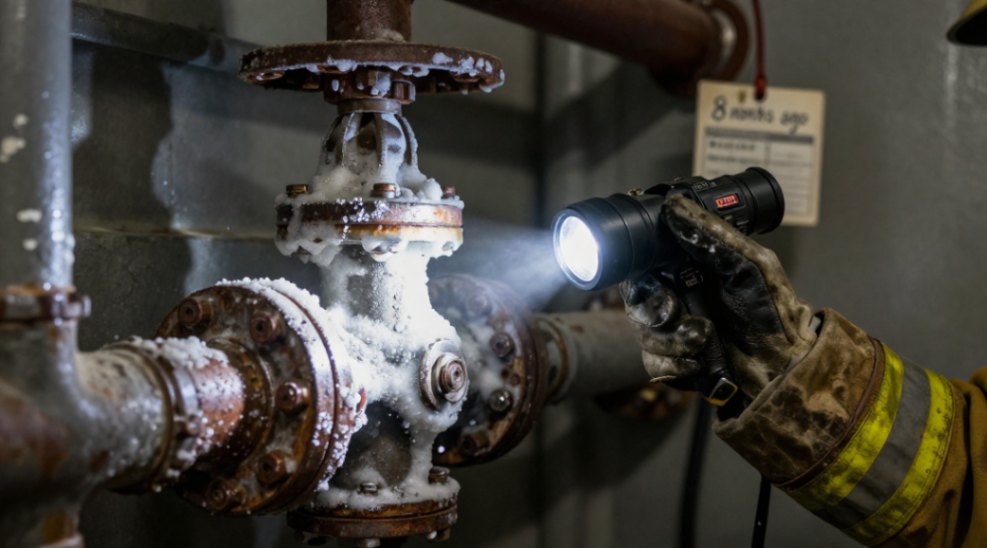
I watched a warehouse burn to the ground. The call came in late. The initial attack crew laid the line, tapped into the onsite foam system, and opened the valve. A weak, watery stream sputtered out. The 6% AFFF solution tank hadn’t been refilled after a quarterly test eight months prior. The proportioner was gummed up with crystallized concentrate. The fire won. A strict maintenance schedule for foam generating equipment would have prevented that loss. It’s the backbone of system reliability.
Defining the Foam Equipment Maintenance Schedule
A foam generating equipment maintenance schedule is a proactive, time-based regimen of inspection, testing, and service tasks. Its purpose is to verify and preserve the operational integrity of every component in a fixed or portable foam suppression system. This includes proportioners (balanced pressure, around-the-pump, inline), bladder or pressure tanks, concentrate pumps, strainers, valves, and associated piping.
You cannot “wing it.” NFPA 11 and 25 mandate specific intervals. Insurance providers require documented compliance. More importantly, firefighters’ lives depend on it. A neglected schedule guarantees failure at the worst possible moment.
The Core Pillars of the Schedule: A Tactical Breakdown
Daily/Pre-Use: The Visual Cheque
This is a 60-second operational scan. Look for visible leaks, gauge readings in the green, and physical damage. Cheque the foam concentrate tank level. Ensure access panels are clear. Many users on industrial safety forums like Reddit emphasize this simple habit, noting it often catches minor issues before they escalate into major shutdowns.
Weekly: Operational Function & Cleanliness
Conduct a brief operational test of the proportioning system without discharging foam. Cycle valves, listen for pump anomalies, and inspect strainers for debris. Wipe down equipment to prevent dirt accumulation. Verify control panel status lights.
Monthly: Mechanical Integrity Inspection
This is a hands-on inspection. Check all pump seals and packing glands. Manually exercise isolation and control valves. Inspect bladder tanks for proper pre-charge pressure using a calibrated gauge. Examine piping supports and hoses for wear or corrosion.
Quarterly: Performance Verification & Calibration
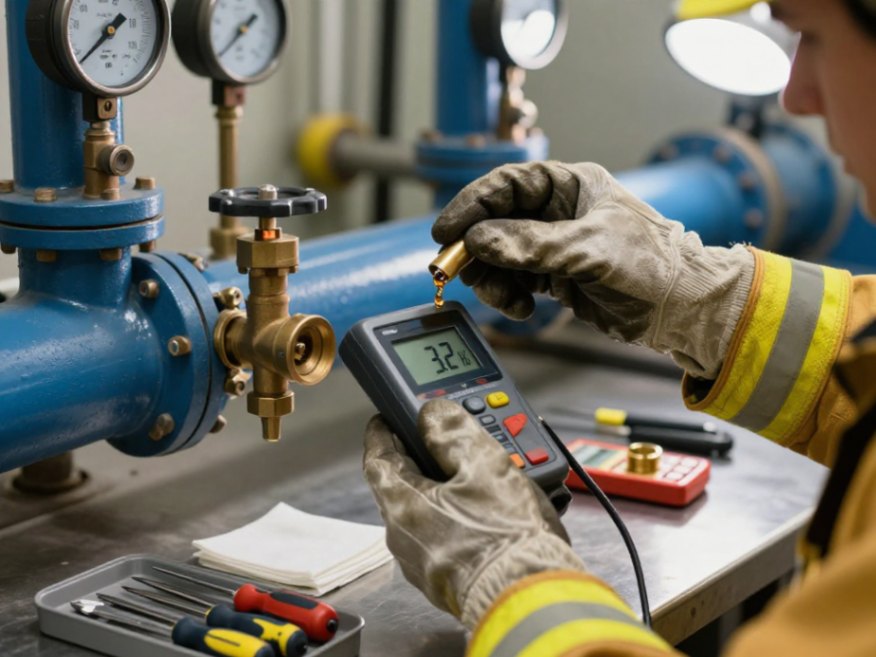
The most critical technical checkpoint. You must verify the proportioning accuracy. Use a refractometer or conductivity tester to analyse the foam solution percentage at the discharge point. It must be within the manufacturer’s specified range (e.g., 3% or 6% +/- 0.5%). Calibrate or clean proportioner components as needed. Fully cycle and test any automated actuation systems.
Annually: Full System Certification & Fluid Integrity
A comprehensive evaluation performed by a qualified technician. This involves a full flow test of the system, internal inspection of tanks for corrosion or bladder integrity, replacement of all seals in the proportioner service kit, and laboratory analysis of the foam concentrate. The concentrate degrades over time. Annual analysis checks for sedimentation, pH balance, and freezing point.
Consequences of Neglect: The Hard Data
Ignoring the maintenance schedule for foam generating equipment has direct, measurable outcomes. Reduced foam expansion ratio means less blanket to smother the fire. Incorrect proportioning (too weak or too rich) destroys the foam’s fuel-shearing capability. Crystallized concentrate can seize a proportioning valve entirely. Your system becomes a very expensive water spray.
Building Your Defence: Documentation and Spares
A logbook is non-negotiable. Every inspection, test, and service action gets recorded with a date and technician’s initials. This log provides traceability and proves due diligence.
Maintain an inventory of OEM-critical spares. At minimum, keep the manufacturer’s recommended service kit for your proportioner model on hand. This kit typically contains diaphragms, seals, and valves prone to wear. Waiting for parts during an outage is a risk you cannot afford.
Integrating Into Your Overall Program
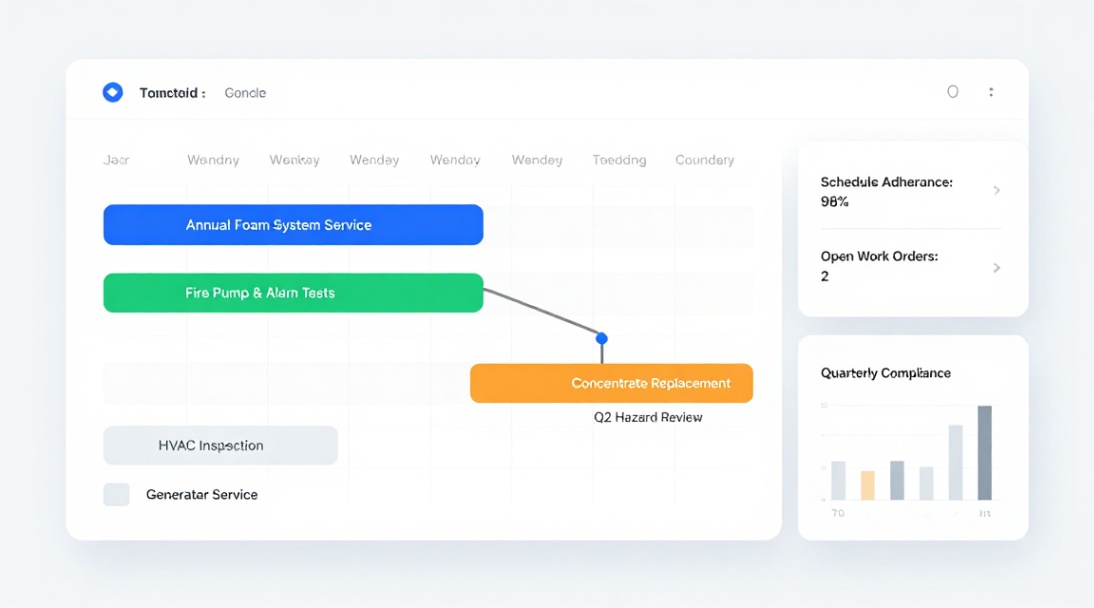
The foam system schedule cannot live in a silo. It must integrate with your facility’s overall preventive maintenance program. Sync the annual service with other fire protection system checks. Align concentrate replacement with hazard review cycles. This holistic approach ensures consistency and management visibility.
Your Next Command Decision
The schedule is your playbook. Pull your system’s maintenance manual right now. Compare its requirements against your last twelve months of logs. Identify the gaps. Then, commit to closing them with the discipline this critical life-safety equipment demands. Your property, your people, and your responding firefighters are relying on that commitment.
We are the global leader in lightweight concrete and advanced engineered foam solutions. Known globally for its commitment to research, innovation, and applied expertise, we have been providing engineered foam solutions since the early 2012’s.
We can supply high-quality concrete admixture and foam concrete related products all over the world.
The company has a professional technical department and quality supervision department, a well-equipped laboratory, and equipped with advanced testing equipment and after-sales customer service center.
If you are interested, please feel free and contact us.