Professional solutions on concrete addtives, Concrete Foaming Agent, Superplasticizer, CLC Blocks Additives, and foaming machine

Portable Foam Generator Operation Guide: How to Produce On-Site Foam Concrete
A Bridge Contractor’s Reality Cheque
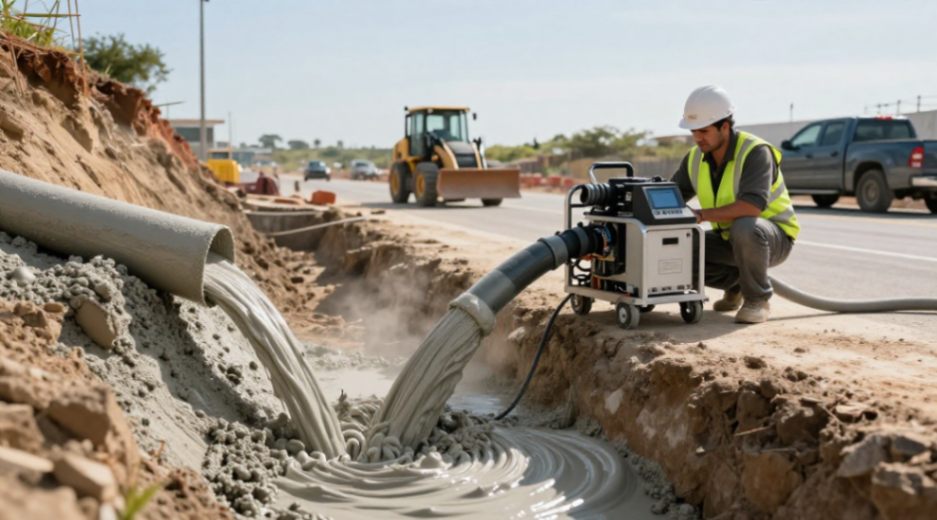
Years ago, we encountered a collapsing road embankment that required immediate backfilling with lightweight material. The logistics for trucking in cellular concrete from a central plant were a nightmare. Our solution? We mobilized a portable foam generator for on-site concrete production. Within hours, we were producing stable, low-density fill that stabilized the site, saved three days on the schedule, and avoided massive transport costs. That day cemented my view: for agility and control, on-site generation is unmatched. Let’s break down exactly how it works.
Key Questions & Operational Answers
What is a portable foam generator and how does it differ from stationary plant equipment?
A portable foam generator is a compact, trailer- or skid-mounted unit that produces stable, pre-formed foam from a liquid foaming agent, water, and compressed air. The core difference from stationary systems is integration. A stationary plant batches complete foamed concrete. A portable generator produces only the foam, which you inject directly into standard on-site mixer trucks containing your base sand-cement slurry. This decouples foam production from concrete batching, offering unparalleled flexibility.
What are the primary benefits for on-site work?
- Logistics Simplification: Transport concentrated foaming agent and a compact generator instead of bulky pre-mixed lightweight concrete.
- Cost Control: Eliminate per-cubic-yard hauling fees for specialty concrete. Produce only what you need, when you need it.
- Just-in-Time Production: Match foam output directly to your pour rate, minimizing waste and cold joints.
- Material Consistency: Produce foam with consistent bubble structure (foam density) on-site, leading to uniform final concrete density.
How does the generator create stable foam for concrete?
The process is physical, not chemical. The unit meters a precise ratio of foaming agent concentrate and water into a mixing chamber. Compressed air, introduced at a controlled pressure, shears the diluted agent into billions of micro-bubbles. A stable foam requires a high-quality surfactant and precise control over the air-to-solution ratio. This ratio directly determines the foam density, typically measured in kilograms per cubic meter (kg/m³).
What are common on-site applications?
- Backfill & Void Filling: For bridge abutments, pipeline trenches, and old culverts.
- Insulating Roof Screeds & Floor Slabs: Producing low-density, thermal insulating layers.
- Low-Density Non-Structural Slabs: For grade adjustments or sub-floor leveling.
- Pre-cast Elements: Manufacturing lightweight blocks or panels directly in the yard.
What technical specs are critical when selecting a unit?
Do not buy on horsepower alone. Evaluate the entire system.
- Foam Output Rate: Measured in liters per minute (L/min) or cubic meters per hour (m³/h). Match this to your mixer truck capacity and pour requirements.
- Density Control Range: The unit must reliably produce foam across your target range (e.g., 40-100 kg/m³).
- Air Compressor Capacity: Integrated compressor must supply sufficient, stable air pressure (typically 4-7 bar).
- Proportioning System Accuracy: Look for positive-displacement pumps with digital controls for precise agent/water ratios.
- Portability & Power Source: Trailer design, weight, and whether it runs on diesel, electric, or a hybrid system.
How do you integrate it with on-site batching?
Think of it as a two-stream process. Stream one: produce your base cement-sand-water slurry in a standard ready-mix truck or planetary mixer. Stream two: produce stable foam with your portable foam generator. The key is injection. You pump the foam directly into the mixer drum while it is rotating. The mixing action uniformly distributes the foam cells throughout the slurry. The required materials are simply your standard concrete raw materials plus the liquid foaming agent concentrate.
What are the critical factors for foam stability and final quality?
Foam stability dictates concrete strength and density. Three factors are non-negotiable.
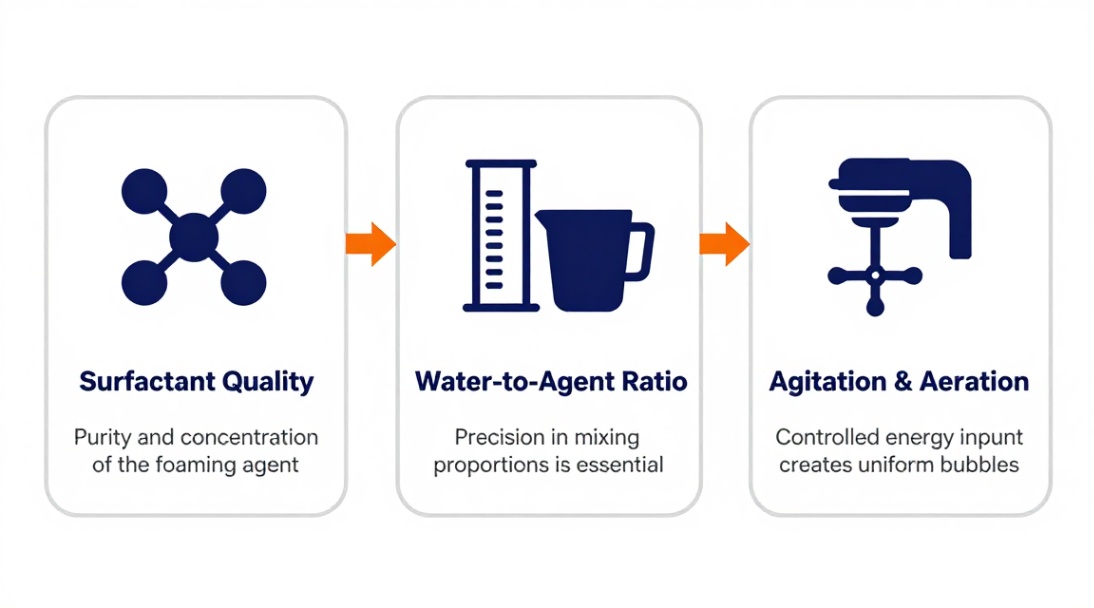
- Foam Density Consistency: Measure the density of the fresh foam every 15-30 minutes using a 1-liter container and a scale. Variation beyond ±5 kg/m³ signals a problem.
- Bubble Structure: The foam should be creamy with uniform, sub-millimeter bubbles. Large, irregular bubbles indicate poor surfactant or incorrect air pressure.
- Drainage Time: Stable foam resists breaking down and draining liquid. Perform a simple drainage test by filling a container and observing how long it takes for 50ml of liquid to separate.
How do you calculate ROI for a contractor?
Compare total project costs. For a 500 m³ lightweight fill project 50 km from a plant: Haulage costs for pre-mixed material could exceed $80 per m³. Using a portable foam generator, your cost is the base slurry (standard concrete price) plus agent cost (~$15/m³) plus generator rental/operation. The savings often justify equipment rental or purchase in 2-3 projects. Factor in saved time, reduced waste (no leftover truckloads), and schedule certainty.
What are essential safety and training protocols?
Operator training is your primary safety system. Cover these points:
- Pressure Systems: Understand air compressor and hose safety. Inspect for wear.
- Chemical Handling: Use PPE when handling concentrated foaming agent.
- Process Calibration: Train operators to calibrate the foam density at the start of each shift and after any process change.
- Clean-in-Place Procedures: Flush the system with clean water after use to prevent agent crystallization in pumps and lines.
What maintenance ensures durability?
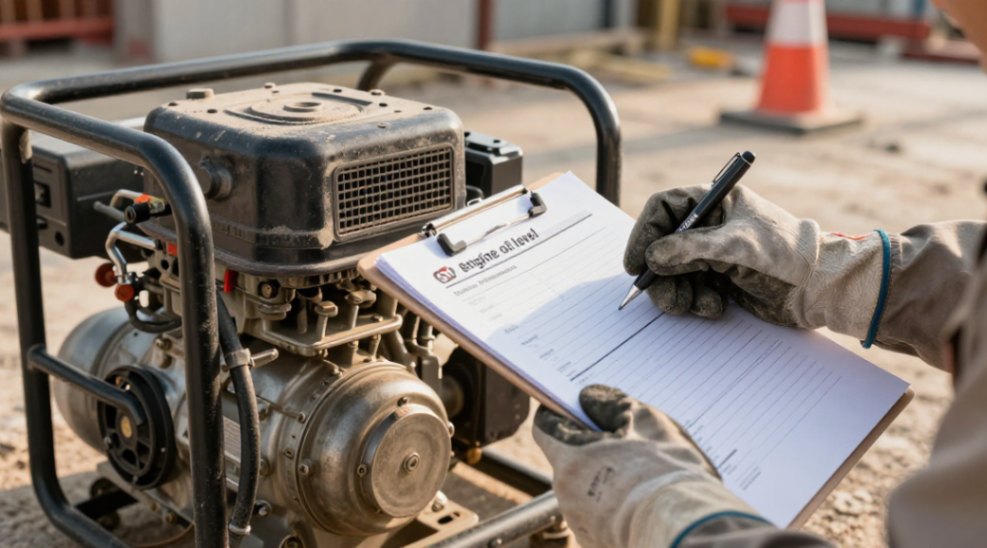
Portable equipment faces harsh conditions. Implement a strict daily and weekly checklist.
| Component | Daily Cheque | Weekly/Monthly Maintenance |
|---|---|---|
| Proportioning Pumps | Check for leaks, unusual noise. | Verify calibration accuracy. |
| Air Compressor | Drain moisture trap, cheque oil level. | Change air filter, inspect belts. |
| Hoses & Fittings | Inspect for cuts, abrasions, secure connections. | Pressure test, replace worn sections. |
| Chemical Tank | Ensure vent is clear, cheque level sensor. | Clean interior to prevent residue buildup. |
Final Guidance for Project Success
The strategic advantage of a portable foam generator for on-site concrete production is operational control. You command density, timing, and volume. Success hinges on selecting a robust unit with precise controls and committing to rigorous operator training and process discipline. Before your next project requiring lightweight concrete, run the numbers. Compare the total delivered cost of ready-mix versus on-site production. For many projects, the logistics and cost equation is decisively in favor of taking production into your own hands.
We are the global leader in lightweight concrete and advanced engineered foam solutions. Known globally for its commitment to research, innovation, and applied expertise, we have been providing engineered foam solutions since the early 2012’s.
We can supply high-quality concrete admixture and foam concrete related products all over the world.
The company has a professional technical department and quality supervision department, a well-equipped laboratory, and equipped with advanced testing equipment and after-sales customer service center.
If you are interested, please feel free and contact us.