Professional solutions on concrete addtives, Concrete Foaming Agent, Superplasticizer, CLC Blocks Additives, and foaming machine

The Complete Guide to Non-Structural Lightweight Concrete for Backfill: Solve Weight and Pressure Problems
Struggling with Heavy, Unstable Backfill?
Have you ever watched a perfectly good retaining wall start to lean? Or spent a fortune trying to compact granular fill in a tight, confined trench? Maybe you’ve calculated the staggering load a new bridge abutment will place on soft underlying soils. These are common, costly headaches. Traditional backfill materials like gravel or crushed stone are heavy. They settle. They exert immense pressure. For decades, we’ve accepted these problems as just part of the job. But what if there was a better way? A material that acts as a stable, predictable fill while dramatically reducing weight and pressure. That material exists. It’s called non-structural lightweight concrete for backfill.
What is Non-Structural Lightweight Concrete for Backfill?
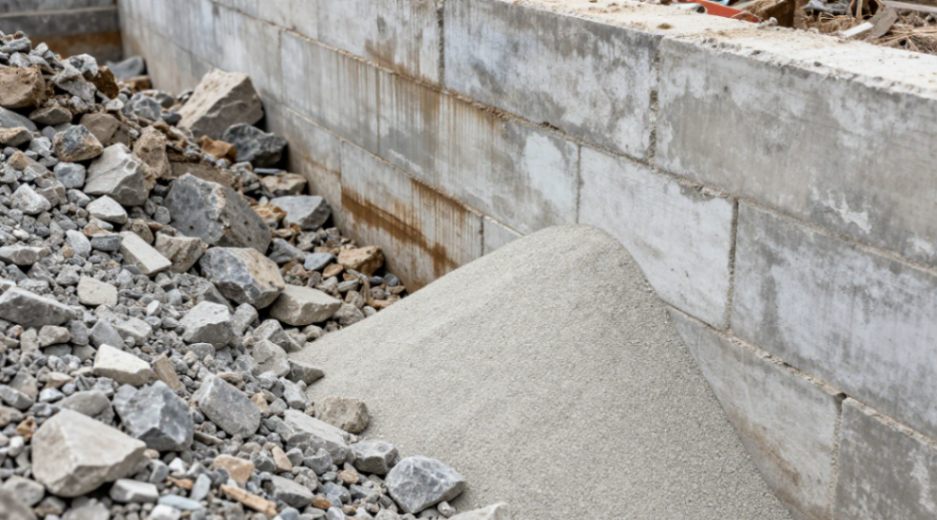
Let’s cut through the jargon. Non-structural lightweight concrete for backfill is a flowable, low-density fill material. It is not meant to carry structural loads like a building column. Its sole job is to replace soil or granular fill efficiently and safely. We make it by combining Portland cement, water, and lightweight aggregates. These aggregates are the key. We use materials like expanded shale, clay, slate, or industrial by-products like fly ash or slag. These aggregates are fired in a kiln, causing them to expand into strong, ceramic-like pellets full of air pockets. This gives the final concrete its crucial lightness.
How It Stacks Up Against Traditional Fill
Forget shoveling, compacting, and testing for days. Think about the fundamental problems of traditional backfill. First, weight. Granular fills are dense. They can weigh 120 pounds per cubic foot (pcf) or more. This dead load stresses everything below it. Second, lateral pressure. A tall wall of heavy soil pushes outward with tremendous force, requiring massive, expensive wall designs. Third, settlement. Achieving perfect, uniform compaction behind a wall or in a utility trench is nearly impossible. Voids lead to settlement, which leads to cracked pavement and broken pipes. Non-structural lightweight concrete solves these problems at their root. It is typically 35 to 50% lighter than conventional fill. A standard mix might weigh between 90 and 110 pcf. It flows like thick pancake batter, filling every nook and cranny without mechanical compaction. It hardens into a uniform, monolithic mass that does not settle. This directly translates to reduced lateral earth pressure on retaining structures and minimal long-term settlement risk.
The Core Advantages You Can’t Ignore
We choose this material for specific, high-value engineering benefits. Let’s break them down.
Engineered Lightness for Superior Performance
The low density is not a minor convenience. It is a powerful design tool. By significantly reducing the weight of the backfill mass, we dramatically decrease the vertical and lateral forces on underlying soils and adjacent structures. This allows for more economical design of retaining walls, bridge abutments, and foundations. On weak or compressible soils, it can be the difference between a feasible project and an abandoned one. The typical compressive strength for these mixes ranges from 100 to 800 psi, which is more than sufficient to resist the pressures encountered in backfill applications while maintaining its low-density advantage.
Flowability: The End of Compaction Headaches
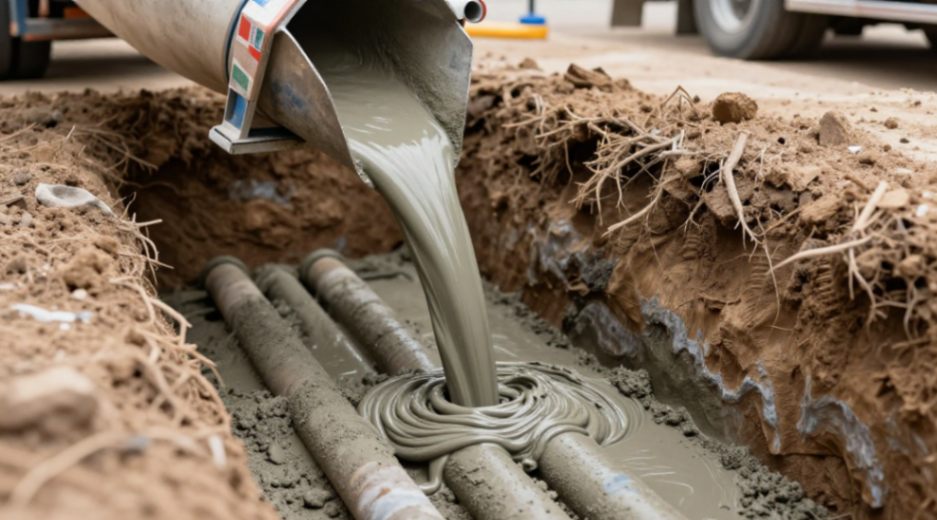
This is where the construction process transforms. The material is designed to be self-levelling and flowable. We place it via chute, pump, or ready-mix truck directly into the excavation. It seeks its own level and encapsulates utilities, irregular surfaces, and obstacles completely. This eliminates the need for compaction equipment and the associated labor, testing, and access issues in confined spaces. The result is a perfectly placed, void-free fill in a fraction of the time.
Where It Shines: Key Application Scenarios
This isn’t a solution for every problem. But in the right scenarios, it is unbeatable. The most common applications leverage its unique properties to solve specific challenges.
- Bridge Approach & Abutment Backfill: This is a classic use case. The material minimizes settlement behind the abutment, preventing the notorious “bump at the end of the bridge.” Its low weight reduces stress on foundation piles and soft subsoils.
- Retaining Wall Backfill: By cutting lateral pressure, it allows for thinner, less reinforced wall sections. This can lead to significant cost savings on materials and installation.
- Utility Trench Backfill: It flows around and protects underground pipes and conduits, providing uniform support and preventing point loads that cause breaks. Rapid placement means trenches can be closed and roads reopened faster.
- Void Filling & Slope Stabilization: It can be used to fill old underground structures, mines, or sinkholes, creating a stable, lightweight plug. On slopes, it can replace heavy, unstable soil masses.
Thinking About Cost? Consider Total Value
Yes, the upfront cost per cubic yard is higher than gravel. We must be clear about that. But we measure value differently. You are not just buying dirt. You are buying performance, time, and risk reduction. The true cost analysis includes eliminated compaction equipment and labor, faster construction schedules, reduced over-excavation due to its high placed yield, and the long-term elimination of maintenance from settlement repairs. For many projects, especially those with difficult access, tight timelines, or sensitive soils, the total installed cost is competitive or lower. The long-term value, in avoided call-backs and liabilities, is often superior.
Building with Confidence: Standards and Specifications
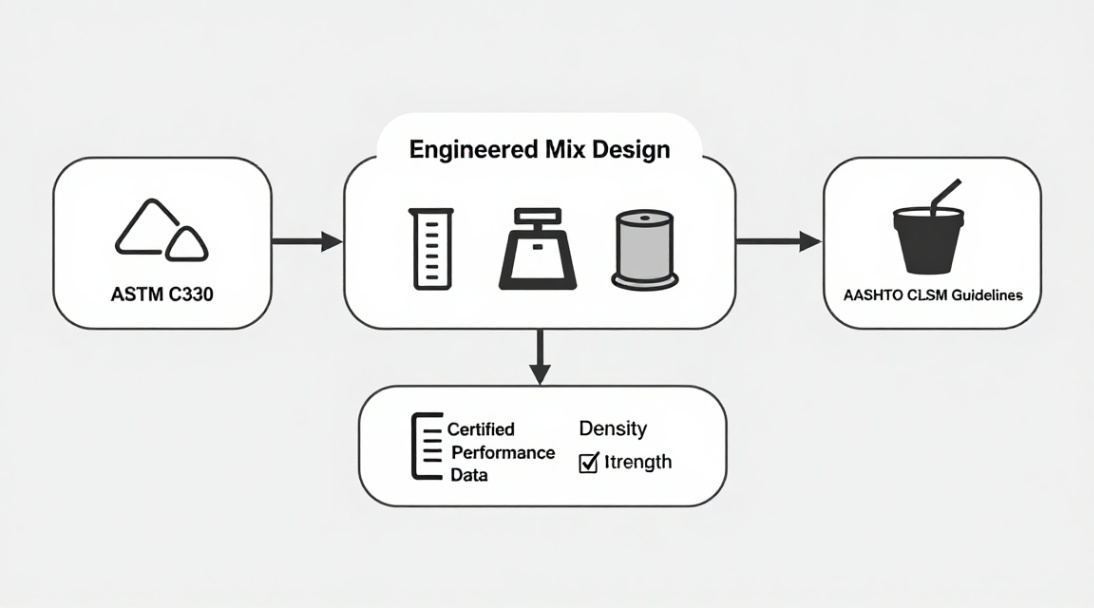
This is a proven, standardized material. We do not wing the mix design. Key standards govern its use. ASTM C330 provides the specification for lightweight aggregates for concrete masonry units and structural concrete, which forms the basis for the aggregates used. For the placed material, engineers often reference AASHTO specifications for controlled low-strength material (CLSM) or similar guidelines. Reputable suppliers will provide mix designs with certified density and strength data. This gives you predictable, engineer-approved performance.
A Material That Makes Sense
Non-structural lightweight concrete for backfill is a smart engineering choice. It turns geotechnical problems into simple placement operations. It trades uncertainty for predictable, monolithic performance. The next time you face a deep trench, a tall wall, or weak soils, remember you have an alternative to the heavy, unreliable fills of the past. The modern solution is engineered to be light, fast, and stable. To see if this solution fits your next project’s specific soil conditions and structural requirements, a detailed consultation with your geotechnical engineer and a reputable specialty concrete supplier is the logical next step. They can provide mix designs, cost estimates, and case studies from projects just like yours.
We are the global leader in lightweight concrete and advanced engineered foam solutions. Known globally for its commitment to research, innovation, and applied expertise, we have been providing engineered foam solutions since the early 2012’s.
We can supply high-quality concrete admixture and foam concrete related products all over the world.
The company has a professional technical department and quality supervision department, a well-equipped laboratory, and equipped with advanced testing equipment and after-sales customer service center.
If you are interested, please feel free and contact us.