Professional solutions on concrete addtives, Concrete Foaming Agent, Superplasticizer, CLC Blocks Additives, and foaming machine

How Early Strength Admixtures for Cold Weather Save Winter Concrete Projects
What is an Early Strength Concrete Admixture for Cold Weather?
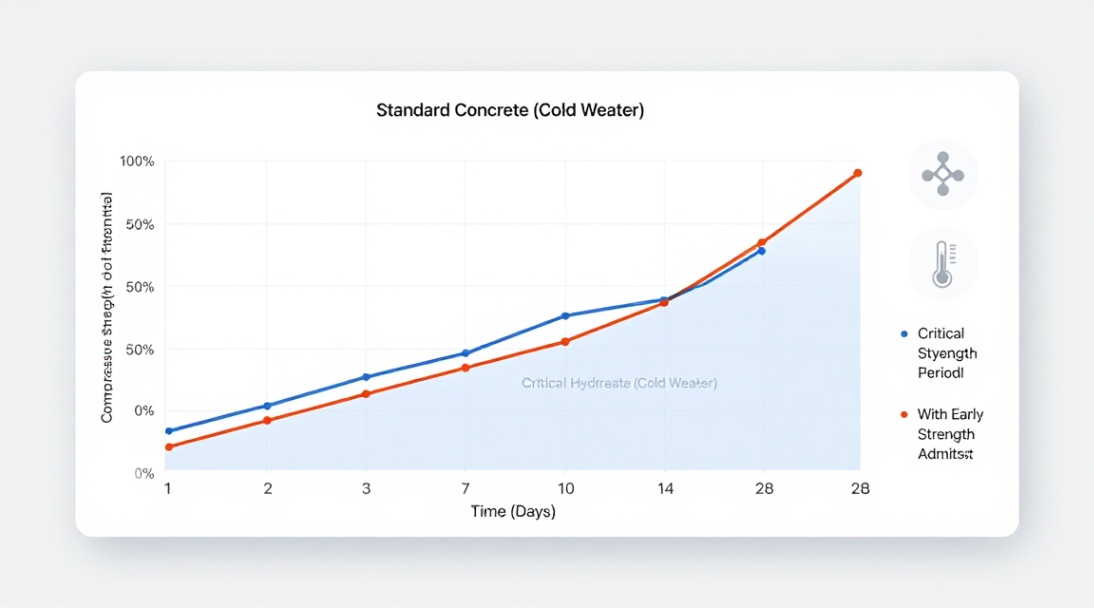
Concrete poured in cold weather can lose 50% of its potential 28-day strength. This statistic shocks most people. The reason is simple: hydration, the chemical reaction that gives concrete its strength, slows dramatically as temperatures drop. An early strength concrete admixture for cold weather is a specially formulated chemical solution added to the concrete mix. Its sole purpose is to accelerate the rate of hydration, forcing the concrete to develop critical strength much faster despite the cold.
The Cold Weather Concreting Problem
Pouring concrete below 40°F (4°C) is risky. Without intervention, setting times stretch. Strength gain crawls. Water in the mix can freeze, causing permanent damage. Traditional solutions like heated enclosures and insulated blankets are expensive and energy-intensive. They address the symptom-low ambient temperature-but not the root cause: the slowed chemistry inside the concrete itself. This is where early strength admixtures change the game. They work from within.
How Cold Weather Accelerators Work
These admixtures are chemical catalysts. They don’t heat the concrete. Instead, they manipulate the silicate and aluminate reactions at the core of hydration. Think of them as a caffeine shot for your concrete mix. By speeding up these initial reactions, the admixture generates heat internally. This heat further fuels the process, creating a positive feedback loop. The concrete sets quicker. It reaches strength milestones-like 500 psi for safe formwork removal-in hours instead of days.
Chloride vs. Non-Chloride Accelerators
Not all accelerators are the same. The choice hinges on your project’s corrosion risk.
- Calcium Chloride (CaCl2): This is the classic, most cost-effective accelerator. It works exceptionally well. However, chloride ions can initiate corrosion in embedded steel reinforcement. Never use it in reinforced concrete, prestressed concrete, or where electrical systems will be embedded.
- Non-Chloride Accelerators (NCAs): These are modern alternatives based on chemicals like calcium nitrite, nitrates, or thiocyanates. They provide robust acceleration without the corrosive chloride ions. They are the standard for any concrete containing steel. Always specify a non-chloride accelerator unless you are pouring plain, unreinforced mass concrete.
Critical Application Guidelines
Mistakes with admixtures waste money and compromise concrete. Follow these steps precisely.
1. Dosing and Mixing
Dosage is weight-based, typically 1-3% of cementitious materials. Never guess. Follow the manufacturer’s data sheet for your specific mix temperature and target set time. Add the liquid admixture to the mixing water or with the initial batch water. Ensure a minimum 5-minute mix time for uniform distribution. Inconsistent mixing leads to weak spots and erratic setting.
2. Placement and Initial Protection
The admixture gets the reaction started, but you must still protect the concrete. Place concrete at the highest practical temperature, above 40°F. Once placed, immediately cover it with insulating blankets or polyethylene sheets to trap the internally generated heat. This retained heat is your best ally. The admixture and insulation work as a powerful team.
3. Curing is Non-Negotiable
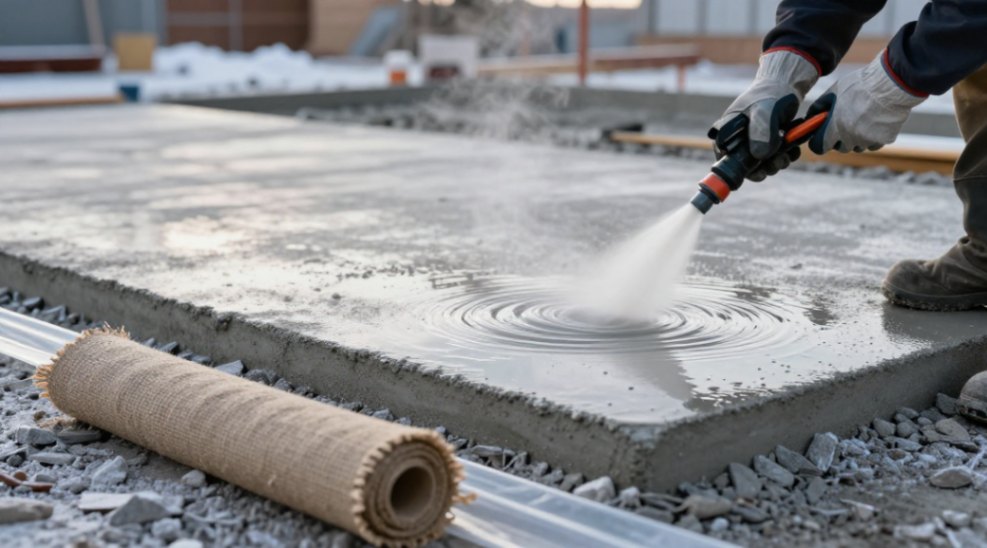
Accelerated hydration consumes water rapidly. If the surface dries out, hydration stops, and strength development ceases. Start curing the moment the surface can resist marking. Use liquid membrane-forming curing compounds or wet burlap covered with plastic sheeting. Maintain this curing for at least 3 days, longer if temperatures remain near freezing.
Benefits and Project Impact
Using an early strength admixture for cold weather delivers concrete advantages.
- Faster Formwork Stripping: Remove forms in 12-24 hours instead of 3-7 days. This reclaims expensive formwork and lets crews move to the next task.
- Reliable Scheduling: Eliminate weather-related delays. You gain predictable, shortened critical path timelines for finishing and follow-on trades.
- Cost Reduction: Slash or eliminate the need for fuel-guzzling temporary heat and complex enclosures. The savings on winter protection often exceed the cost of the admixture.
- Improved Surface Quality: Faster setting reduces the risk of surface scaling from early freezing and minimizes plastic shrinkage cracks.
Avoiding Common Pitfalls
Success requires avoiding these frequent errors.
Over-Dosing: More is not better. Excessive accelerator can cause flash set, reduce ultimate strength, and increase shrinkage cracking. Stick to the recommended dosage.
Ignoring Mix Compatibility: Test your specific mix design with the admixture beforehand. Some admixtures can interact poorly with certain fly ashes or slag cements, affecting workability or set time.
Neglecting Curing: Assuming the admixture “cures” the concrete is the most dangerous mistake. The admixture accelerates strength gain; proper curing ensures it happens. Never skip this step.
Selecting the Right Admixture for Your Project
Choosing an accelerator is a technical decision. Start by consulting with a reputable admixture supplier who offers technical support. Provide them with your mix design, the lowest expected ambient temperature, and your project’s critical path timeline. They can recommend a product like a non-chloride, liquid accelerating admixture that integrates seamlessly into your batching process. The right partner provides more than a chemical; they provide a winter concreting strategy. Their guidance on dosing, placement, and protection turns a risky winter pour into a routine, successful operation.

An early strength concrete admixture for cold weather is not a magic potion. It is a precision tool. When you understand its function, apply it correctly, and partner it with sound cold-weather practices, it transforms winter from a construction obstacle into a manageable condition. You pour with confidence, finish on schedule, and achieve durable, high-quality concrete.
We are the global leader in lightweight concrete and advanced engineered foam solutions. Known globally for its commitment to research, innovation, and applied expertise, we have been providing engineered foam solutions since the early 2012’s.
We can supply high-quality concrete admixture and foam concrete related products all over the world.
The company has a professional technical department and quality supervision department, a well-equipped laboratory, and equipped with advanced testing equipment and after-sales customer service center.
If you are interested, please feel free and contact us.