Professional solutions on concrete addtives, Concrete Foaming Agent, Superplasticizer, CLC Blocks Additives, and foaming machine

Lightweight Concrete Bridge Deck Overlays: 3 Costly Mistakes You Must Avoid
Is Your Bridge Deck Repair Doomed from the Start?
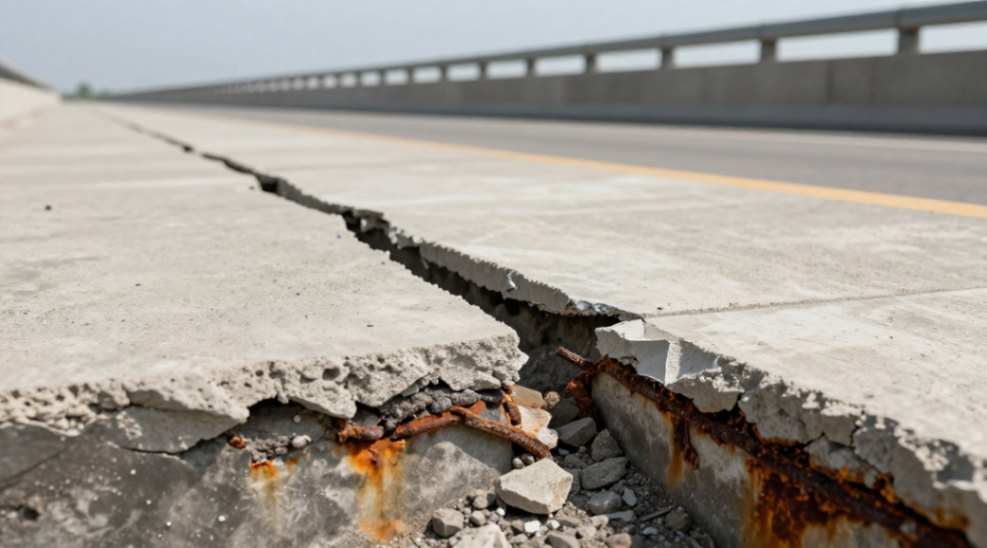
Have you watched your bridge deck repair project turn into a nightmare of premature cracks, delamination, and soaring costs? You’re not alone. Many engineers and DOT teams face the same heartbreak. They choose an overlay material expecting decades of service, only to see it fail far too soon. The root cause is rarely the concrete itself. It’s the hidden mistakes made before a single truck ever arrives on site. As someone who has supervised hundreds of successful overlays, I’m here to guide you away from the cliff. Let’s talk about the real-world power-and critical warnings-of lightweight concrete for bridge deck overlays.
The Core Promise (And Where It Goes Wrong)
At its heart, a lightweight concrete overlay uses special aggregates like expanded shale, clay, or slate to slash the density. This isn’t just about weight. A properly designed mix reduces dead load on the structure by 25-35% compared to normal-weight concrete. That translates directly to extended service life for the entire bridge. The real benefits are a superior bond, enhanced durability against chloride intrusion, and resistance to thermal cracking. But here’s the hard truth many learn too late: if you treat it like ordinary concrete, you will fail. The community sees this all the time. You’ll find posts from frustrated project managers on forums asking, “Why did our lightweight overlay debond after one winter?” The answer almost always lies in the preparation and the mix.
Critical Warning: The 3 Most Common (and Costly) Mistakes
I’ve built my career on preventing these errors. Let’s be blunt: avoid these, and your project succeeds. Ignore them, and you risk a very public, very expensive failure.
1. Treating It Like a Standard Concrete Pour
This is the cardinal sin. The low-density aggregates in lightweight concrete for bridge deck overlays behave differently. They are more absorbent. If your crew uses standard placement and finishing techniques, you’ll trap excessive water at the surface. This creates a weak, dusty layer (laitance) that destroys the bond and leads to scaling. The fix is non-negotiable: you must adjust vibration timing and bullfloat pressure. Finish only when the water sheen is gone.
2. Compromising on Curing. Just Don’t.
Many projects fail right here. Lightweight concrete loses moisture faster. Inadequate curing is a death sentence. You cannot rely on a quick spray and hope for the best. I mandate a wet cure with saturated burlap or a spray-applied membrane for a minimum of 7 days. This isn’t a suggestion; it’s the rule that ensures the cement fully hydrates, developing the strength and durability you paid for. Skipping this step guarantees micro-cracks.
3. Selecting Aggregates Based on Price Alone
Not all lightweight aggregates are equal. Some cheap, poorly processed aggregates have inconsistent pore structure. They lead to wildly variable water demand in the mix, killing your strength and durability. You need aggregates with a proven track record in bridge decks. Always, always request the producer’s mix performance data and case studies. This is where your project’s 30-year lifespan is decided.
Side-by-Side: Why Lightweight Concrete Wins (When Done Right)
Let’s cut through the noise. Here’s a direct comparison of overlay options, based on decades of field performance.
| Criteria | Lightweight Concrete Overlay | Normal-Weight Concrete Overlay | Polymer Overlay (Typical) |
|---|---|---|---|
| Key Advantage | Reduced structural load, superior durability | Familiarity, lower material cost | Rapid installation, very thin profile |
| Major Risk if Done Wrong | Poor bond, plastic shrinkage cracks | Added dead load, thermal cracking | Debonding, sensitivity to substrate moisture |
| Critical Success Factor | Aggregate quality & disciplined curing | Joint detailing & mix shrinkage control | Impeccable surface prep & climate control |
| Lifecycle Cost Outlook | Excellent (Lower long-term maintenance) | Moderate (Potential for earlier repair) | Variable (Can be high if replacement needed) |
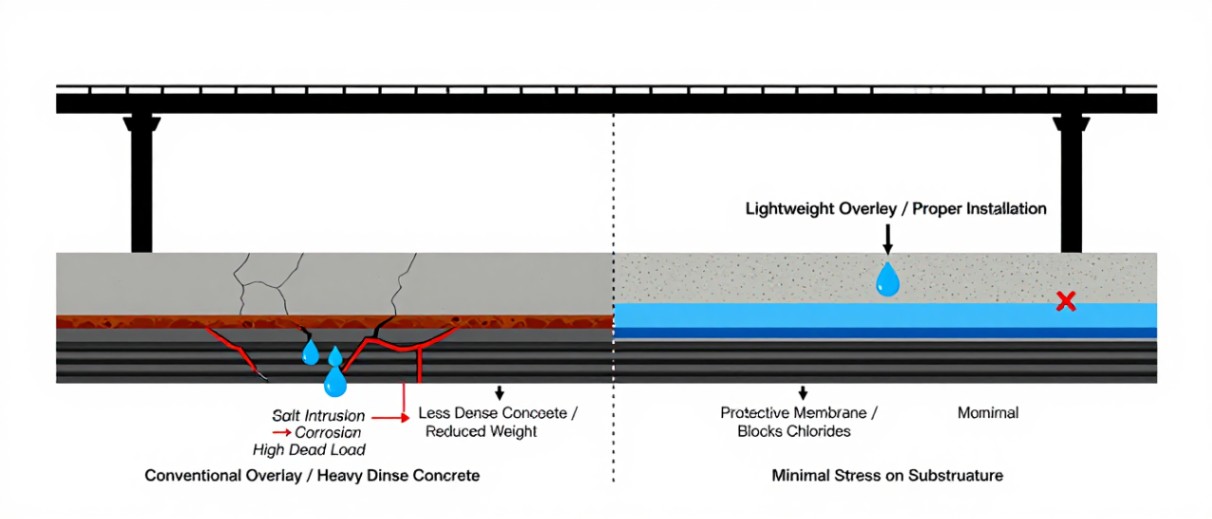
The data tells a clear story. For a long-term, durable solution that protects the bridge girders, a correctly installed lightweight overlay is often the most rational choice. It addresses the root cause of deck deterioration-corrosion from salt intrusion-while adding minimal stress to the aging structure below.
Your Path to a Flawless Overlay: The Non-Negotiable Steps
Success isn’t accidental. It’s procedural. Follow this framework.
Material Selection: The Foundation
Partner with a reputable supplier who specializes in bridge-grade lightweight aggregates. Demand a mix design that meets AASHTO or your state DOT specs for strength (typically 4,000+ psi compressive), low permeability, and a solid bond strength (often 250+ psi). The mix must be designed for pumpability and finishability.
Installation: The Make-or-Break Phase
Surface preparation is 90% of the bond. This means aggressive hydro-demolition or milling to expose solid, clean sound concrete. Place the concrete promptly. Monitor air content and slump on-site. Remember the finishing rule: wait for the sheen to disappear. Then, begin your immediate, rigorous curing protocol.
The Long-Term Payoff
When executed with this discipline, the overlay becomes a permanent, protective shield. It drastically reduces chloride ion penetration, stopping corrosion in its tracks. The reduced load means less deflection and fatigue on the supporting elements. You’re not just repairing a deck; you’re renewing the entire bridge’s service life.
Stop Gambling With Your Next Bridge Deck Project
You now know the pitfalls that derail most teams. You understand the precise steps that lead to a durable, high-performance lightweight concrete bridge deck overlay. This isn’t theoretical. We’ve used this exact process to deliver overlays that are still performing flawlessly after 20+ years of harsh freeze-thaw cycles and heavy de-icing salts. The difference is execution.
Don’t leave this critical repair to chance or to a team learning on your dime. Your next step is clear. Before you finalize your next overlay specification, get a professional review from an expert who has lived this process. I offer a dedicated specification and plan review service to identify the red flags in your current approach and lock in the procedures for success. Let’s turn your next overlay from a risk into a legacy. Contact me today to schedule your project review.
We are the global leader in lightweight concrete and advanced engineered foam solutions. Known globally for its commitment to research, innovation, and applied expertise, we have been providing engineered foam solutions since the early 2012’s.
We can supply high-quality concrete admixture and foam concrete related products all over the world.
The company has a professional technical department and quality supervision department, a well-equipped laboratory, and equipped with advanced testing equipment and after-sales customer service center.
If you are interested, please feel free and contact us.