Professional solutions on concrete addtives, Concrete Foaming Agent, Superplasticizer, CLC Blocks Additives, and foaming machine

Protein Based Foaming Agent vs Synthetic: Which Performs Better?
Key takeaways
- Protein based foaming agents offer superior foam stability and finer cell structure, leading to higher compressive strength at the same density.
- Synthetic foaming agents provide faster foam generation and lower cost, but may produce weaker and less stable foam.
- Choice depends on application: structural lightweight concrete favors protein based, while non-structural fills favor synthetic.
- Sustainability considerations: protein based agents are often more eco-friendly but more expensive; synthetic agents are cheaper but may have higher environmental impact.
- Always conduct small-scale tests with your specific materials to validate performance before full-scale production.
Which Performs Better: Protein Based or Synthetic Foaming Agents?
The performance of protein based foaming agents versus synthetic foaming agents depends heavily on the specific application and performance criteria. Protein based foaming agents offer superior foam stability and finer cell structure, making them ideal for lightweight concrete where strength and density uniformity are critical. Synthetic foaming agents provide higher foam generation efficiency and lower cost, but may sacrifice some stability and compressive strength. The choice depends on which trade-offs align with your project requirements.
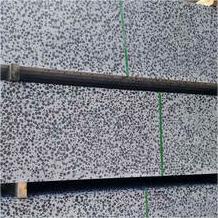
Definitions and Key Differences
Understanding what a concrete foaming agent is and how it works is essential before comparing protein and synthetic types. Protein based foaming agents are derived from natural proteins such as animal collagen or plant proteins. They create stable foam by forming a tough, elastic film around air bubbles, resulting in a closed-cell structure that resists collapse. Synthetic foaming agents are chemically manufactured surfactants (e.g., alkyl sulfates, alkyl ether sulfates) that lower surface tension to generate foam quickly. They produce larger, more open bubbles that are less stable over time and under pressure.
The main difference lies in foam structure and stability. Protein based foams tend to have smaller, more uniform bubbles with higher mechanical strength, while synthetic foams are larger, less uniform, and more prone to coalescence. This directly impacts the properties of the final lightweight concrete, such as density, compressive strength, and thermal insulation.
Performance Comparison: Density, Strength, and Stability
This comparison demonstrates how a concrete foaming agent cuts density by 50% without sacrificing strength. Both types can achieve similar low densities (e.g., 300–800 kg/m³), but protein based foaming agents often maintain a more consistent density distribution due to finer cell structure. Lightweight concrete made with protein based foaming agents typically exhibits higher strength at the same density because the closed-cell foam provides better load-bearing capacity. Synthetic foaming agents may produce lower strength, especially when used at high foam content.
Protein based foam can withstand longer mixing times and higher shear forces without collapsing, whereas synthetic foam may break down more easily, leading to uneven density and potential strength loss. Synthetic foaming agents are easier to handle, foam faster, and require less energy to generate foam.
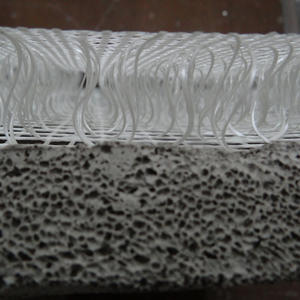
Application Scenarios and Suitability
Before selecting, be aware of the 5 critical mistakes that ruin lightweight concrete. Protein based foaming agents are commonly used in structural lightweight concrete, precast elements, and insulation layers where strength and long-term durability are important. They are also preferred in projects requiring fire resistance and sound insulation due to the finer cell structure. Synthetic foaming agents are more suitable for non-structural applications such as lightweight fill, void filling, and thermal insulation boards where cost is a primary concern and extreme strength is not required.
In some cases, a blend of both types can be used to balance cost and performance. For example, a synthetic foaming agent may be used for initial foam generation, while a protein based stabilizer is added to improve foam stability. The choice should be based on the specific performance requirements of the project, including target density, strength, workability, and environmental conditions.
Cost and Sustainability Considerations
Synthetic foaming agents are generally less expensive than protein based ones, both in raw material cost and production. They are also widely available and have a longer shelf life. The lower cost may come at the expense of performance and environmental footprint. Many synthetic foaming agents are derived from petrochemicals and may have higher carbon emissions during production.
Protein based foaming agents are often considered more sustainable if sourced from renewable or waste protein streams. They are biodegradable and have lower toxicity. They can be more expensive and may have shorter shelf life or require special storage conditions. The overall sustainability assessment should include the full lifecycle, from raw material extraction to disposal.
Selection Guide: How to Choose the Right Foaming Agent
To choose between protein based and synthetic foaming agents, start by defining your project requirements: target density, required compressive strength, curing conditions, and budget. If strength and structural integrity are critical, protein based foaming agents are generally recommended. For cost-sensitive, non-structural applications, synthetic foaming agents can be a viable option.
Consider the mixing equipment and process. Protein based foaming agents may require longer mixing time or specific temperature control. Synthetic foaming agents are more forgiving. Test trials with your specific materials are essential to verify performance. Always consult the manufacturer's technical data and conduct small-scale tests before large-scale production.
Frequently asked questions
Can protein based and synthetic foaming agents be used together?
Yes, blends are sometimes used to combine the cost benefits of synthetic agents with the stability of protein based agents. However, compatibility must be tested, as improper ratios can cause foam collapse or inconsistent density.
Which foaming agent gives better thermal insulation?
Protein based foaming agents typically produce finer, more uniform cells that can improve thermal insulation by reducing heat transfer through the foam. However, the difference is often marginal, and both types can achieve low thermal conductivity if properly formulated.
Are synthetic foaming agents harmful to the environment?
Some synthetic foaming agents are derived from petrochemicals and may be less biodegradable. However, many modern formulations are designed to be environmentally friendly. Always check the specific product's environmental data sheet.
How do I test the foam stability of a foaming agent?
A common method is to measure the foam volume and its collapse over time under controlled conditions. For concrete applications, the foam should be mixed with cement paste and the resulting density and strength should be evaluated. Refer to ASTM C796 or similar standards.
Waterreduceragent is a supplier of Concrete Admixture with over 12 years of experience in nano-building energy conservation and nanotechnology development. It accepts payment via Credit Card, T/T, West Union and Paypal. TRUNNANO will ship the goods to customers overseas through FedEx, DHL, by air, or by sea. If you are looking for lightweight concrete relative materials, please feel free to contact us and send an inquiry.