Professional solutions on concrete addtives, Concrete Foaming Agent, Superplasticizer, CLC Blocks Additives, and foaming machine

Choosing the Right Superplasticizer for SCC: A Practical Guide to High-Performance Concrete
The choice of superplasticizer for self-consolidating concrete SCC isn’t just about fluidity-it’s the foundation for achieving strength without sacrificing stability. The long-dominance of Polycarboxylate Ether (PCE) superplasticizers seems clear-cut, but the reality on-site is a nuanced conversation between performance, compatibility, and economics. We’ve spent decades in the lab and on the pour deck watching how the choice here determines everything from the initial slump flow to the long-term durability of the structure. Let’s walk through this not as a theoretical exercise, but as a practical decision every concrete professional faces.
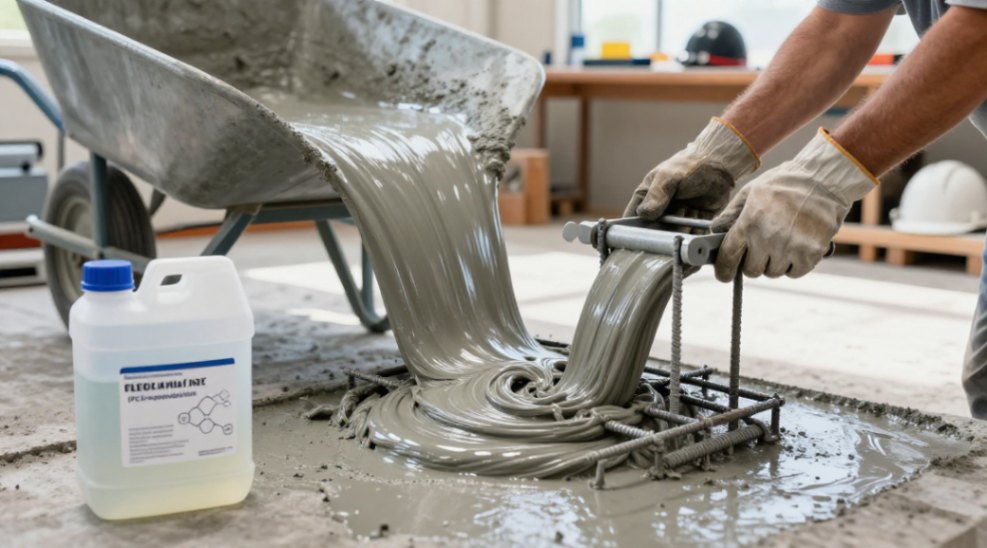
The Heart of the Matter: Chemistry in the Mix
To understand the choice, we need to start at the molecular level. Older generation superplasticizers, primarily based on sulfonated naphthalene (SNF) or melamine (SMF) formaldehyde condensates, work through electrostatic repulsion. They give the particles a negative charge, pushing them apart. They’re effective, familiar, and often less expensive. However, their performance is a bit of a blunt instrument. They can be sensitive to cement chemistry, leading to unpredictable slump loss, and achieving the extreme, stable flow of modern SCC often requires high dosages that risk side effects like excessive retardation or air entrainment issues.
Polycarboxylate Ether (PCE) superplasticizers operate differently. They use a mechanism called steric hindrance. Imagine a comb: the backbone adsorbs onto the cement particle, while the long polymer ‘teeth’ extend into the water, physically blocking particles from coming close. This is a more powerful, more tunable form of dispersion. The major advantage? You get significantly higher water reduction and fluidity at lower dosages. The workability retention is superior and more predictable, which is non-negotiable for the extended placing windows of SCC. But this sophistication comes with complexity. PCEs are highly sensitive to the mix’s ‘soup’-the specific combination of cement, supplementary materials like slag or fly ash, and other admixtures. What works perfectly with one cement source can lead to rapid slump loss or severe segregation with another.
| Superplasticizer Type | Core Mechanism | Primary Advantages | Key Considerations |
|---|---|---|---|
| SNF / SMF | Electrostatic Repulsion | Cost-effective, predictable with compatible cements, good early strength. | Higher dosage often needed for SCC flow, prone to rapid slump loss, sensitive to sulfate content. |
| PCE | Steric Hindrance | High water reduction, excellent slump retention, lower dosage, tunable molecule. | Higher cost, critical compatibility testing required, can over-disperse leading to segregation. |
Beyond Flow: The Ripple Effects on Your Concrete
Your superplasticizer choice doesn’t operate in a vacuum. It sends ripples through every property of the hardened concrete. A well-dosed PCE, by enabling ultra-low water-cement ratios while maintaining flow, directly translates to higher early and ultimate compressive strength. Durability metrics like chloride ion penetration resistance and freeze-thaw performance see a dramatic boost. However, that same powerful dispersion can be a double-edged sword. If the paste viscosity isn’t properly managed-often through the judicious use of viscosity-modifying admixtures (VMAs) or optimized fines content-you risk bleeding and segregation. The concrete might flow beautifully but leave a trail of aggregate behind. With older sulfonates, the challenge is often the opposite: maintaining enough flow to pass through congested reinforcement without the mix becoming sticky and prone to blocking.
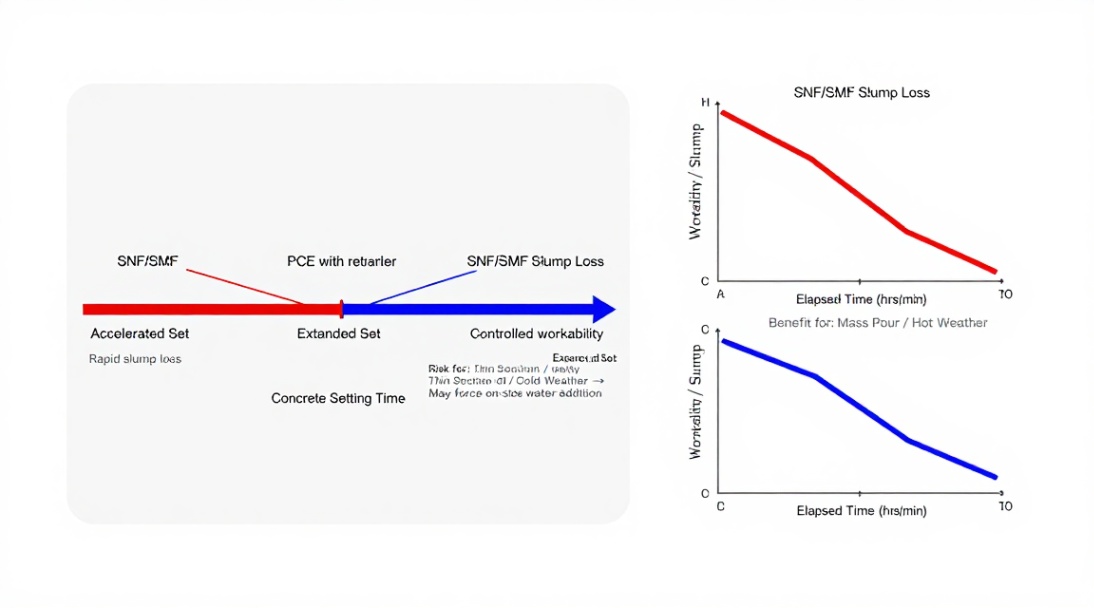
Setting time is another crucial battlefield. PCEs are often formulated with retarding agents to extend workability. For mass pours or in hot weather, this is a benefit. For thin sections or cold weather placements, it can delay finishing and formwork stripping. SNF/SMF admixtures typically have less impact on set time, but their rapid slump loss can create a false sense of urgency, forcing crews to add water on site-the cardinal sin of concrete practice. The control PCE offers over the rheological ‘clock’ is a significant operational advantage, but only if you understand and plan for its timing.
The Art of Implementation: Batching, Testing, and Troubleshooting
Selecting the chemical is only half the battle. How you introduce it to the mix is equally critical. We’ve seen too many projects where a perfect lab mix fails on-site due to batching sequence errors. The golden rule: add the superplasticizer, especially PCE types, to the mixing water or with it, never onto dry powder. This ensures even distribution from the first moment of mixing. For central mix plants, a delayed addition-adding a portion of the superplasticizer after 30-60 seconds of initial mixing-can dramatically improve efficiency and reduce total required dosage. This isn’t a minor detail; it’s a standard best practice that separates adequate SCC from exceptional SCC.
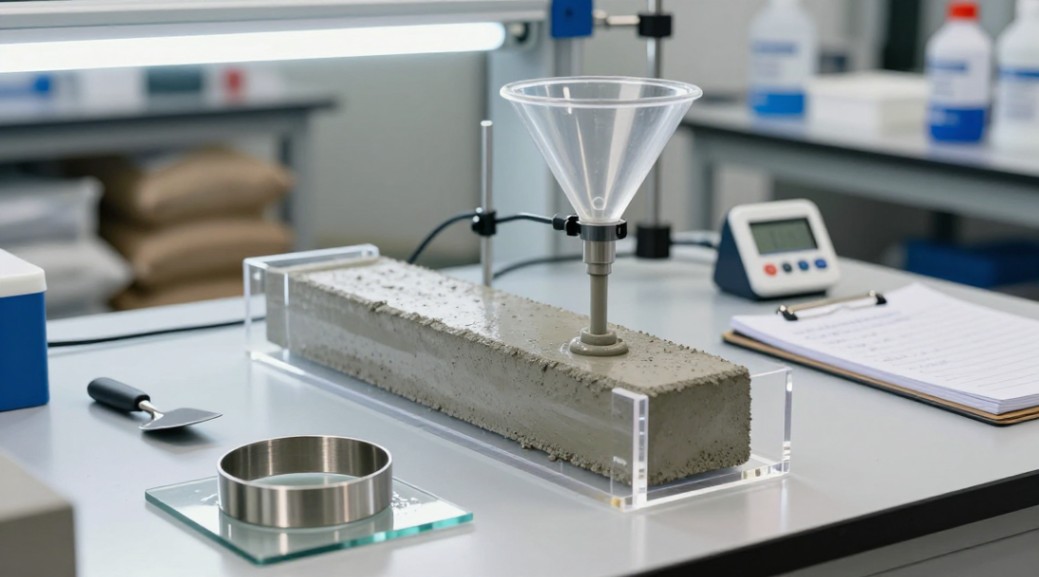
Testing must move beyond the simple slump flow test. The J-Ring or L-Box test assesses passing ability around rebar. The V-Funnel or Orimet test measures viscosity and flow speed. You need this full suite to diagnose issues. Is the mix segregating? Increase the VMA or fines content. Is it blocking in the L-Box? Re-evaluate your coarse aggregate grading or consider a superplasticizer with a different molecular structure designed for better passing. Common challenges have direct, if not always simple, solutions. Rapid slump loss often points to cement-superplasticizer incompatibility or high ambient temperatures-solved by switching admixture brands or using a hydration-stabilizing version. Excessive bleeding suggests the paste lacks viscosity; a VMA is your friend here.
A Forward-Looking Conclusion
So, what’s the verdict? For the vast majority of modern SCC applications demanding high performance, durability, and precise control, a properly selected PCE-based superplasticizer for self-consolidating concrete SCC is the unequivocal choice. Its benefits in strength, durability, and workability retention are simply too significant to ignore. However, dismissing older sulfonate technology outright is a mistake. In lower-performance SCC mixes, with very well-understood and compatible local materials, and where budget is the primary constraint, they remain a viable, proven tool. The future lies in smarter admixtures: PCE molecules engineered for specific cement types, ‘green’ variants with reduced carbon footprints, and multi-functional blends that combine water reduction, viscosity control, and shrinkage reduction in one bottle. The core principle remains. Don’t just pick a product from a datasheet. Test it with your exact materials, under your expected conditions. That’s how we build confidence, and ultimately, better structures.
We are the global leader in lightweight concrete and advanced engineered foam solutions. Known globally for its commitment to research, innovation, and applied expertise, we have been providing engineered foam solutions since the early 2012’s.
We can supply high-quality concrete admixture and foam concrete related products all over the world.
The company has a professional technical department and quality supervision department, a well-equipped laboratory, and equipped with advanced testing equipment and after-sales customer service center.
If you are interested, please feel free and contact us.