Professional solutions on concrete addtives, Concrete Foaming Agent, Superplasticizer, CLC Blocks Additives, and foaming machine

Stop Ruining Your Slabs: The Mid-Range Water Reducer Warning Every Contractor Needs to Hear
A Warning You Can’t Afford to Ignore
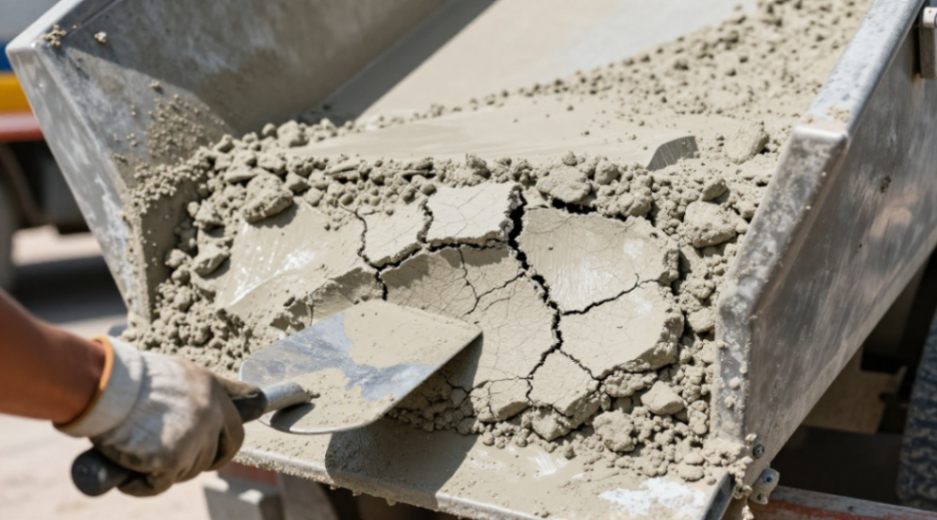
Have you ever watched a crew desperately trying to place a concrete mix that’s already going stiff at the truck chute? Or maybe you’ve been the one signing off on a slab, only to find a spiderweb of cracks six months later. You followed the spec, used an admixture, and still got burned. The problem isn’t the concept of a mid-range water reducer for concrete slabs; it’s the cavalier, almost superstitious way the industry often uses them. We treat them like a magic potion for workability, ignoring the delicate chemistry at play. After two decades of troubleshooting failures and optimizing pours, I’m here to deliver a blunt warning: misuse this tool, and you will compromise the entire structural integrity of your project. This isn’t theory. It’s the costly reality I’ve seen repeated on job sites from residential driveways to million-square-foot warehouse floors.
The Deceptive Simplicity of “Just Add More”
The greatest lie told on the concrete site is that admixtures are simple. A mid-range water reducer operates in a precise zone, typically achieving a 6% to 12% water reduction. This is its power and its peril. Unlike standard reducers that offer minimal effect, or high-range superplasticizers that can drastically transform a mix, the mid-range product lives in the goldilocks zone. It’s designed for the sweet spot of concrete slab construction: enough workability for easy placement and finishing, without the extended set times or cost premium of high-range products. But here’s the trap. When the mix looks a little dry, the instinct is to overdose. You chase workability with more admixture, not more water. Sounds responsible, right? It’s a disaster in the making. Excessive dosage can lead to severe retardation, delayed finishing windows, and a surface that crusts while the underlying concrete remains plastic. I’ve seen crews trowel a slab into a sealed, blistered mess because they fought the clock set by their own chemical miscalculation. The data from independent labs is stark: a variance beyond the recommended dosage by just 20% can alter initial set by over 90 minutes. You’re not just adjusting flow; you’re rewriting the concrete’s internal clock.
The Hidden Compromises in Your Mix Design
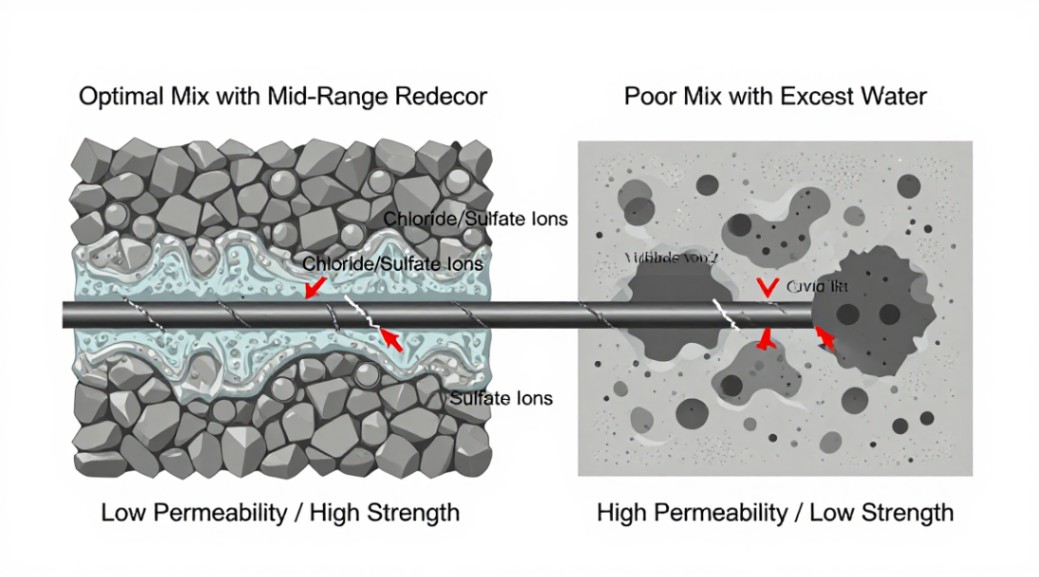
Let’s talk about what you’re really buying. The core purpose is balance. For a concrete slab, this balance is everything. A properly dosed mid-range reducer delivers that crucial workability and strength balance, allowing the mix to consolidate around rebar and flow into corners without segregating. It reduces the water-cement ratio, which directly translates to higher early and ultimate compressive strength. More critically for durability, it reduces permeability. A denser slab resists chloride ingress and sulfate attack. This is where the cost-effectiveness for mid-size projects like commercial floors and residential slabs becomes clear. You get premium performance without the superplasticizer price tag. But this entire house of cards collapses if you ignore compatibility. Never assume your mid-range water reducer plays nice with every other chemical in the drum. Its interaction with air-entrainers is particularly sensitive. Adding them in the wrong order, or using incompatible brands, can destroy your air-void system. You’ll get a number on the meter, but the bubbles will be large and unstable, offering zero protection against freeze-thaw cycles. The slab will spell in a single winter. The rule is non-negotiable: conduct job-site compatibility tests with your exact materials, in your local water, before the pour. Don’t rely on a data sheet from three years ago.
The Pour Where Everything Went Right (And Why)
I want to describe a perfect pour. Not a theory, but a 40,000 sq. ft. industrial floor we placed in variable weather. The forecast promised sun, then rain, then a temperature drop. Standard practice would be to panic, order a hot mix, and blanket it. We took control with chemistry. We selected a mid-range water reducer known for consistent performance in different weather conditions. Its predictable set time gave us a stable window. Our batching and mixing procedures were militant. The admixture was charged into the mixing water in the truck drum before adding aggregate, ensuring total dispersion. We didn’t add a single extra ounce at the site. The result was a mix with perfect cohesion-it flowed without bleeding, finished like butter under the power trowel, and cured into a monolithic, low-permeability surface. The placement and finishing advantages were not luck; they were engineered. The client avoided costly delays and got a slab with a proven extended service life. The solution wasn’t a secret product. It was the disciplined, informed application of the right tool. This is the standard you must demand.
Your Path to a Bulletproof Slab
So, what should you do? First, abandon the one-size-fits-all mentality. Selecting the right mid-range reducer for your mix design is a technical decision, not a brand loyalty contest. Analyse your cementitious materials, your aggregates, and your project’s specific demands for set time and finishability. Second, treat the recommended dosage as a starting point for testing, not a prescription. Third, control your environment. In hot weather, a mid-range reducer can help manage slump loss; in cold weather, understand how it affects the thermal profile of your setting concrete. Finally, view the admixture as one component in a system. Its job is to optimize the potential locked in your mix design, not to rescue a bad one. If your aggregate gradation is poor or your cement content is marginal, no amount of chemical will give you a durable slab. The goal is a dense, impermeable, and strong end product. When you specify and use a mid-range water reducer for concrete slabs with this level of rigor, you move from guessing to engineering. You stop fixing failures and start building legacies. Your next pour should begin with a lab mix, not a hope.
We are the global leader in lightweight concrete and advanced engineered foam solutions. Known globally for its commitment to research, innovation, and applied expertise, we have been providing engineered foam solutions since the early 2012’s.
We can supply high-quality concrete admixture and foam concrete related products all over the world.
The company has a professional technical department and quality supervision department, a well-equipped laboratory, and equipped with advanced testing equipment and after-sales customer service center.
If you are interested, please feel free and contact us.