Professional solutions on concrete addtives, Concrete Foaming Agent, Superplasticizer, CLC Blocks Additives, and foaming machine

Superplasticizer for SCC: The Craftsman’s Guide to Predictable, Flowing Concrete
Let me guess. You’ve poured your share of concrete. You know the recipe. Yet, there you are, staring at a mix that’s supposed to be self-consolidating. Instead of flowing like honey around tight rebar cages, it sits there. It’s stubborn. It segregates. Or worse, you get the flow right, but twenty minutes later, it’s a stiff, unworkable mass. Your placement schedule is in tatters, and the crew is looking at you. I’ve been there. That feeling of helplessness as a perfectly planned pour goes sideways is what keeps concrete professionals up at night. If this sounds familiar, take a breath. The gap between frustration and a flawless, flowing SCC pour is bridged by one critical component: a deep, practical understanding of the superplasticizer for self-consolidating concrete SCC. This isn’t about magic potions. It’s about control.
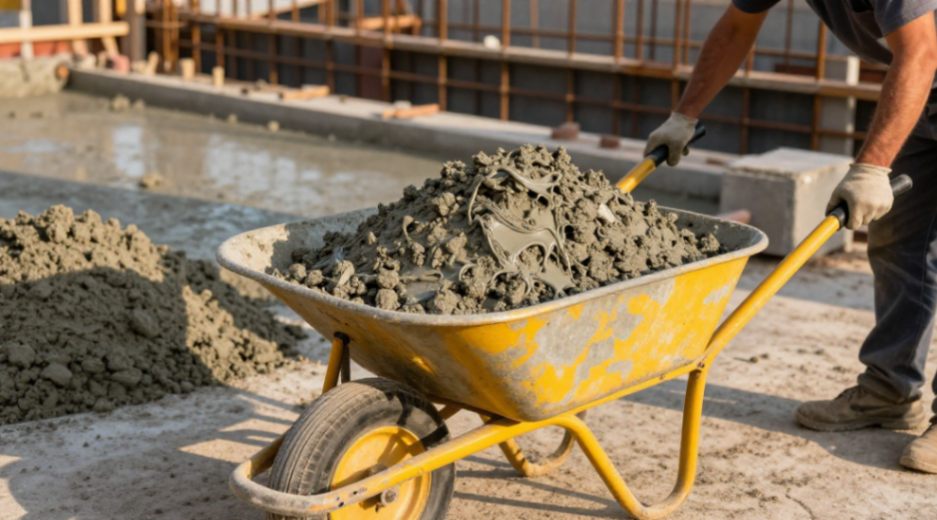
The Heart of the Modern SCC Mix
At its core, a superplasticizer for self-consolidating concrete SCC is not just a water reducer; it is the molecular maestro of your mix. Its primary role is one of dispersion. Imagine cement particles in water, huddled together in weak, flocculated clumps, trapping water uselessly between them. A superplasticizer’s job is to gently but firmly push these particles apart. This action, called deflocculation, releases all that trapped water to lubricate the mix. Suddenly, you have a concrete that flows under its own weight without needing vibration, yet holds its mortar tightly around the coarse aggregate to prevent segregation. The difference between a good and a failed SCC mix often rests entirely on how well you’ve chosen and applied this chemical conductor.
Understanding Your Tool: The Chemistry of Flow
Not all superplasticizers are the same. The journey began with sulfonated melamine and naphthalene-based formulations. They were revolutionary, but they had a temper. Slump loss could be rapid. Today, the undisputed champion for superplasticizer for self-consolidating concrete SCC is the Polycarboxylate Ether, or PCE. Why? Its mechanism is elegantly precise. A PCE molecule has a long backbone that adsorbs onto a cement particle. From this backbone, numerous ‘comb’ teeth extend into the water, creating a powerful steric repulsion force. It’s like putting the same magnetic pole on every particle-they repel each other. This gives you superior water reduction and, crucially, much better control over slump retention. You can tailor the molecular structure of the PCE to prioritize rapid initial flow, extended workability, or a balance of both.
A Step-by-Step Framework for Success
Let’s move from theory to the truck. Here is your action plan.
Step One: The Compatibility Cheque. This is non-negotiable. Never assume a superplasticizer will perform identically with every cement or supplementary material. You must run a mini-slump test in the lab first. Combine your proposed cement, fly ash, slag, and the superplasticizer. Watch the flow. Does it develop quickly and smoothly? Does it maintain for 60 to 90 minutes? Any rapid loss or strange bubbling tells you there’s a chemical mismatch. This one afternoon of testing prevents weeks of headaches on site.
Step Two: Determining the Sweet Spot Dosage. More is not better. The dosage curve for a PCE superplasticizer is logarithmic. A little gives a big boost in flow. Adding more gives diminishing returns, and beyond the saturation point, you risk over-lubrication. This leads to segregation-the paste flows out, leaving the aggregate behind. Start with the manufacturer’s recommendation, typically between 0.8% to 1.5% by weight of cementitious material. Then, in your trial batch, adjust in small increments (0.1% steps) while measuring the slump flow. Stop when you achieve your target flow diameter, usually between 24 to 30 inches for typical SCC, while the concrete remains cohesive.
Step Three: Validating with Performance Tests. Slump flow is your first cheque. But for SCC, it’s only half the story. You must confirm it can pass through reinforcement without blocking. This is where the J-Ring test becomes your best friend. Pour the concrete into a slump cone centered inside a J-Ring. Lift the cone and measure the difference in height between the concrete inside the ring and just outside it. A difference of less than 10mm (0.4 inches) typically indicates excellent passing ability. It tells you the viscosity is right-the concrete is fluid but has enough internal friction to hold the coarse aggregate in suspension as it navigates obstacles.
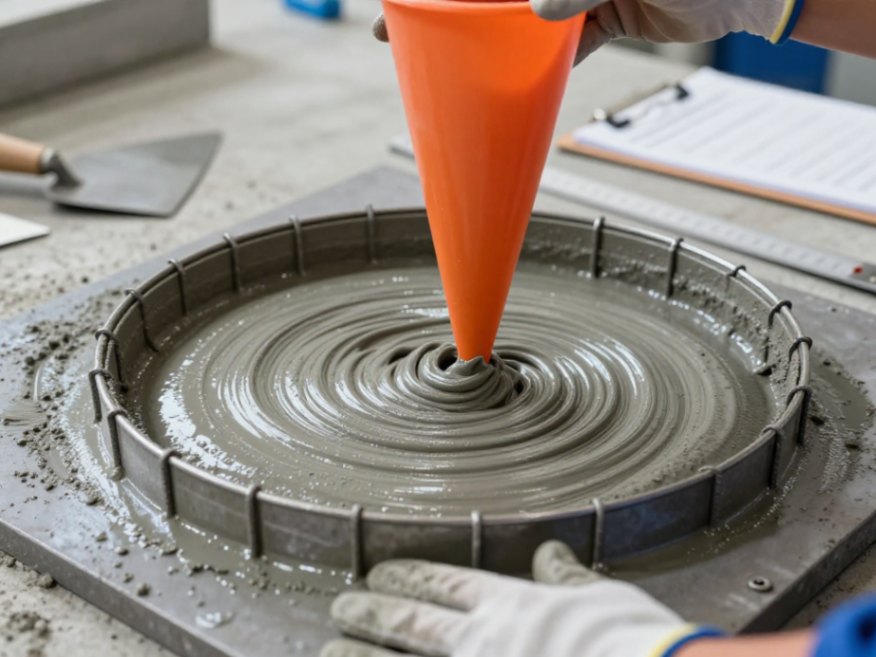
Step Four: Mastering Batching and Placement. Sequence matters. For optimal dispersion, add about 80% of your mixing water first. Then add all aggregates and powders. Mix until uniform. Now, add the majority of your superplasticizer with the remaining mixing water. This method ensures the chemical is distributed evenly when it meets the cement. If you experience rapid slump loss on-site, have a plan for a controlled ‘re-tempering’ dose. Have a small, measured amount of superplasticizer and additional water ready. Adding only water weakens the mix. A small, well-calculated dose of admixture can often restore flow without compromising strength.
Navigating Common Pitfalls
Temperature is your silent adversary. High temperatures accelerate the cement’s reaction, which can burn through your superplasticizer’s effectiveness, causing rapid slump loss. On hot days, consider using a retarding-type PCE or plan for shorter transport and placement times. Conversely, cold weather slows everything down, which can be an advantage for workability but requires attention to set times. The key is to know your specific admixture’s behavior. Over-dosage, as mentioned, leads to segregation. Under-dosage gives you a stiff, non-flowing mix that defeats the purpose of SCC. Always conduct site-specific trial batches under expected weather conditions.
From Theory to Reality: A Tightly Packed Column
I recall a project involving the core columns of a high-rise. The rebar density was extreme-a true maze of steel. Conventional concrete was impossible. Our designed SCC, built around a robust, slump-retaining PCE superplasticizer, had to flow horizontally for 15 feet and then vertically, filling the form from the bottom without a single vibration needle. The margin for error was zero. We spent days on compatibility tests and dialing in the J-Ring performance. On pour day, watching that concrete move like a thick fluid, completely enveloping every bar and leaving a smooth, honey-like surface as it rose, was the ultimate validation. It performed perfectly because we respected the chemistry and followed the process.
The Path Forward and Your Next Move
The future points toward even more sophisticated ‘high-range water reducers’ with multiple functionalities-self-curing, shrinkage reduction, and enhanced durability built into the polymer. Sustainability is also driving the development of bio-based and lower-carbon admixtures. But the fundamentals remain. Your success with SCC will always hinge on your command of the admixture. This knowledge transforms the superplasticizer for self-consolidating concrete SCC from a mysterious additive into your most predictable, powerful tool.
Now, it’s your turn to stop guessing and start controlling. Don’t risk your next critical pour on assumptions. The single most effective action you can take is to rigorously test the compatibility and performance of your chosen superplasticizer with your exact materials. If you are looking for a reliable, high-performance PCE superplasticizer engineered specifically for the demanding requirements of modern SCC, I strongly recommend you evaluate our flagship product, FlowMaster Pro SCC. Its balanced formulation provides exceptional slump retention and segregation resistance, giving you the window of workability you need. Visit our product page to request a technical data sheet and, more importantly, a free sample for your own compatibility trials. Take control of your mix today.
We are the global leader in lightweight concrete and advanced engineered foam solutions. Known globally for its commitment to research, innovation, and applied expertise, we have been providing engineered foam solutions since the early 2012’s.
We can supply high-quality concrete admixture and foam concrete related products all over the world.
The company has a professional technical department and quality supervision department, a well-equipped laboratory, and equipped with advanced testing equipment and after-sales customer service center.
If you are interested, please feel free and contact us.