Professional solutions on concrete addtives, Concrete Foaming Agent, Superplasticizer, CLC Blocks Additives, and foaming machine

From Plasticity to Performance: How Polycarboxylate Ether Superplasticizers Redefine High-Slump Concrete
The Hidden Variable in Your High-Slump Headaches
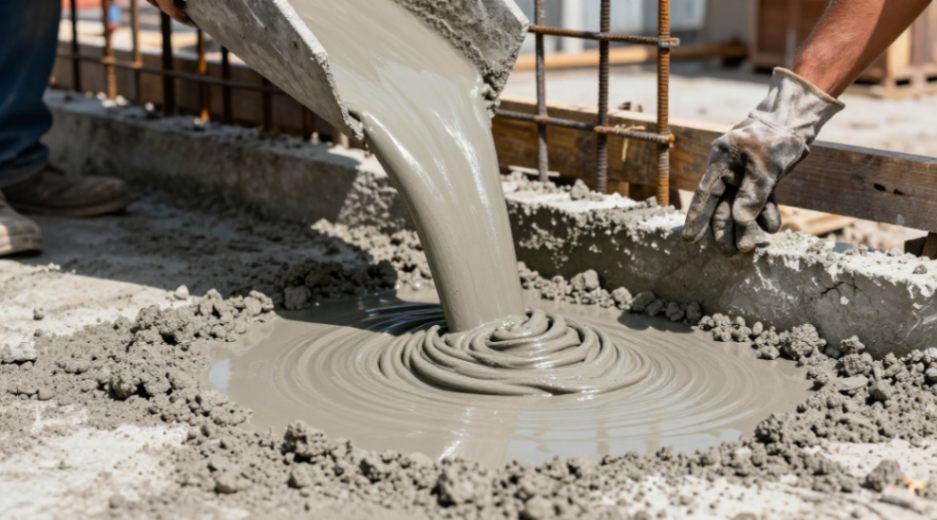
You’ve seen it happen. The plan called for a beautifully fluid, self-levelling mix-the kind that flows effortlessly into intricate forms. You added more water. The slump came up, sure. But then the strength lagged. The surface bled. Or worse, after 30 minutes on a hot day, the pour turned stiff and uncooperative. Your crew had to fight the concrete instead of placing it. That frustration, the costly slowdown, the nagging compromise between workability and durability-it defines the old way of doing things. Today, that compromise is unnecessary. The solution isn’t about adding more of anything. It’s about a smarter molecule: the polycarboxylate ether superplasticizer for high slump concrete.
Beyond Water Reduction: The Physics of Flow
Traditional water reducers worked by imparting a negative charge to cement particles, making them repel each other. It was effective, but crude. The effect often dissipated quickly, sensitive to mix ingredients and temperature. The polycarboxylate ether (PCE) molecule represents a fundamental shift in design. Think of it as a precision tool instead of a blunt instrument. Its backbone adsorbs onto the cement grain. Long, comb-like polymer chains extend out into the water-filled space between particles. This creates a powerful physical barrier-steric hindrance-that keeps particles apart. The result is a dramatic dispersion of cement flocs with minimal water. This mechanism is why PCEs deliver such robust slump retention. The effect is more physical than electrostatic, making it less vulnerable to being “used up” by the chemistry of the mix.
The Customization Revolution
This isn’t a one-size-fits-all admixture. The real power of PCE technology lies in molecular engineering. By varying the length of the backbone, the density and length of the “teeth” on the comb, and the chemical groups involved, manufacturers can tailor performance. Need a mix that remains flowable for two hours for a large foundation pour? There’s a PCE for that. Need rapid early strength development in a precast plant? A different PCE profile handles that. This customization drives its dominance in applications from self-consolidating concrete (SCC) to high-strength pumped mixes. It gives us the control we’ve always wanted.
The On-Site Reality and Industry Shift
The theory is clean. The job site is messy. We know the questions that really matter. How does it interact with my local cement, which might have high alkali content? What if my aggregate has a lot of clay fines? Experienced crews on forums will tell you the key is in the batching sequence. Adding the PCE superplasticizer too early, or with the initial mix water, can lead to severe slump loss. The best practice is to add it after a brief initial mixing, allowing the cement particles to be wetted first. This ensures optimal adsorption and performance. Compatibility with other admixtures, like retarders or air-entrainers, must also be tested in trial batches-never assumed.
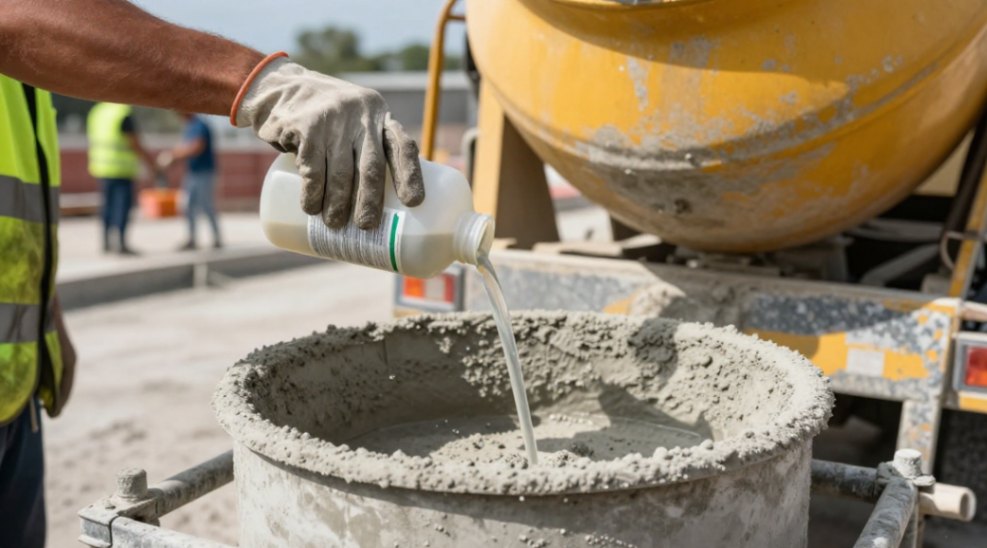
The trend data is clear. As global construction pushes for faster schedules, more complex architectures, and higher durability standards, the demand for reliable high-workability concrete grows. This directly fuels the innovation and adoption of advanced PCEs. They are no longer a “special” admixture; they are becoming the standard for any project where predictable, high-quality placement is critical. The move is towards systems that offer not just water reduction, but comprehensive control over rheology from the plant through final set.
Delivering More Than Just Slump
The ultimate value of a well-formulated polycarboxylate ether superplasticizer for high slump concrete is measured long after the pour. By enabling a low water-cement ratio even in highly fluid mixes, it lays the groundwork for superior durability. Density increases. Permeability drops. The resistance to chloride ingress, sulfate attack, and freeze-thaw cycles improves fundamentally. You get the workability you need for efficient placement without mortgaging the structure’s future. From a sustainability angle, this is profound. It allows for the use of supplementary cementitious materials more effectively, reducing the carbon footprint of the mix while enhancing long-term performance. It turns a placement challenge into a durability solution.
The conversation has moved on. The question is no longer “Can we achieve a high slump?” It is “How do we engineer the entire rheological profile of our concrete to match the pace and precision of modern construction?” The polycarboxylate ether superplasticizer is the tool that makes that engineering possible. It represents a shift from coping with material behavior to commanding it. Your next mix shouldn’t be a compromise. It should be designed.
We are the global leader in lightweight concrete and advanced engineered foam solutions. Known globally for its commitment to research, innovation, and applied expertise, we have been providing engineered foam solutions since the early 2012’s.
We can supply high-quality concrete admixture and foam concrete related products all over the world.
The company has a professional technical department and quality supervision department, a well-equipped laboratory, and equipped with advanced testing equipment and after-sales customer service center.
If you are interested, please feel free and contact us.