Professional solutions on concrete addtives, Concrete Foaming Agent, Superplasticizer, CLC Blocks Additives, and foaming machine

Superplasticizers for Pumping Concrete Long Distances: The Definitive Field Guide
Are You Losing Slump and Battling Blockages on Your Long Pump Line?
You’ve set up the line for a 500-meter pour. The first few trucks flow smoothly. Then, the pressure gauge starts climbing. The crew adds water at the hopper, trying to keep things moving. By the time the concrete reaches the end of the line, it’s stiff, segregated, and threatening to block the pipe completely. This frustrating, costly scenario is all too common. The solution isn’t magic; it’s a deep understanding of superplasticizers for pumping concrete long distances. As a veteran in this field, I’ve guided countless projects out of this exact bind. Let’s walk through the practical steps to ensure your next long-distance pump is a success.
Step 1: Understand Your Concrete’s “Lubricity”
Pumping concrete isn’t about pushing a solid. You’re shearing a lubricating layer of paste against the pipe wall. Friction is your enemy. A standard mix loses this lubricating layer over distance due to pressure and time. Water addition destroys the design strength and causes segregation. This is where a high-range water-reducing admixture, a superplasticizer, becomes non-negotiable. Its primary job for pumping is twofold: drastically lower the water demand at the batching plant to create a strong, dense matrix, and then provide exceptional slump retention to maintain that critical lubricating layer throughout the entire journey. Think of it as engineering the concrete’s internal slip factor.
Step 2: Select the Right Type for the Job
Not all superplasticizers are equal for long-haul pumping. The evolution from older sulfonated naphthalene or melamine formaldehyde condensates (SNF, SMF) to modern polycarboxylate ether (PCE) based superplasticizers was a game-changer. PCEs offer superior slump retention and allow for much lower water-to-cement ratios. They give you control. You need to match the admixture‘s performance profile to your specific timeline and environmental conditions. Use this comparison to guide your initial selection:
| Admixture Type | Key Mechanism | Best For Long-Distance Pumping? | Critical Consideration |
|---|---|---|---|
| Standard Plasticizer (Lignosulfonate) | Moderate water reduction (~5-10%) | No | Limited slump retention; not for high-pressure pumps. |
| Mid-Range Water Reducer | Good water reduction (~8-15%) with some retardation | For moderate distances | Useful for hot weather but may lack the ultimate flow needed for very long lines. |
| First-Gen Superplasticizer (SNF/SMF) | High water reduction (~12-25%) | Yes, with caution | Slump loss can be rapid; timing of addition is critical to avoid quick slump loss. |
| PCE Superplasticizer | Very High water reduction (~25-40%) | Yes, the preferred choice | Excellent slump retention and workability preservation; allows for highly fluid, yet cohesive, low-viscosity mixes ideal for pumping. |
Step 3: Master the Onsite Batching Sequence
This is where theory meets the mixer truck. The wrong addition sequence can ruin your carefully designed mix. Follow this protocol:
- Batch the Fundamentals: Load 75-80% of your mixing water into the drum.
- Add Aggregates and Cement: Introduce your coarse and fine aggregates, followed by the cementitious materials (cement, fly ash, slag).
- Initial Mixing: Mix for 30-60 seconds to create a uniform base.
- The Superplasticizer Addition: Add the pre-measured superplasticizer to the remaining 20-25% of the mixing water. Pour this solution into the drum. This delayed addition, known as “post-dosing,” is crucial. It prevents admixture absorption by the cement particles before full hydration begins, maximizing efficiency and slump retention.
- Final Mix: Mix for a minimum of 3-5 minutes at full drum speed to achieve complete, homogeneous dispersion.
Never add undiluted superplasticizer directly onto dry cement. Never use the admixture dispenser as a substitute for proper water calculation. Always conduct trial batches with your specific materials to determine the optimal dosage, which typically ranges from 0.5% to 2.0% by weight of cementitious material.
Step 4: Design for Cohesion and Flow
A pumpable mix needs more than just flow; it needs cohesion to resist segregation under pressure. Your concrete mix design must support the admixture. Key adjustments include:
- Increase Paste Content: Ensure sufficient fines (cement + supplementary materials like fly ash) to coat all aggregates and maintain the lubricating layer.
- Optimize Aggregate Gradation: A well-graded, smooth, rounded aggregate reduces internal friction. Avoid harsh, gap-graded, or jagged stone.
- Consider Viscosity Modifying Admixtures (VMAs): For extreme distances or highly fluid mixes, a small dose of a VMA can enhance cohesion and prevent bleeding without sacrificing flow.
- Manage Set Times: In hot weather or for very long lines, discuss compatibility with retarders with your admixture supplier. A retarding-type PCE is often the integrated solution.
Step 5: Anticipate and Solve Common Field Challenges
Even with perfect planning, monitor these points:
- Over-Dosage: Too much superplasticizer can cause excessive bleeding, segregation, or delayed setting. Stick to your trial batch data.
- Rapid Slump Loss: If slump disappears too quickly, check the cement temperature, the addition sequence, and the admixture compatibility. A secondary, small “re-dose” at the pump may be permitted but must be pre-planned and controlled.
- Compatibility with Air-Entrainment: Some superplasticizers can reduce air content. If the mix requires entrained air for freeze-thaw resistance, test for compatibility early. You may need to adjust the dosage of the air-entraining agent.
Putting It All Together: A Real-World Application
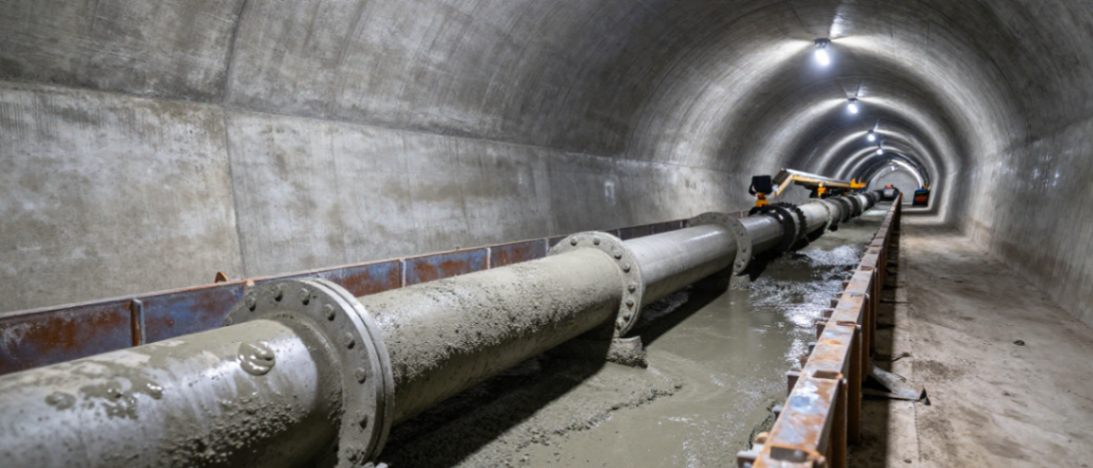
Consider a tunnel project requiring a 1.2-kilometer pump. The mix uses a 40% fly ash replacement and a PCE-based superplasticizer dosed at 1.2%. The slump at the plant is 200mm. After a 90-minute transit and pump time, the slump at the point of placement holds at 180mm. The concrete flows smoothly, fills the forms without vibration, and achieves a 50 MPa compressive strength at 28 days. This performance is only possible through the deliberate, knowledgeable use of superplasticizers for pumping concrete long distances.
Your Path to Flawless Pours
The complexity of long-distance pumping is tamed by fundamentals. Select a modern PCE superplasticizer for its slump retention. Follow a strict batching sequence with post-dosing. Design your mix for cohesion, not just flow. Test everything with your local materials before the pour day. This process isn’t guesswork; it’s applied science. For your next project, partner with a trusted admixture supplier, share your pump plan, and insist on trial mixes. The confidence of a smooth, blockage-free pour is the ultimate reward for getting these details right.
We are the global leader in lightweight concrete and advanced engineered foam solutions. Known globally for its commitment to research, innovation, and applied expertise, we have been providing engineered foam solutions since the early 2012’s.
We can supply high-quality concrete admixture and foam concrete related products all over the world.
The company has a professional technical department and quality supervision department, a well-equipped laboratory, and equipped with advanced testing equipment and after-sales customer service center.
If you are interested, please feel free and contact us.