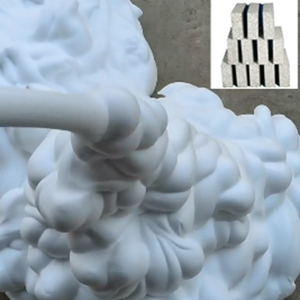
Professional solutions on concrete addtives, Concrete Foaming Agent, Superplasticizer, CLC Blocks Additives, and foaming machine

What Are Admixtures and How Do They Transform Modern Concrete?
1. Introduction
Just 48 hours ago, global construction leaders at the World Concrete Summit highlighted a major shift toward eco-friendly concrete admixtures, with companies like Chryso unveiling new polycarboxylate ether (PCE)-based superplasticizers that reduce cement usage by up to 30% while maintaining strength. This innovation underscores how admixtures are no longer optional—they’re essential for modern, sustainable building.
If you’ve ever wondered why some concrete pours stay workable for hours while others set in minutes, or how sidewalks survive freeze-thaw cycles without cracking, the answer lies in admixtures. These concrete additives—also called ad mixtures or chemical admixtures for concrete—are carefully engineered ingredients that modify the behavior of fresh or hardened concrete.
2. What Are Admixtures?
Admixtures are materials added to concrete during mixing, beyond the basic components of cement, water, and aggregates. They can be chemical or mineral-based and are used to improve workability, durability, setting time, strength, or appearance. Whether it’s a plasticizer for concrete or an integral waterproofer, each admixture serves a specific purpose.
The best admixture for concrete depends entirely on the project’s needs—from fast curing concrete additives for emergency repairs to surface retarder concrete for decorative finishes.
3. Major Types of Concrete Admixtures
Concrete admixture types fall into several functional categories. Understanding these helps contractors and engineers choose the right admixture used in concrete for any application.
- Water reducing admixtures: These include mid-range and high-range water reducers (like superplasticizers) that cut water content without sacrificing flow. A concrete water reducer improves strength and reduces permeability.
- Superplasticizers: Often called super plasticizers or PCE-based superplasticizers, these are the most powerful water reducers. Superplasticizer in concrete enables self-consolidating mixes and is vital for high-strength applications. Polycarboxylate ether superplasticizer is now the industry standard due to its efficiency and compatibility.
- Concrete accelerators: Accelerating admixtures for concrete shorten setting time and boost early strength—ideal for cold-weather pours or when formwork must be removed quickly. They directly impact concrete accelerator curing time.
- Concrete retarders: A concrete retarder admixture delays hydration, useful in hot climates or for long-haul deliveries. Admixture retarder types include sugar-based or lignosulfonate formulas.
- Air entraining admixtures: These introduce microscopic air bubbles into the mix, creating air entraining concrete that resists damage from freezing and thawing. An air entraining agent is crucial for pavements and bridges in cold regions.
- Waterproofing admixtures: From crystalline waterproofing admixture to cement waterproofing additive, these seal pores and block moisture. Waterproof admix or concrete waterproofing additive options include integral waterproofers that react chemically within the matrix.
- Mineral admixtures: Materials like fly ash, silica fume, or slag act as partial cement replacements, enhancing durability and sustainability. These are distinct from chemical admixtures but equally important.
4. Fiber Reinforcement and Specialty Additives
Fibers for concrete—whether polypropylene fibres for concrete, steel fibers for concrete, or even coconut fiber reinforced concrete—add tensile strength and crack resistance. Fiber reinforced concrete is widely used in industrial floors, shotcrete, and seismic zones.
Macro fibers and microfibers serve different roles: macro fibers bridge cracks structurally, while concrete microfiber controls plastic shrinkage. Products like Fibermesh concrete combine both for optimal performance. Carbon fiber reinforcement in concrete is emerging for ultra-high-performance applications.
Foaming agents are another niche but growing category. A concrete foaming agent creates lightweight cellular concrete (aircrete), used in insulation blocks and void filling. CLC foaming agent types range from protein-based to synthetic, with prices varying by performance and stability.
5. Practical Applications and Popular Brands
From home projects to skyscrapers, admixtures are everywhere. Home Depot concrete siding often uses fiberfor concrete mixes for durability, while Certainteed and Hardie concrete siding rely on fiber cement technology for a wood-like aesthetic without rot or pests.
For decorative work, stamped and colored concrete uses release agents and color powders alongside retarders to create patterns. Meanwhile, white cement—often paired with superplasticizer admixture—is favored for countertops and architectural finishes.
Leading brands like Chryso admixture offer tailored solutions, including fast-setting formulas and eco-conscious PCE superplasticizers. When selecting a concrete additive, always consider compatibility, dosage, and local climate.
6. Conclusion
Admixtures have revolutionized concrete from a basic building block into a high-tech, customizable material. Whether you need a concrete accelerator for rapid repairs, an air entraining cement for winter durability, or a waterproofing admixture for basements, there’s a specialized solution available. As sustainability drives innovation—like low-carbon superplasticizers and bio-based foaming agents—the future of concrete is smarter, stronger, and greener than ever.
Our Website founded on October 17, 2012, is a high-tech enterprise committed to the research and development, production, processing, sales and technical services of ceramic relative materials such as What. Our products includes but not limited to Boron Carbide Ceramic Products, Boron Nitride Ceramic Products, Silicon Carbide Ceramic Products, Silicon Nitride Ceramic Products, Zirconium Dioxide Ceramic Products, etc. If you are interested, please feel free to contact us.