Professional solutions on concrete addtives, Concrete Foaming Agent, Superplasticizer, CLC Blocks Additives, and foaming machine

Don’t Make These 4 Critical Mistakes with Structural Lightweight Concrete with Expanded Clay
You Cannot Treat This Like Ordinary Concrete
Structural lightweight concrete with expanded clay aggregate is not a simple drop-in replacement for normal-weight concrete. The biggest mistake you can make is assuming its behavior is identical. We’ve seen projects go sideways because teams treat it like standard concrete. The properties are fundamentally different, demanding a shift in design thinking and execution. Ignoring this invites risk.
1. Never Guess on the Mix Design
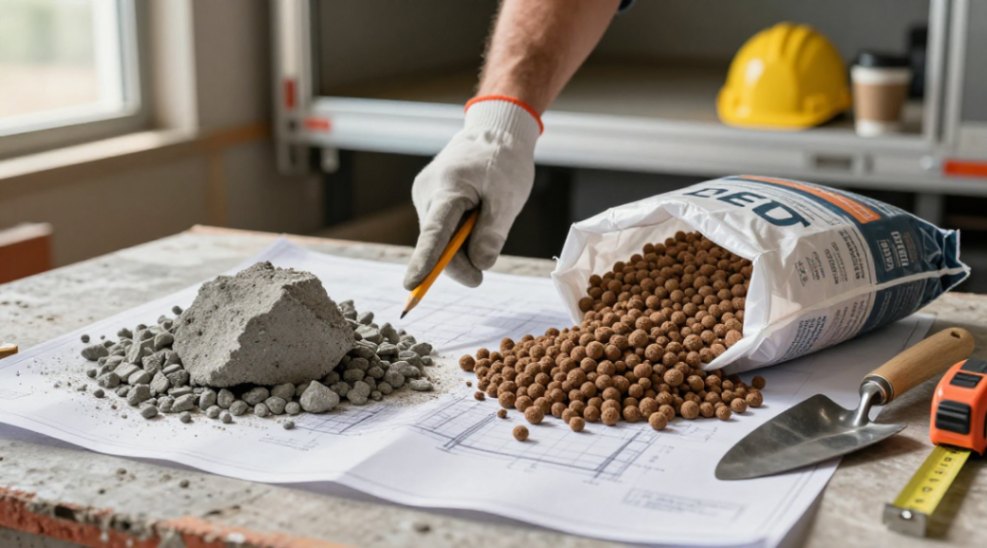
This is where the magic happens, or where the structure fails. With expanded clay aggregate, you’re dealing with a porous, absorptive material. The water demand is not the same. A common and disastrous error is using a normal-weight concrete mix design without adjustment. The aggregate will suck the water right out of your mix before hydration begins, leading to poor workability, low strength, and a compromised structural core.
You must account for aggregate absorption. Always pre-wet the expanded clay aggregate. Not to saturation, but to a controlled, surface-saturated-dry (SSD) condition. This prevents the aggregate from stealing mixing water. It’s a non-negotiable step we enforce on every project. Failure here guarantees a weak, inconsistent pour.
2. Never Underestimate the Strength-to-Weight Ratio
This material’s superpower is also its biggest design trap. Yes, structural lightweight concrete with expanded clay aggregate drastically cuts dead load. But you must design to its actual, specific mechanical properties, not the generic ones in your textbook.
| Property | Typical Impact vs. Normal-Weight Concrete | The Critical ‘Don’t’ |
|---|---|---|
| Compressive Strength | Achieves 20-40 MPa (3000-6000 psi), suitable for most structural applications. | Don’t assume equal density at equal strength. The lower modulus of elasticity changes deflection calculations. |
| Tensile Strength & Modulus of Elasticity | Lower. This affects crack control and serviceability. | Don’t ignore shrinkage and creep. They are higher. Your prestress losses and long-term camber will be different. Design for it. |
| Reduced Dead Load | Can be 25-35% lighter. This is the main benefit for seismic design and foundation savings. | Don’t just use the weight saving to make the building taller. First, use it to make the structure more robust, ductile, and efficient within the same footprint. |
We design for ductility and energy absorption, especially in seismic zones. The lower stiffness can be an advantage if you model it correctly. If you just swap materials in your software without updating the material model, you’re building a digital fantasy, not a real structure.
3. Never Assume Standard Placement & Curing
The finishing and curing of structural lightweight concrete with expanded clay aggregate demand a gentler touch. Here are the operational warnings we give our crews:
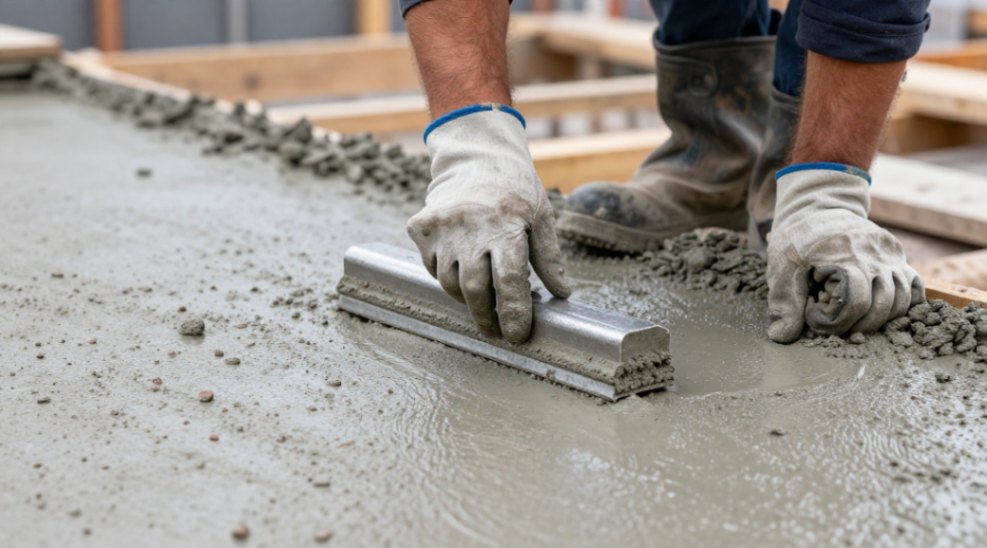
- Don’t Over-vibrate. The lightweight aggregate wants to float. Excessive vibration segregates the mix, bringing all the paste to the surface and weakening the matrix. Use internal vibration sparingly. Often, external form vibration is better.
- Don’t Power-Trowel Too Early. The surface can tear easily because the aggregate just beneath is less rigid. Wait for the bleed water to dissipate fully. Use a magnesium or plastic float for the first pass.
- Don’t Skip Extended Curing. The thermal mass is lower, and the internal moisture moves differently. You must cure for a minimum of 7 days with wet burlap or curing compounds. This isn’t optional. Inadequate curing leads to craze cracking and reduced surface durability.
4. Never Overlook Its True Competitive Edge
People get fixated on weight. That’s just the entry ticket. The real value of structural lightweight concrete with expanded clay aggregate lies in its combined performance profile. Failing to leverage all its benefits is a waste of money.
| Benefit | How It’s Misunderstood | The Smart Application |
|---|---|---|
| Thermal Insulation | Seen as a ‘nice-to-have’ for energy codes. | It’s a structural insulator. Use it in exterior walls, floor slabs, and roofs to reduce thermal bridging and HVAC loads from day one. This is integrated design. |
| Fire Resistance | Often verified only to meet the minimum code rating. | The ceramic expanded clay is inherently fireproof. This concrete provides superior spall resistance and structural integrity in fire, a critical factor for high-rises and parking structures. |
| Durability & Freeze-Thaw | Assumed to be weaker due to lower density. | The opposite is true. The internal pore structure of the aggregate provides pressure relief zones. When designed and cured properly, it often outperforms normal-weight concrete in freeze-thaw cycling. |
| Sustainability | Touted as ‘green’ without real analysis. | The logic is solid: reduced dead load means smaller foundations, less reinforcing steel, and lower embodied carbon in supporting elements. It’s a systems-level carbon reduction, not just a material swap. |
Stop Gambling with Your Structural Design
This isn’t speculative technology. Structural lightweight concrete with expanded clay aggregate is a proven, high-performance material. But its performance is conditional on correct use. The mistakes we’ve outlined aren’t theoretical. We’ve repaired them. The cost of a failed pour or an under-designed element dwarfs the cost of getting expert input upfront.
You need a partner who has navigated these specifics for decades. Not a generic concrete supplier. You need a firm that designs the mix, understands the structural modeling nuances, and can guide your field crew through placement. That’s where we come in.
Do not proceed with your project based on generic advice. Contact our specialist engineering team today for a review of your structural lightweight concrete application. We will audit your mix design, review your structural models for material property inputs, and provide a field procedure checklist to your superintendent. Let’s build something lighter, smarter, and more durable. Get in touch now for a confidential consultation.
We are the global leader in lightweight concrete and advanced engineered foam solutions. Known globally for its commitment to research, innovation, and applied expertise, we have been providing engineered foam solutions since the early 2012’s.
We can supply high-quality concrete admixture and foam concrete related products all over the world.
The company has a professional technical department and quality supervision department, a well-equipped laboratory, and equipped with advanced testing equipment and after-sales customer service center.
If you are interested, please feel free and contact us.