Professional solutions on concrete addtives, Concrete Foaming Agent, Superplasticizer, CLC Blocks Additives, and foaming machine

What Is Protein-Based Foaming Agent for Concrete? Definition, Mechanism and Limits
Key takeaways
- A protein-based foaming agent is a surfactant concentrate whose foaming component comes from hydrolysed protein, diluted and expanded into foam before mixing into a cementitious slurry.
- The agent stabilises air bubbles; density, strength and thermal performance of the finished foamed concrete are determined by the full mix design and curing.
- Dilution ratio, foam density, storage conditions and admixture compatibility are the specification points that most affect results.
- Water carried in with the foam counts toward total mix water, so dilution settings are part of mix design.
- Protein-based and synthetic agents differ in foam behaviour and cost; neither is universally preferable, and selection depends on the application.
What Is a Protein-Based Foaming Agent for Concrete?
A protein-based foaming agent for concrete is a surfactant concentrate whose foaming component is derived from hydrolysed protein. It is diluted with water and expanded into foam, which is then mixed into a cementitious slurry to produce foamed or cellular concrete. The agent supplies the surface-active molecules that stabilise air bubbles; the concrete mix design supplies the cement, filler, water and mixing energy that determine the density and strength of the hardened result. The term describes an input material, not a finished concrete product: the same agent can be used to make foamed concrete across a range of densities depending on dosage, dilution and foam volume.
The defining feature is the origin of the foaming substance, not the physical form of the product. Protein-based agents are typically supplied as a liquid concentrate that is diluted on site before being passed through a foam generator. The foam produced is a temporary, metastable structure: it needs to remain stable long enough to be blended into the mix and to set, not to persist indefinitely. This distinction matters when comparing the material with synthetic foaming agents, because the two families differ in bubble behaviour, handling and cost structure rather than in the basic principle of entraining air.
Buyers and specifiers often search for this keyword rather than chemists, so it helps to separate three things that are frequently conflated: the agent itself, the foam it generates, and the foamed concrete that results. The agent is a purchased concentrate; the foam is an intermediate produced by equipment; the foamed concrete is the final construction material, whose properties are governed by mix design and curing. Statements about strength, density or insulation performance belong to the third category and cannot be inferred from the agent alone.
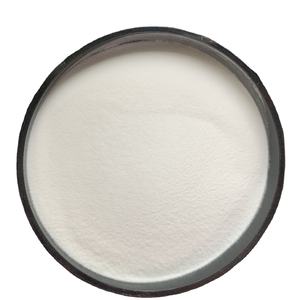
How Protein-Based Foaming Agents Generate and Stabilise Foam
The mechanism begins with dilution. A protein-based concentrate is mixed with water to a working concentration recommended by the supplier, then pumped through a foam generator that introduces air and shear. The shear creates a large interfacial area between air and liquid, and the protein-derived surfactants adsorb at those interfaces, lowering surface tension and forming a film around each bubble. The resulting foam is a network of gas cells separated by thin liquid lamellae.
Stability comes from the mechanical and electrostatic properties of that film. In many formulations, protein hydrolysates form cohesive interfacial layers that resist drainage and coalescence better than simple low-molecular-weight surfactants, which is why protein-based foams are often described as having a finer, more persistent bubble structure. This is a general characteristic of the chemistry, not a guarantee for every product: actual foam quality depends on the degree of hydrolysis, concentration, water hardness, temperature and the performance of the generator.
Once the foam is blended into the cementitious slurry, the bubbles become the air voids of the hardened material. The agent's job ends at the point of set; the cement matrix then fixes the void structure. Two practical consequences follow. First, foam must be added and mixed within a working window, because foam that has drained or collapsed before blending contributes water and little else. Second, the water introduced with the foam counts toward the total water content of the mix, so dilution ratios and foam density are part of mix design rather than mere operating settings.
Key Properties and Specification Points to Check
Because protein-based foaming agents are sold as concentrates, the specification should be read as a set of conditions under which the product is expected to perform. The table below summarises the points buyers and specifiers commonly need to confirm; it describes the category in general terms and does not assert values for any particular product.
Dilution ratio and recommended working concentration are the first items to confirm, since they determine consumption per cubic metre of foam and therefore the real cost per unit of finished concrete. Foam density and expansion ratio describe how much air a given volume of diluted agent can entrain under stated equipment conditions. Shelf life and storage conditions matter because protein hydrolysates can be subject to biological degradation if stored warm or diluted for long periods. Compatibility with the cement, filler and any chemical admixtures in the mix should be checked, because the foam must coexist with the rest of the system until set.
Marketing descriptors should also be distinguished from testable parameters. Terms such as high foaming or stable foam are meaningful only when tied to a stated test method, dilution and temperature. Where a supplier provides no method, the practical alternative is a trial mix at the intended density, which reveals whether the foam survives blending and whether the hardened material meets the project requirement.
| Aspect | What it describes and why it matters |
|---|---|
| Foaming component | Hydrolysed protein-derived surfactant that adsorbs at air–water interfaces and stabilises bubbles |
| Supplied form | Usually a liquid concentrate diluted with water before foam generation |
| Dilution and working concentration | Ratio set by the supplier; determines consumption and the water added to the mix |
| Foam density and expansion ratio | Air entrained per volume of diluted agent under stated equipment conditions |
| Storage and shelf life | Temperature range and period within which the concentrate is expected to remain usable |
| Compatibility | Behaviour alongside cement, fillers and other admixtures until set |
| Effect on finished concrete | Contributes air voids; density, strength and thermal performance depend on the full mix design |
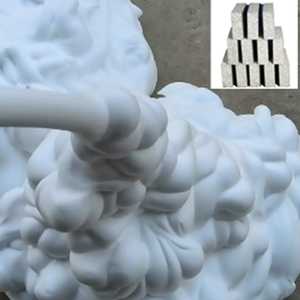
Where Protein-Based Foaming Agents Are Used
The main application is foamed or cellular concrete for non-structural and semi-structural purposes: void filling, trench reinstatement, roof insulation slopes, floor screeds, lightweight blocks and backfill where reduced density lowers dead load or improves thermal performance. In these uses the agent is selected because the resulting air-void system reduces density and thermal conductivity relative to normal-weight concrete, at the cost of compressive strength.
Protein-based agents are also used where a finer and more cohesive foam is preferred for pumpability, or where the mix must remain stable during transport. Whether the agent suits a given application depends on the target density, the required strength, the placing method and the curing regime, all of which are mix-design decisions. A foaming agent does not by itself determine whether a foamed concrete is fit for a structural role; that depends on the full mix and on verification testing.
Outside concrete, the same class of chemistry appears in other foam applications, but those uses fall outside the scope of this definition. For concrete specifically, the relevant boundary is that the agent must be compatible with a highly alkaline cementitious environment and must not introduce constituents that interfere with setting or with the performance of other admixtures.
Limits, Handling and Common Misconceptions
The most common misconception is that a protein-based agent is inherently superior to synthetic alternatives. The two differ in foam texture, stability and cost, and the better choice depends on the mix, the equipment and the required density; neither family is universally preferable. A second misconception is that adding more agent improves the product. Beyond the supplier's recommended concentration, additional surfactant may destabilise foam, increase water content and raise cost without improving the void structure.
Handling constraints are practical rather than theoretical. Concentrates should be diluted shortly before use, kept within the supplier's stated temperature range and protected from contamination, because diluted protein solutions are more vulnerable to spoilage than concentrates. Foam quality should be checked at the generator, not assumed from the drum. And because the foam introduces water, the mix water must be adjusted accordingly; otherwise the effective water-to-binder ratio rises and strength falls.
Finally, the agent should not be credited with properties it does not control. Density, strength, shrinkage and thermal performance of foamed concrete are outcomes of mix design, curing and testing. The foaming agent is one input among several, and any claim about finished performance requires verification on the actual mix.
How to Evaluate and Specify a Protein-Based Foaming Agent
Evaluation should start from the project requirement rather than the product data sheet. Define the target hardened density, the required compressive strength at the specified age, the placing method and the curing conditions. These parameters set the foam volume and the mix proportions; only then does the choice of agent become a comparison between candidate products under the same conditions.
A practical evaluation sequence is: confirm the supplier's dilution and storage instructions; run a trial mix at the target density using the intended equipment; measure fresh density and hardened density; and test strength at the specified age. Compare candidates on consumption per cubic metre of finished concrete rather than on price per kilogram of concentrate, since dilution ratio changes the real cost. Where admixtures such as superplasticisers are used, check compatibility in the same trial rather than assuming it.
For procurement, the specification should record the agent type, the dilution and working concentration, the foam density or expansion ratio under stated conditions, storage requirements and shelf life, and the test method used to verify foam quality. Recording these conditions makes later comparisons meaningful and prevents a change of supplier or batch from silently altering the mix.
Frequently asked questions
Is a protein-based foaming agent the same as a synthetic foaming agent?
No. Both are surfactants that entrain air, but a protein-based agent derives its foaming component from hydrolysed protein, while synthetic agents use other surfactant chemistries. They differ in foam texture, stability and cost structure. The better choice depends on the target density, the equipment and the mix, so neither family should be treated as universally superior.
Does a protein-based foaming agent increase concrete strength?
No. Entrained air reduces density and generally reduces compressive strength relative to normal-weight concrete. The agent's role is to create and stabilise the air-void system; strength is governed by the cement content, water-to-binder ratio, density and curing of the full mix.
How should the agent be stored?
Concentrates should be kept within the supplier's stated temperature range and protected from contamination. Diluted solution is more vulnerable to spoilage than concentrate, so dilution is normally carried out shortly before use rather than stored for long periods.
Can the same agent be used at different concrete densities?
Yes, within limits. Foam volume and mix proportions are adjusted to reach a target density, so one agent can serve several densities. The achievable range and the resulting strength should be confirmed by trial mixes rather than assumed from the product description.
Waterreduceragent is a supplier of Concrete Admixture with over 12 years of experience in nano-building energy conservation and nanotechnology development. It accepts payment via Credit Card, T/T, West Union and Paypal. TRUNNANO will ship the goods to customers overseas through FedEx, DHL, by air, or by sea. If you are looking for lightweight concrete relative materials, please feel free to contact us and send an inquiry.