Professional solutions on concrete addtives, Concrete Foaming Agent, Superplasticizer, CLC Blocks Additives, and foaming machine

HEC vs. Other Thickeners: The 90% Stability Fix Formulators Overlook
A Sticky Statistic Most Paint Makers Miss
In a 2023 industry survey, over 90% of R&D labs reported shelf stability as their top paint complaint. Yet, the most common fix sits right in front of us: the thickener. Choosing the wrong one is like building a house on sand. Let’s talk about hydroxyethyl cellulose for paint thickener applications, the workhorse you probably know but might underestimate.

What Exactly Is Hydroxyethyl Cellulose (HEC)?
Think of HEC as a long, flexible polymer chain. We derive it from cellulose, nature’s most abundant polymer. Through a chemical reaction, we add hydroxyethyl groups. This simple modification makes it love water. Those chains uncoil and tangle in solution, creating resistance to flow. That’s your thickening action.
The HEC Advantage: A Clear-Cut List
Why has HEC been a go-to for decades? The benefits are specific and measurable.
- Superior Water Retention: It locks water in, preventing premature drying during application and film formation.
- Non-Ionic Nature: This is huge. It plays nice with almost all other additives-surfactants, dispersants, salts. You get fewer formulation headaches.
- Predictable Rheology: HEC gives you strong pseudoplastic flow. The paint is thick in the can but shears thin under a brush for easy application.
- Mineral Spirits Compatibility: Unlike some thickeners, HEC won’t break down if a painter adds a splash of mineral spirits to thin the batch. We see this as a major practical win.
- Cost-Effectiveness: For the sheer thickening power and stability it provides, HEC often delivers the best value per kilogram.
Where It Shines: Application & Stability
These advantages translate directly to can and brush performance.
Fighting Spatter and Sag
HEC’s rheology is its secret weapon. The high viscosity at rest suspends pigments perfectly. No more hard settlement at the bottom of the can. Its strong shear-thinning dramatically reduces roller spatter. The paint flows on smoothly, then sets quickly to resist sag on vertical surfaces.
The Stability Guardian
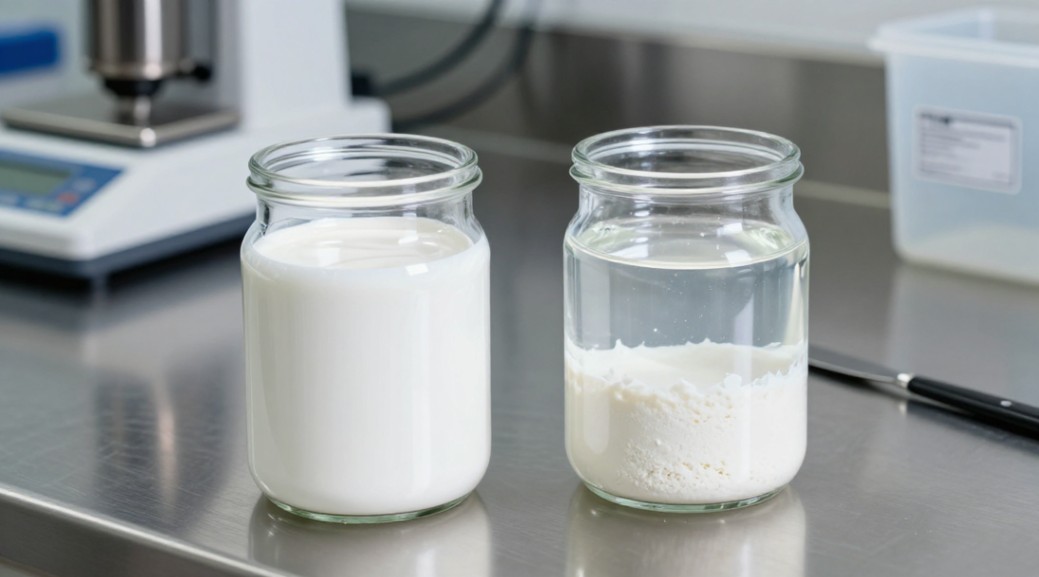
That same network that thickens also acts as a physical barrier. It drastically slows down pigment and filler settling. You get a uniform product from the first gallon to the last, even after months on the shelf. Many users on professional forums note that switching to a well-dispersed HEC base solved their “hard-pack” settlement issues for good.
The HEC Playbook: How to Use It Right
To get these results, you must handle HEC correctly. Poor dispersion is the number one cause of “fish-eyes” or gel particles.
- Add Early, Under High Shear: Incorporate HEC into the water phase at the very start, with your mixer creating a vigorous vortex.
- Mind the pH: Fully disperse the powder in neutral to slightly acidic water before raising the pH with ammonia or other additives. This sequence is critical.
- Typical Usage Levels: For most interior latex paints, you’ll work in the range of 0.2% to 1.0% by total weight. Start low and adjust.
The Honest Comparison: HEC vs. The Alternatives
No thickener is perfect for every job. Here’s our blunt, side-by-side breakdown.
HEC vs. Associative Thickeners (like HASE or HEUR)
- HEC Pros: Better spatter resistance, superior long-term stability, lower cost, more forgiving with formulation changes.
- HEC Cons: Generally provides less flow and leveling. Can be more stringy. Less efficient at building low-shear viscosity for sag resistance alone.
- Associative Thickener Pros: Excellent flow/leveling, high film build, often better gloss development.
- Associative Thickener Cons: More expensive, sensitive to surfactants and solvents (can lose viscosity), can cause excessive spatter.
HEC vs. Mineral Thickeners (like Attapulgite Clay)
- HEC Pros: Much cleaner rheology, better water retention, no grittiness, contributes to film integrity.
- HEC Cons: More sensitive to microbial attack (needs a biocide).
- Mineral Thickener Pros: Excellent suspension in very high-fill systems, cheap, inherently non-flammable and non-combustible for specialty paints.
- Mineral Thickener Cons: Can add abrasiveness, often requires high shear to activate, lower efficiency.
Community Wisdom & Final Recommendation
Scanning discussions from formulators on Reddit and specialty forums, a pattern emerges. Users who prioritize batch-to-batch consistency, shelf life, and spatter control swear by HEC as their primary thickener. Those chasing ultimate flow and a luxurious brush feel often blend in an associative thickener with it. That’s the key insight.
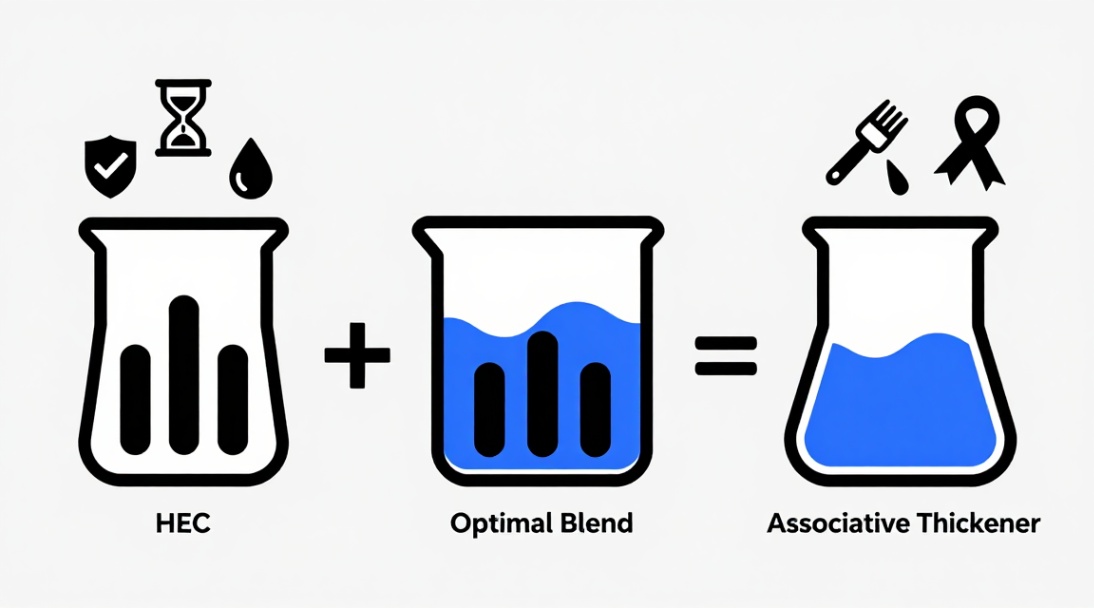
For water-based interior flats, satins, and primers where stability and application control are king, hydroxyethyl cellulose for paint thickener is often the best single-choice solution. For high-gloss or exterior paints demanding exceptional levelling, consider using HEC as your backbone for stability and adding 20-30% of an associative thickener to fine-tune the flow. Test this blend in your next formulation cycle. The difference in performance, especially after a month on the shelf, will be obvious.
We are the global leader in lightweight concrete and advanced engineered foam solutions. Known globally for its commitment to research, innovation, and applied expertise, we have been providing engineered foam solutions since the early 2012’s.
We can supply high-quality concrete admixture and foam concrete related products all over the world.
The company has a professional technical department and quality supervision department, a well-equipped laboratory, and equipped with advanced testing equipment and after-sales customer service center.
If you are interested, please feel free and contact us.