Professional solutions on concrete addtives, Concrete Foaming Agent, Superplasticizer, CLC Blocks Additives, and foaming machine

Refractory Cement: The Ultimate Guide for Fireplace and Kiln Durability
Refractory Cement: Why It’s Non-Negotiable for High-Heat Projects
Refractory cement is a specialized, heat-resistant binder designed to withstand temperatures over 1,000°C (1832°F), making common Portland cement utterly useless by comparison. The core difference lies in the aggregate; refractory mixes use crushed firebrick, vermiculite, or perlite, which expand slightly under heat to create a stable, insulating matrix. For fireplace repairs, firebox construction, or pottery kiln linings, this material isn’t just an option-it’s the foundation of safety and longevity. Using regular concrete in these applications is a dangerous shortcut that guarantees failure.
The Key Properties That Define Performance
Not all refractory cements are equal. Performance hinges on three non-negotiable properties.
1. Heat Resistance & Maximum Service Temperature
This is the most critical specification. A standard fireplace-rated cement must handle consistent temperatures of 1200-1400°C (2192-2552°F). For kilns, especially those firing stoneware or porcelain, look for products rated to at least 1500°C (2732°F). The cement’s composition of alumina and silica determines this threshold.
2. Thermal Shock Resistance
Can the material survive rapid heating and cooling without cracking? This property separates good cement from great cement. It relies on a carefully balanced formulation that allows for slight, controlled expansion and contraction. Many users on forums like Reddit note that brands with high alumina content typically excel here, stating, “The switch to a high-alumina mix stopped the hairline cracks in my wood-fired pizza oven.”
3. Insulating Value & Bond Strength
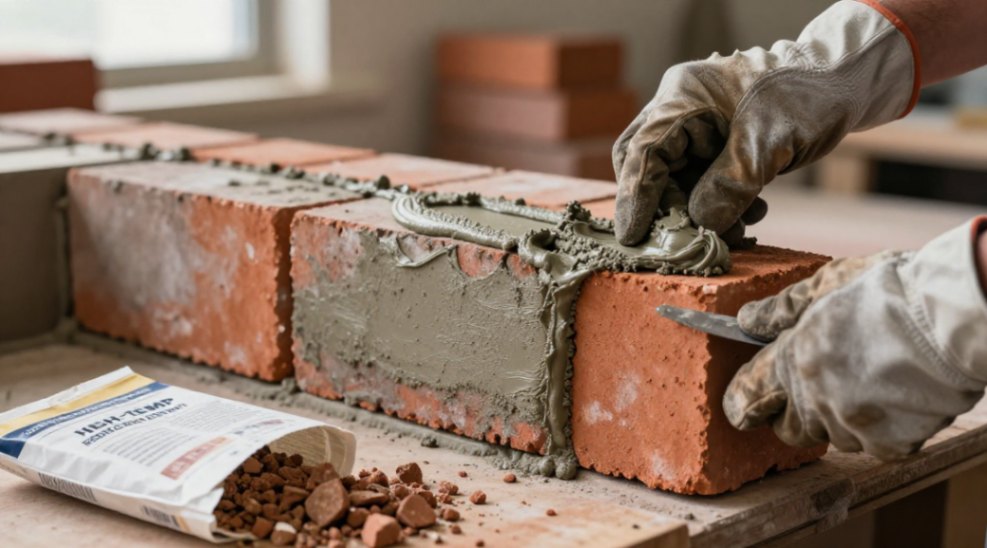
Refractory cement isn’t just a barrier; it’s an insulator. Lightweight aggregates like vermiculite create air pockets that slow heat transfer, improving energy efficiency. Simultaneously, it must form a strong, permanent bond to firebrick and steel. A weak bond leads to spalling-where sections pop off under stress.
Pre-Mixed vs. Dry Mix: A Clear-Cut Choice
The convenience debate ends when you understand performance.
- Pre-Mixed Refractory Cement (Air-Setting): Comes ready-to-use in a bucket. It cures by reacting with air moisture, not by heat. Ideal for small repairs, sealing cracks, or coating applications. It’s user-friendly but often less durable and heat-resistant than a dry, heat-setting mix.
- Dry Mix Refractory Cement (Heat-Setting): Sold in bags, you mix it with water. It achieves its final strength and stability only when fired to a high temperature for the first time. This is the professional choice for building new fireboxes, kiln linings, or forge bases. Its structural integrity is superior.
For any structural, high-heat application, the dry, heat-setting mix is the only serious choice. The initial firing process sinters the cement, creating a ceramic bond that locks in durability.
Step-by-Step Application Guide
Proper technique prevents callbacks and failures. Follow this sequence.
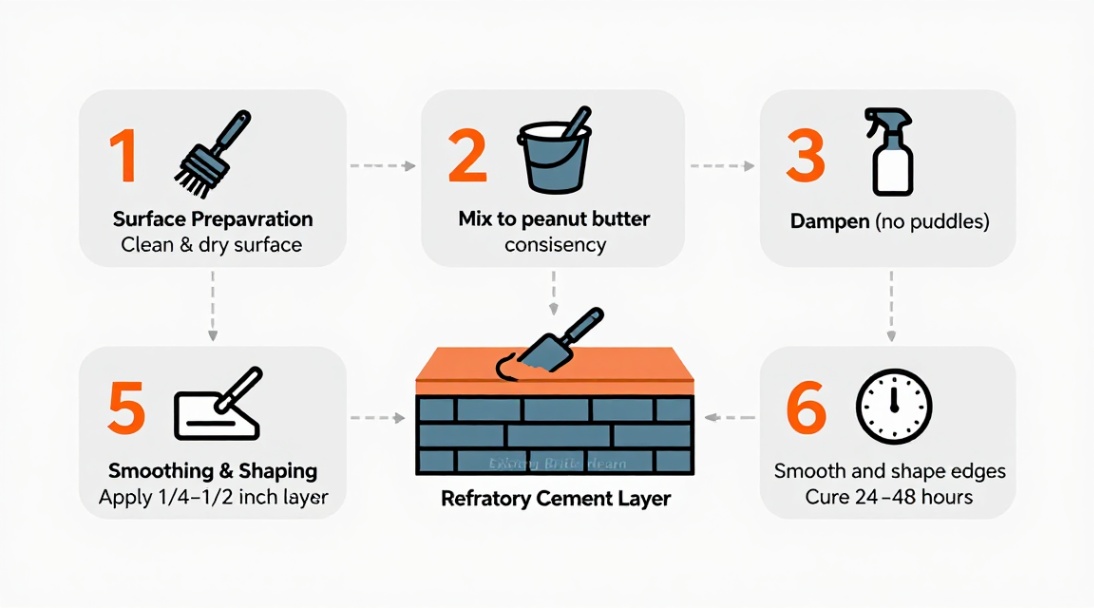
1. Surface Preparation is 90% of the Job
All surfaces must be clean, sound, and free of dust, grease, or old, loose material. On existing firebrick, use a wire brush vigorously. The goal is a rough, porous surface for the cement to mechanically grip. Lightly mist the surface with water before application to prevent it from sucking moisture out of your fresh mix too quickly.
2. Mixing to the Perfect Consistency
Use clean, cool water. Add the dry mix to the water gradually, not the other way around. Mix with a paddle drill or by hand until you achieve a stiff, moldable consistency-like thick peanut butter. It should hold its shape on a trowel. Too wet, and it will slump and weaken; too dry, and it won’t bond.
| Project Type | Recommended Consistency |
|---|---|
| Laying Firebrick | Stiff, holds brick weight |
| Coating/Pargetting | Slightly looser, spreadable |
| Filling Gaps >1/2\” | Stiff, to prevent shrinkage |
3. Application and Curing: The Critical Phase
Apply in layers no thicker than 1/2 inch (12 mm). For thicker applications, build up in multiple layers, scoring the surface of each layer before it fully sets to provide a key for the next. After shaping, let the cement air-dry slowly for 24-48 hours. Avoid rapid drying from direct heat or fans. Then, begin the cure-by-fire process: build a small, low fire and let it burn out over several hours. Gradually increase the temperature over the next 2-3 uses. This slow drive-off of chemical water is what prevents explosive spalling.
Common Mistakes and How to Avoid Them
- Mistake: Using it like concrete. Solution: Refractory cement is not structural in the traditional sense. It is a lining or mortar. Build a support structure of standard firebrick first.
- Mistake: Skipping the gradual heat cure. Solution: The first fire must be gentle. A roaring blaze on fresh cement will create steam pressure and cause it to explode off the surface.
- Mistake: Ignoring expansion joints. Solution: In large panels or long walls, incorporate flexible ceramic fiber paper as an expansion joint to absorb thermal movement.
Where to Buy and What to Look For
Source your materials from specialized masonry supply houses, pottery kiln manufacturers, or reputable online industrial suppliers. Big-box store options are often pre-mixed air-setting types suitable only for minor repairs. Check the technical data sheet for the PCE (Pyrometric Cone Equivalent) value, which indicates its refractoriness. For a fireplace, a PCE of 28-30 is sufficient. For a kiln, aim for PCE 32-34 or higher.
For a project that demands professional-grade results and true long-term durability, your choice is clear. Invest in a high-quality, dry-mix, heat-setting refractory cement from a trusted specialist supplier. This single decision will define the safety, efficiency, and lifespan of your fireplace or kiln for the next twenty years.
Ready to build with confidence? Skip the guesswork and substandard materials. Click here to explore our curated selection of industrial-grade refractory cements, complete with technical specifications and project calculators to ensure you buy exactly what your high-heat project demands.
We are the global leader in lightweight concrete and advanced engineered foam solutions. Known globally for its commitment to research, innovation, and applied expertise, we have been providing engineered foam solutions since the early 2012’s.
We can supply high-quality concrete admixture and foam concrete related products all over the world.
The company has a professional technical department and quality supervision department, a well-equipped laboratory, and equipped with advanced testing equipment and after-sales customer service center.
If you are interested, please feel free and contact us.