Professional solutions on concrete addtives, Concrete Foaming Agent, Superplasticizer, CLC Blocks Additives, and foaming machine

Stop Ruining Your Architectural Concrete: The Truth About Eco-Friendly Form Separators
You’re Probably Using the Wrong Product. Here’s Why.
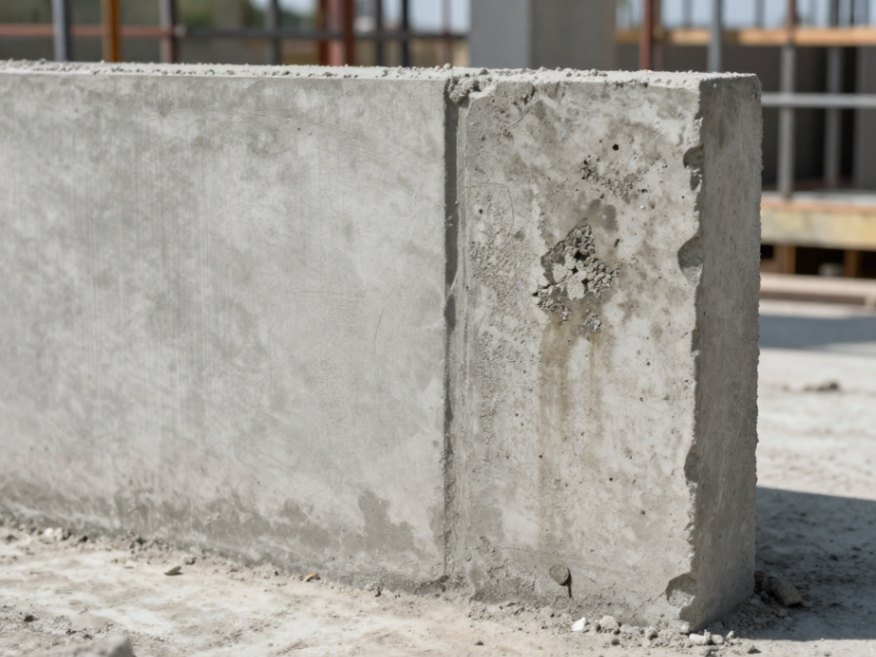
Most projects fail their eco-friendly concrete form separator for architectural finishes selection before the first pour. They choose based on marketing claims, not logic. The result? Staining, inconsistent texture, and a finish that screams ‘amateur hour.’ An architectural finish is the face of your design; you cannot gamble its quality on an unknown chemical cocktail.
The Core Questions You Must Answer
This is not a sales pitch. It’s a warning. Think of this as a checklist of what not to do, built from decades of fixing other people’s mistakes. Every question below targets a critical, overlooked risk.
What is an eco-friendly concrete form separator, really?
It is not just a ‘less bad’ version of diesel fuel and solvents. A true eco-friendly concrete form separator for architectural finishes is a precision tool. Its primary purpose is release. Its secondary, non-negotiable purpose is to leave zero detrimental residue on the concrete surface. Traditional agents fail this second test. They rely on persistent oils and reactive chemicals that alter surface chemistry. A genuine eco-separator uses materials that do their job and disappear-plant esters that evaporate, bio-polymers that are inert, or water-based emulsions with no volatile organic compounds (VOCs). If the safety data sheet reads like a hazard warning, it will compromise your finish.
What’s the biggest mistake people make with ‘green’ separators?
They assume all bio-based oils are equal. This is catastrophically wrong. Crude vegetable oil will go rancid, attract dust, and create a gummy film that stains concrete. A high-grade, refined plant-based ester is chemically stable. It releases cleanly. The difference is not subtle; it’s the difference between a museum-quality wall and a wall that needs a costly abrasive clean or an opaque paint job. You must look beyond the ‘plant-based’ label to the molecule’s stability.
How do these products actually protect my architectural finish?
They act as a perfect, temporary barrier. Think of it like a non-stick coating for your formwork. A superior eco-friendly concrete form separator provides uniform surface tension. This prevents water from the concrete mix from migrating locally to the form face, which is the root cause of ‘sand streaking’ and discoloration. It ensures the cement paste at the interface cures identically to the bulk concrete. The result? Consistent color, consistent bubble structure, and the true, intended texture of your mix design. It doesn’t ‘improve’ the concrete; it prevents the formwork from damaging it.
Are they compatible with all my formwork materials?
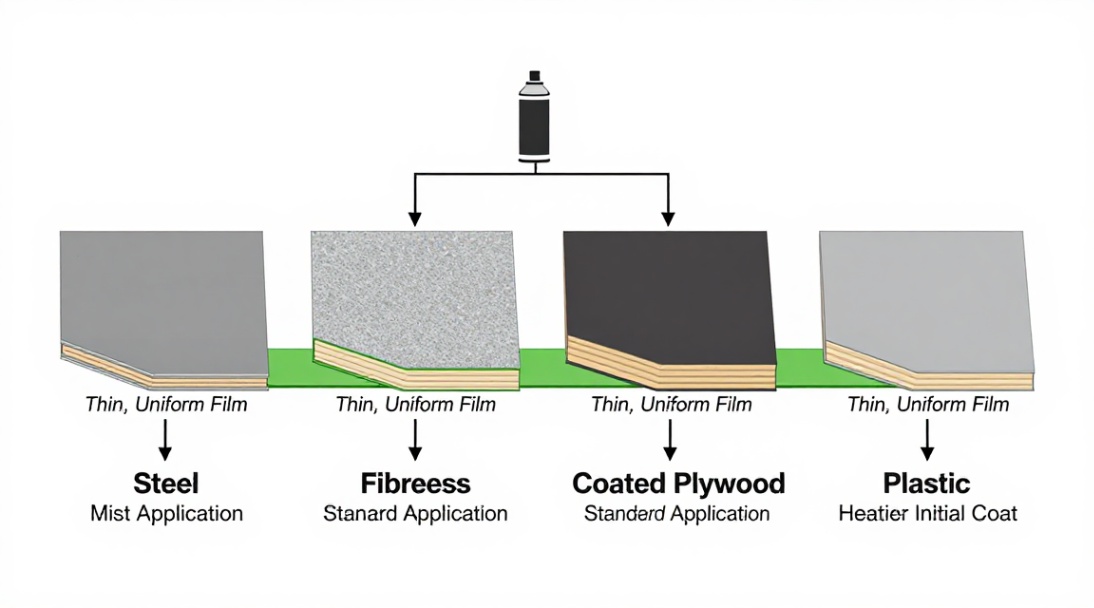
Yes, but with a critical caveat: application logic changes. Steel, fiberglass, coated plywood, plastic-they all have different surface energies. A thin, uniform film is mandatory for all. On absorbitive wood forms, you may need a slightly heavier initial application to seal the pores. On non-porous steel, a mist is sufficient. The universal error is over-application. Excess product pools, runs, and creates blotches. The rule is simple: apply the minimum needed for a complete, sheeting film. Test on a sample panel first.
Do they affect long-term concrete durability?
A proper one has no effect. A bad one will. This is where logic is your best tool. If a separator leaves a fatty acid or soap residue on the concrete, that residue can interfere with future coatings, sealers, or the natural carbonation process of the surface. It can create a weak layer. A high-quality, non-reactive separator leaves a surface that is, for all intents and purposes, virgin concrete. Its architectural finishes are pure and unmodified, ready for any intended lifespan or patina.
How do they contribute to green building certifications?
Indirectly, but powerfully. They tackle three key areas: Indoor Air Quality (by eliminating VOCs on-site and in the finished building envelope), Resource Efficiency (by preventing waste from rejected, stained panels), and Material Ingredients (by using safer chemistries). You’re not just buying a product; you’re eliminating a source of pollution and construction waste. This is a lifecycle win. Specifying it is a demonstrable, logical step towards points in LEED, BREEAM, or Living Building Challenge credits.
What should I look for when selecting one?
Ignore the marketing brochure. Demand three documents and use pure logic to assess them. First, the Safety Data Sheet (SDS). Look for high flash points, no H-phrases for environmental toxicity, and low VOC content. Second, independent test data for staining and compatibility. Third, a clear ingredient declaration or technical data sheet listing the active components. If the supplier hesitates on any of these, walk away. Your selection criteria are non-negotiable: performance proof, safety transparency, and material honesty.
What is the future of these materials?
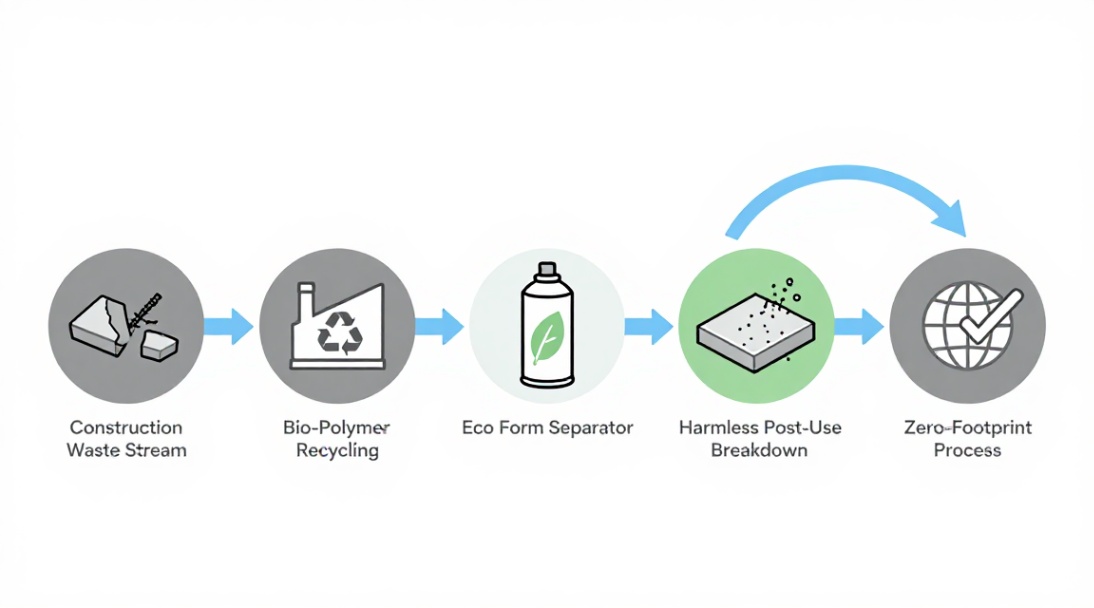
The trend is towards functional circularity. Future eco-friendly concrete form separator formulations won’t just be made from plants. They will be designed to break down into harmless components after use, or even be derived from construction waste streams. Imagine a release agent made from recycled bio-polymers. The goal is a zero-footprint release process. This is not fantasy; it’s the logical endpoint of applying material science to solve a dirty problem.
The Final, Uncompromising Advice
Stop treating the form separator as an afterthought. It is as critical as your cement source or your formwork tolerances. Test your chosen eco-friendly concrete form separator for architectural finishes on a mock-up panel that mimics your exact mix, form material, and curing conditions. Assess the result after 28 days. If you see any variation, staining, or film, you have failed the test. Find a new product. The cost of this test is trivial compared to the cost of facade failure. Your concrete deserves this level of respect. Your design demands it.
We are the global leader in lightweight concrete and advanced engineered foam solutions. Known globally for its commitment to research, innovation, and applied expertise, we have been providing engineered foam solutions since the early 2012’s.
We can supply high-quality concrete admixture and foam concrete related products all over the world.
The company has a professional technical department and quality supervision department, a well-equipped laboratory, and equipped with advanced testing equipment and after-sales customer service center.
If you are interested, please feel free and contact us.