Professional solutions on concrete addtives, Concrete Foaming Agent, Superplasticizer, CLC Blocks Additives, and foaming machine

What Is a Compressed Air Foam Maker? Fixing Inconsistent Foam for Good
The Problem With Conventional Foam
Have you ever spent valuable time mixing foam concentrate, only to end up with a watery, ineffective mess? You pull the hose, and what comes out isn’t that thick, clinging blanket you need. It’s thin. It drains too fast. It just doesn’t stick where you need it to. We’ve all been there. Whether you’re fighting a stubborn Class A fire or cleaning a greasy industrial floor, poor foam quality costs you time, money, and effectiveness. This frustration is exactly why we moved to a more reliable method.
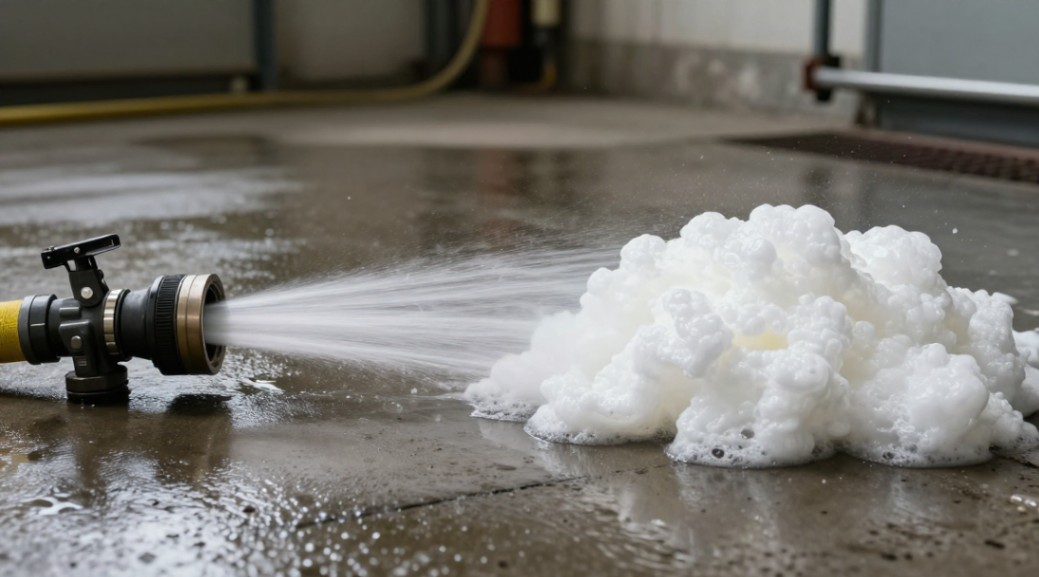
What Is a Foam Maker With a Compressed Air System?
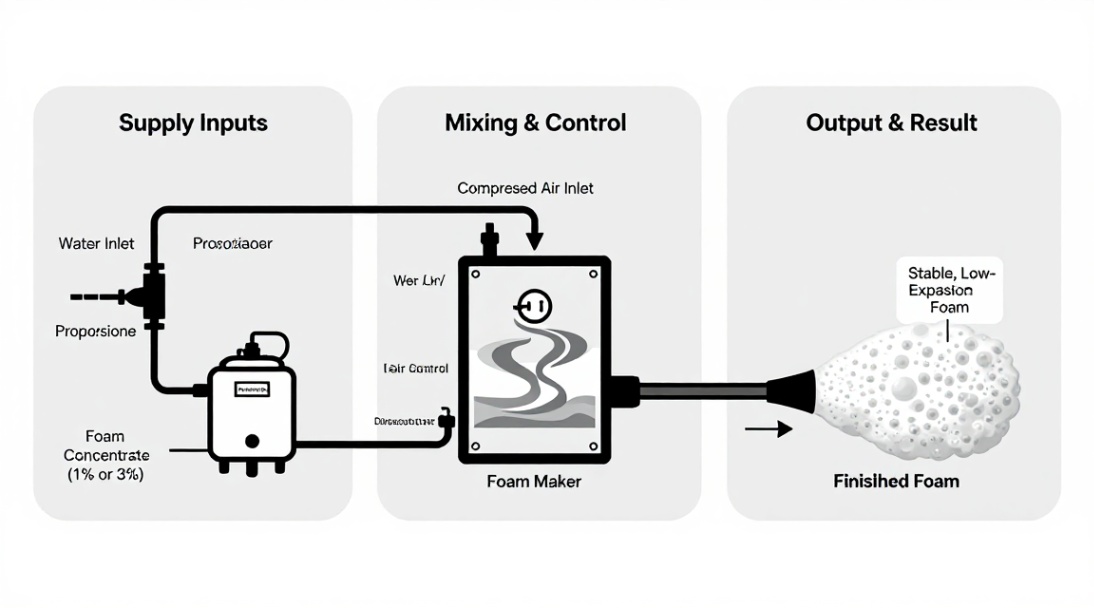
A foam maker with a compressed air system is a specialized device that generates firefighting or industrial foam by forcibly mixing air, water, and foam concentrate under pressure. Unlike traditional methods that rely on water pressure alone, this system uses a dedicated air compressor to inject air directly into the mix. This controlled aeration is the key to its performance. The core components work in a precise sequence: a proportioner meters the foam concentrate into a water stream, and then an air compressor injects a measured volume of compressed air into that solution before it exits the nozzle. The result is a consistent, high-quality foam with a defined structure.
Why Compressed Air Beats Water-Aspirated Systems
Let’s talk about the old way: the water-aspirated or educator system. It uses water flowing through a venturi to suck in air. It’s simple, but it has major flaws. Its performance is completely tied to water pressure and nozzle design. Change the pressure, and your foam quality changes. The bubble structure is often large and uneven. Now, compare that to a compressed air foam system. We have independent control. We set the water flow. We set the foam concentrate percentage. Then, we dial in the air pressure from the compressor separately. This independent air control lets us fine-tune the foam’s texture-from a wet, flowing foam for penetration to a dry, shaving-cream-like foam for blanketing-regardless of the hose length or nozzle type. The consistency is unmatched.
Core Components and Their Roles
To understand how it works, you need to know the three essential parts. First, the proportioner. This device, whether it’s an around-the-pump or an inline balanced-pressure unit, accurately meters foam concentrate into the water stream at a specific percentage (e.g., 1% or 3%). Accuracy here is non-negotiable. Second, the air compressor. This isn’t a shop tool; it’s an industrial unit capable of delivering clean, oil-free air at a constant pressure (typically between 100-200 psi) regardless of demand. It’s the engine for your foam. Third, the foam maker or mixing chamber. This is where the magic happens: the proportioned solution and compressed air collide under turbulent conditions to create the foam bubble structure before it travels to the discharge hose.
How to Operate a Compressed Air Foam System: A Step-by-Step Guide
Success with this system comes from a disciplined procedure. Follow these steps precisely.
1. Pre-Operation Checks
Verify your foam tank is filled with the correct type and grade of concentrate. Cheque all valves are in their correct starting positions (water inlet open, discharge line closed). Inspect the air compressor oil level and ensure the air tank is drained of moisture.
2. System Pressurization and Priming
Start your water supply and allow pressure to stabilize. Typical operating pressure is between 100-150 psi. Engage the foam proportioner. You should see concentrate being drawn into the line. Let the water-concentrate solution run to waste for a moment to ensure the line is fully primed and the proportion is correct.
3. Initiating Air Injection
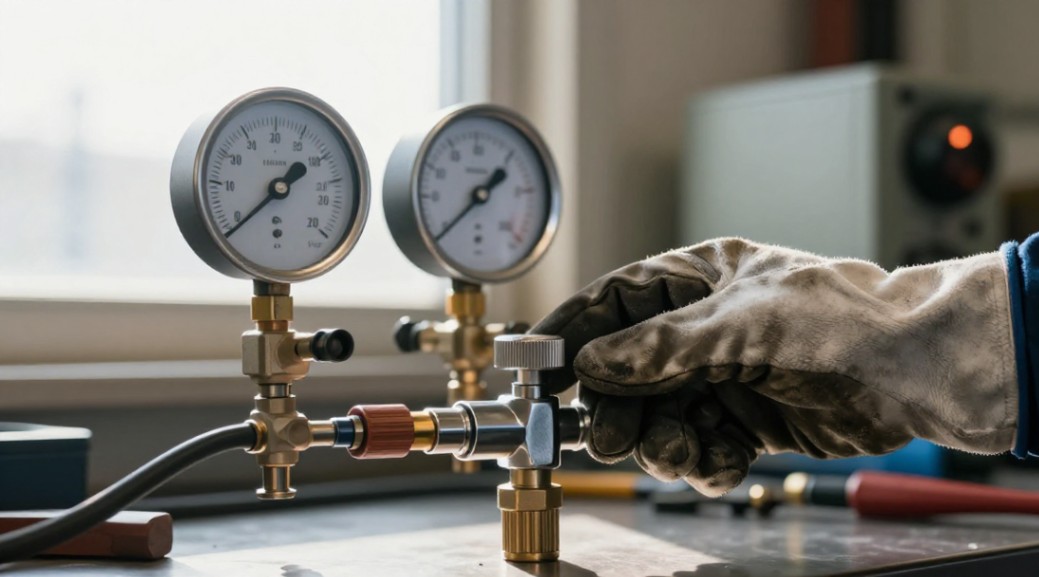
Start the air compressor. Allow it to build to its set operating pressure, usually 20-50 psi above your water pressure. Slowly open the air injection valve to the foam maker. You will immediately hear the texture change as air enters the stream. Do this gradually.
4. Fine-Tuning Foam Quality
This is the critical step. Observe the foam as it discharges. Adjust the air valve to achieve the desired expansion ratio. More air creates drier, higher expansion foam. Less air creates wetter, more fluid foam. Your target is a stable, homogeneous bubble structure without large, collapsing air pockets.
| Step | Action | Key Parameter / Target |
|---|---|---|
| 1. Pre-Check | Fill tank, check valves, drain air compressor. | Correct concentrate type; dry air tank. |
| 2. Pressurize | Start water supply, engage proportioner. | Water pressure stable at 100-150 psi; line primed. |
| 3. Inject Air | Start compressor, open air valve slowly. | Air pressure 20-50 psi above water pressure. |
| 4. Fine-Tune | Adjust air valve while observing discharge. | Achieve uniform bubble structure (target expansion ratio). |
Understanding Foam Performance: Expansion Ratio and Drain Time
We judge foam on two main specs. Expansion ratio is the volume of finished foam compared to the volume of foam solution used. A 5:1 ratio means 5 gallons of foam came from 1 gallon of solution. Low-expansion foam (up to 20:1) is wetter. High-expansion foam (200:1 to 1000:1) is incredibly dry. Your compressed air system lets you adjust this by controlling the air-to-solution mix. Drain time (or 25% drain time) measures how long it takes for 25% of the solution to drain out of the foam. This indicates foam stability. A longer drain time means the foam will cling and last longer on a fuel or surface. A well-tuned system delivers predictable, repeatable results for both metrics.
Critical Safety and Maintenance Must-Dos
Respect the pressure. You are working with compressed air and water. Always wear safety glasses. Never bypass relief valves. For maintenance, your checklist is straightforward but vital. For the air compressor: check and change the oil per the manufacturer’s schedule, drain the moisture from the tank daily, and inspect intake filters. For the foam system: flush all lines with clean water after every use to prevent concentrate crystallization. Inspect the proportioner for wear and verify its accuracy annually. A clogged proportioner or a failing compressor seal will ruin your foam quality immediately.
Troubleshooting Common Foam Problems
If your foam is too wet and thin, you are not injecting enough air. Increase the air pressure or open the air valve further. If your foam is too dry and crumbly, you are injecting too much air. Reduce it. If foam quality is inconsistent, cheque for water pressure fluctuations or a low foam concentrate tank. Always start troubleshooting with the basics: confirm your concentrate type, check for proper proportioner suction, and ensure your air compressor is delivering its rated CFM at pressure.
Choosing the Right System for Your Needs
Your application dictates the tool. For structural firefighting and hydrocarbon spill protection, you need a robust system capable of producing stable, low-expansion foam with a consistent drain time. Look for proportioners rated for your required percentage (1% or 3%) and compressors with sufficient CFM output for your target hose lines. For industrial cleaning or dust suppression, you might prioritize a system that can quickly switch between wet and dry foam types. The beauty of a dedicated foam maker with compressed air system is this flexibility. It solves the inconsistency problem by giving you direct control over the final product.
Once you understand the principles and have a reliable procedure, achieving perfect foam becomes a simple, repeatable task. The control it gives you is the solution to the frustration we started with. If inconsistent results are holding you back, evaluating a compressed air system is the logical next step. Start by defining the foam type and volume you need, then look for a system built to deliver those specifications day in and day out.
We are the global leader in lightweight concrete and advanced engineered foam solutions. Known globally for its commitment to research, innovation, and applied expertise, we have been providing engineered foam solutions since the early 2012’s.
We can supply high-quality concrete admixture and foam concrete related products all over the world.
The company has a professional technical department and quality supervision department, a well-equipped laboratory, and equipped with advanced testing equipment and after-sales customer service center.
If you are interested, please feel free and contact us.