Professional solutions on concrete addtives, Concrete Foaming Agent, Superplasticizer, CLC Blocks Additives, and foaming machine

Compressed Air Foam Systems (CAFS): The Unvarnished Pros & Cons for Industrial Use
Compressed Air Foam Makers: The High-Performance Power Tool You Need
A foam maker with compressed air system isn’t just an upgrade; it’s a different class of tool. Known as a Compressed Air Foam System (CAFS), it injects compressed air directly into the foam solution stream before the nozzle. The result is a dry, stiff, shaving-cream-like foam that clings to surfaces and smothers hazards with unmatched efficiency. For fire suppression, spill control, or deep cleaning, it outperforms standard aspirating systems on several key metrics.
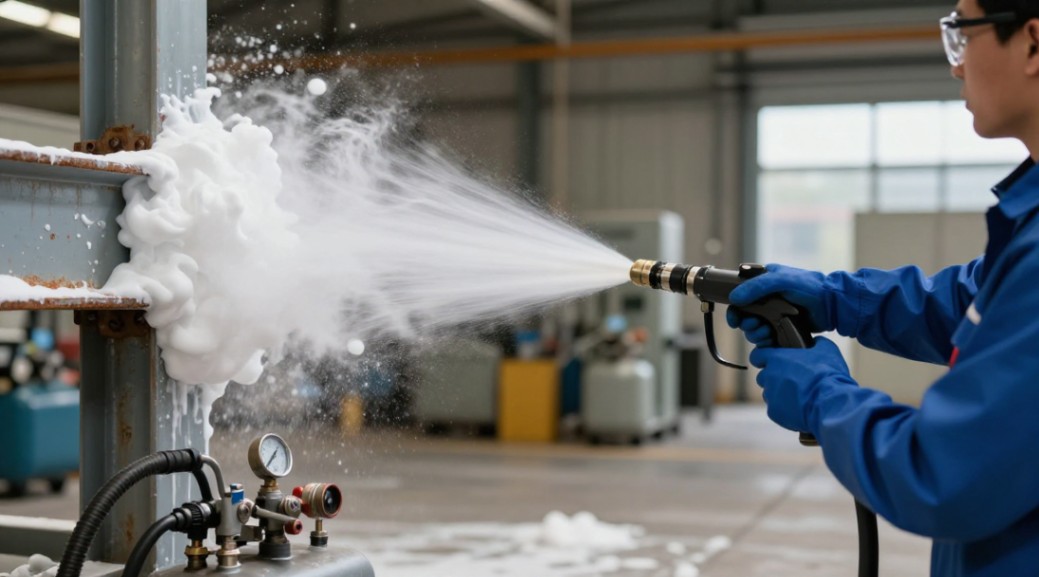
The Core Advantage: Why CAFS Beats Standard Foam
Standard foam makers rely on venturi aspiration, pulling air in at the nozzle. This creates a wet, fluid foam. CAFS forces compressed air into the mix, creating a superior bubble structure.
Pros of a Compressed Air Foam System
- Radically Less Water Usage: Achieves superior extinguishment using up to 90% less water. This is critical for water-scarce sites and reduces runoff contamination.
- Unbeatable Knockdown Speed: The dry foam blankets fuel surfaces instantly, cooling and smothering flames faster than water or wet foam.
- Superior Adhesion & Penetration: The foam sticks to vertical and overhead surfaces, and can penetrate deep into Class A fuel piles (like wood chips).
- Logistical Efficiency: Less water means smaller tanks, lighter apparatus, and longer operational range from a single tank of concentrate.
The Inevitable Cons & Challenges
- Higher Initial Cost & Complexity: You’re adding an air compressor, controls, and more piping. Initial investment is 20-40% higher than a standard system.
- Demanding Maintenance: Compressors require strict maintenance schedules. Water left in lines can cause corrosion; air requires drying. This is not a “set and forget” system.
- Steeper Learning Curve: Operators must balance air pressure, water pressure, and foam concentrate rates. Improper adjustment yields poor foam quality.
- Potential for System Freeze-up: In cold climates, the air-water mix in lines can freeze if not properly purged after use.
Head-to-Head: CAFS vs. Traditional Aspirating System
Let’s cut through the marketing. Here’s the direct comparison.
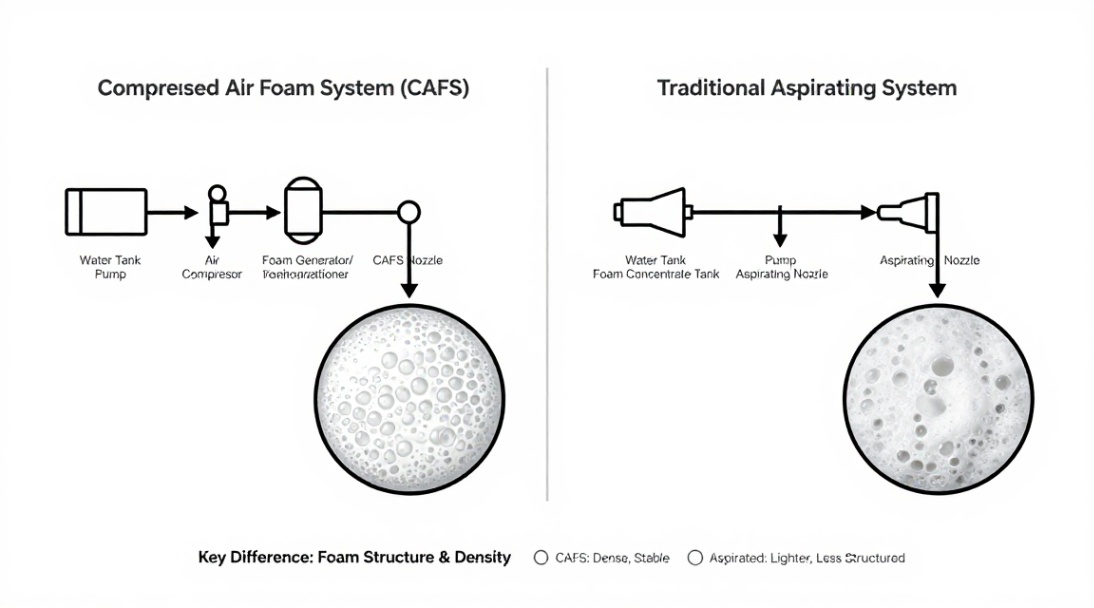
- Foam Quality: CAFS: Dry, stable, clinging. Traditional: Wet, fluid, drains quickly.
- Water Efficiency: CAFS: Exceptional (0.3-0.5 GPM per gallon of foam). Traditional: Poor (4-8 GPM per gallon of foam).
- Setup Complexity: CAFS: High. Requires power for compressor, precise tuning. Traditional: Low. Basically a hose and an eductor.
- Best Use Case: CAFS: Industrial fire brigades, high-value asset protection, remote sites. Traditional: General facility protection, spill response where water volume isn’t an issue.
The Community Verdict: What Veteran Operators Say
Feedback from industrial forums and Reddit threads is clear: “Once you use a proper CAFS, you’ll never want to go back to aspirated foam for a fuel fire. The knockdown is that dramatic.” However, the same users warn: “Budget for a dedicated maintenance tech. If your air compressor fails, you’re just hauling around dead weight.” The consensus? For mission-critical, high-hazard applications, the CAFS premium is justified. For general-purpose use, the complexity often isn’t.
Making Your Decision: A Simple Checklist
- Identify Your Primary Threat: Is it deep-seated Class A materials (timber, pallets) or flammable liquid pools (Class B)? CAFS excels at both, but is transformative for Class A.
- Audit Your Water Supply: Limited or no hydrant? CAFS is likely your only viable option for extended operations.
- Honestly Assess Your Maintenance Capability: Do you have staff trained to service air compressors and proportioning systems? If not, factor in a rigorous service contract.
- Calculate Total Cost of Ownership: Initial cost + 5-year maintenance + foam concentrate savings (you’ll use less) vs. a traditional system.
If your checklist points to CAFS, the next step is selecting the right foam maker with compressed air system. Look for integrated control panels that automate the air/water/foam ratio, built-in air dryers, and robust corrosion-resistant components. Start by requesting a live demo on-site with your specific fuels. Seeing the foam quality and expansion ratio firsthand is the only way to validate the performance claims. A proper vendor will run this test without hesitation.
We are the global leader in lightweight concrete and advanced engineered foam solutions. Known globally for its commitment to research, innovation, and applied expertise, we have been providing engineered foam solutions since the early 2012’s.
We can supply high-quality concrete admixture and foam concrete related products all over the world.
The company has a professional technical department and quality supervision department, a well-equipped laboratory, and equipped with advanced testing equipment and after-sales customer service center.
If you are interested, please feel free and contact us.