Professional solutions on concrete addtives, Concrete Foaming Agent, Superplasticizer, CLC Blocks Additives, and foaming machine

Why Expanded Clay Lightweight Concrete is a Structural Game-Changer
The Uncompromising Definition
Structural lightweight concrete with expanded clay aggregate (SLW-ECA) is a high-strength concrete where the traditional dense gravel is swapped for lightweight, porous pellets of fired clay. This single change creates a material that meets structural code requirements while weighing 25-35% less than standard concrete. It is not a “light-duty” material. It’s a strategic engineering solution.
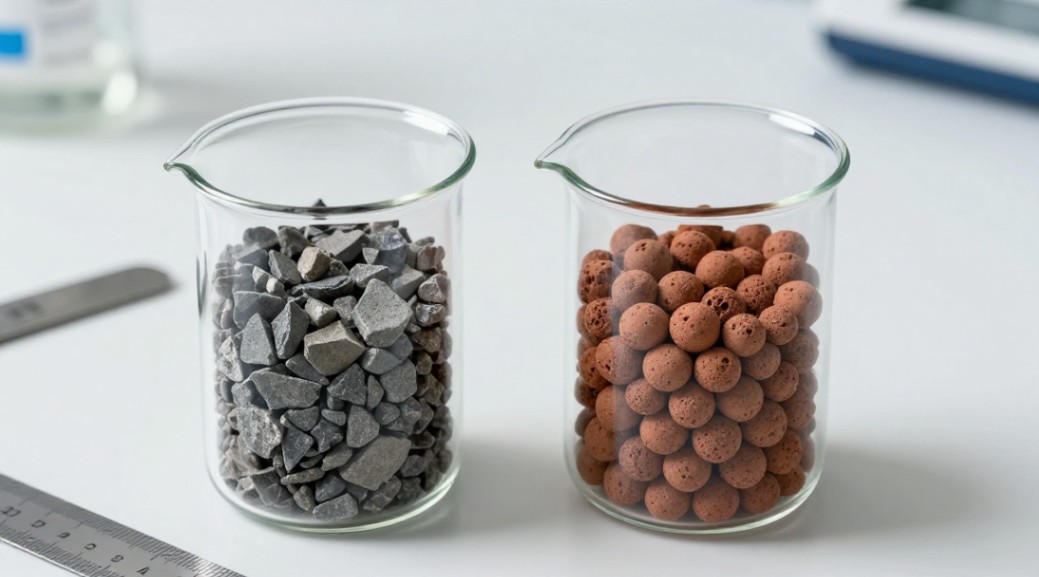
Think of expanded clay as nature’s microscopic honeycomb. Raw clay expands when kiln-fired at 1200°C, trapping air in millions of tiny, sealed cells. These hardened bubbles become the aggregate. The result is a concrete that carries load with rock but floats like pumice.
Core Properties: The Data-Driven Advantage
The benefits aren’t theoretical. They are quantifiable and transformative. The key lies in the relationship between density, strength, and thermal performance. Normal-weight concrete forces a brutal trade-off. SLW-ECA breaks it.
| Property | Standard Concrete (NWC) | Structural LW-ECA Concrete | Practical Impact |
|---|---|---|---|
| Density (kg/m³) | 2300 – 2500 | 1450 – 1850 | Reduces dead load, enabling longer spans, slimmer columns. |
| Compressive Strength (MPa) | 25 – 40+ | 25 – 50+ | Meets and exceeds structural requirements for floors, walls, beams. |
| Thermal Conductivity (W/mK) | 2.0 – 2.5 | 0.4 – 0.8 | Acts as built-in insulation, slashing HVAC energy costs. |
| Fire Resistance Rating | Good | Excellent | The sintered clay aggregate does not spall under intense heat. |
| Acoustic Performance | Moderate | High | Improved sound absorption and impact noise reduction. |
Inside the Mix Design
You cannot just substitute gravel with expanded clay and hope. The mix design is critical. The porous aggregate soaks up water. We pre-wet it. This prevents it from stealing mixing water from the cement paste, which would cripple strength and cause a harsh, unworkable mix.
The rule is simple: saturate the aggregate, don’t drown the mix. Precise admixtures-superplasticizers-are non-negotiable. They deliver the fluidity needed for proper placement without adding excess water that weakens the final structure.
Where It Dominates: Real-World Applications
This material excels where weight, insulation, or speed are paramount. It’s the first choice for:
- High-Rise Construction: Every floor saved 300 tons of dead weight? That means smaller foundations, less seismic force, and more rentable space.
- Precast & Tilt-Up Panels: Lighter panels are cheaper to transport, easier to erect with smaller cranes, and inherently insulate the building envelope.
- Long-Span Bridges & Structures: Reducing the dead load of a bridge deck allows for more elegant, longer spans without increasing the size of supporting piers.
- Roof Toppings & Retrofits: Adding a new insulating concrete layer to an existing roof without overloading the structure below.
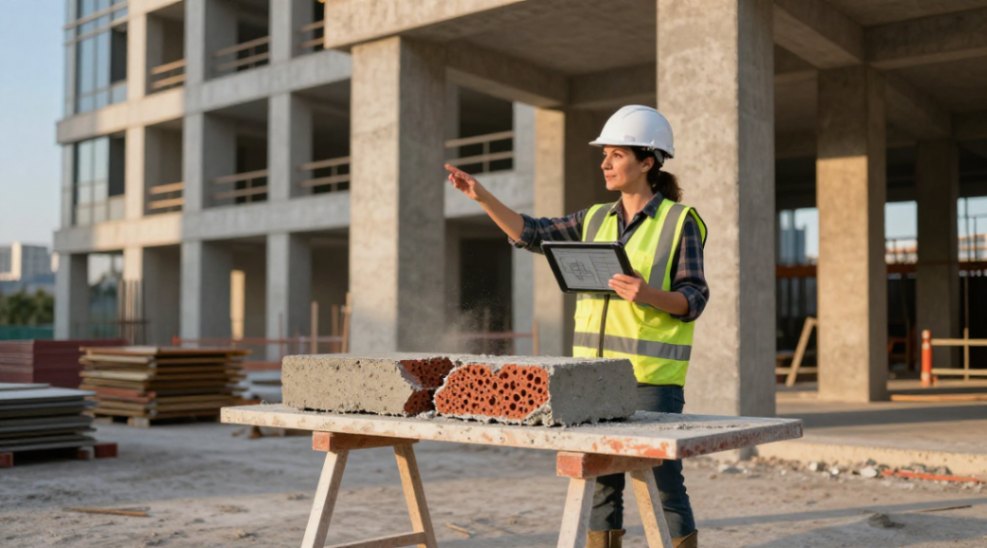
On Reddit’s r/StructuralEngineering, a user overseeing a 20-story hotel retrofit posted: “Switching to LW-ECA for the new floor toppings was the only way. The existing columns couldn’t take another 4000 tons of standard concrete. It saved the project’s budget and timeline.” This is the consensus, not the exception.
The Sustainability Argument You Can’t Ignore
Greenwashing is rampant. SLW-ECA’s credentials are material. The expanded clay aggregate is made from abundant, low-impact shale or clay. Its production is a kiln process, but the lifetime energy savings from the building’s insulation often offset this initial embodied energy multiple times over.
Lighter structures require less steel reinforcement. Smaller foundations use less concrete. The math is straightforward. It is a systems-thinking material that optimizes the entire structural package.
The Hard Truth About Working With It
It demands respect. Placement and curing are different. The mix feels stickier. You finish it with a float, not a trowel, to avoid tearing the surface. Curing is more critical than ever-the internal moisture must hydrate the cement fully. You must plan for these nuances. Contractors who treat it like regular concrete fail.
Your Next Move
The theoretical benefits of structural lightweight concrete with expanded clay aggregate are clear. The practical results are proven. If you are designing a structure where weight, insulation, or construction efficiency is a primary constraint, this material is not just an option-it is the logical next step.
Stop compromising. Demand a mix design review with your ready-mix supplier on your next project. Specify SLW-ECA for your topping slabs, precast panels, or long-span decks. The reduction in structural dead load and long-term energy costs will validate the decision. Make the switch.
We are the global leader in lightweight concrete and advanced engineered foam solutions. Known globally for its commitment to research, innovation, and applied expertise, we have been providing engineered foam solutions since the early 2012’s.
We can supply high-quality concrete admixture and foam concrete related products all over the world.
The company has a professional technical department and quality supervision department, a well-equipped laboratory, and equipped with advanced testing equipment and after-sales customer service center.
If you are interested, please feel free and contact us.