Professional solutions on concrete addtives, Concrete Foaming Agent, Superplasticizer, CLC Blocks Additives, and foaming machine

Sulfate Resistant Cement for Marine Environments: The Critical Warning Engineers Often Ignore
The Core Warning
The single most dangerous mistake you can make is to treat sulfate resistant cement for marine environments as a magic bullet. Selecting ASTM C150 Type V cement is not a checkbox for success; it is merely the first, non-negotiable line of defense in a complex chemical war. I have spent two decades inspecting failed marine structures, and the pattern is depressingly consistent. The problem is not the material itself, but the dangerous complacency it fosters. Engineers specify Type V, pour the concrete, and assume the job is done. This mindset guarantees premature deterioration, often within a decade, leading to repair costs that dwarf the initial budget. The brutal truth is that sulfate resistant cement alone cannot win this fight.
The Silent Mechanism of Failure
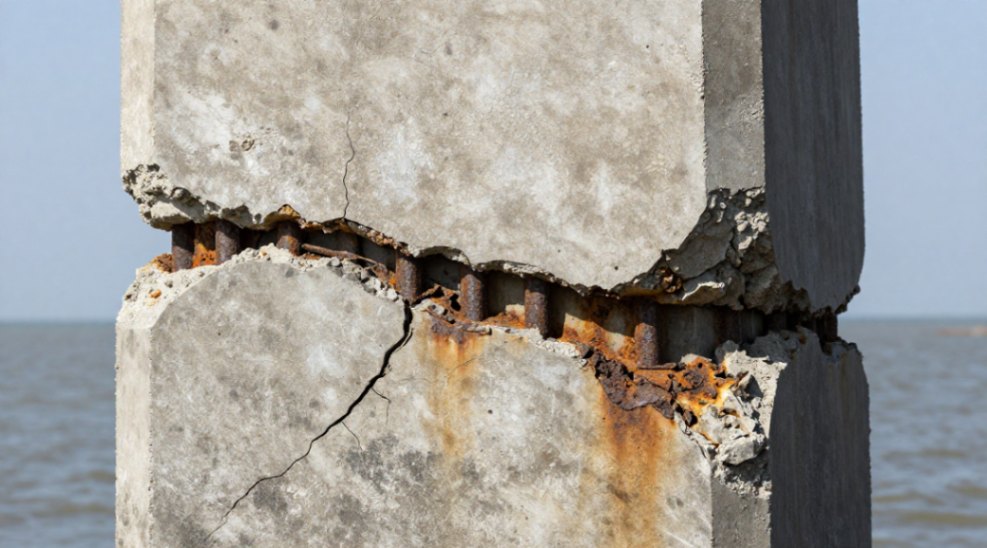
To understand the warning, you must first understand the enemy. Seawater sulfate attack is not a surface stain. It is a deep, chemical transformation. Sulfate ions from seawater penetrate the concrete’s pore network. When they encounter unreacted tricalcium aluminate (C3A) and calcium hydroxide within the hardened paste, they react to form expansive compounds like ettringite and gypsum. These crystals grow, generating immense internal tensile stresses. The concrete cracks from within. This cracking creates new pathways for more sulfates, chlorides, and water, accelerating the attack in a vicious cycle. The tidal zone is the most aggressive environment of all, with constant wetting and drying cycles concentrating salts and driving penetration deeper.
The primary defense of sulfate resistant cement is its chemical composition: a deliberately low C3A content, typically below 5% for Type V. By limiting the amount of this reactive phase, you limit the fuel for the destructive expansive reactions. This is fundamental. However, this is where the first critical error occurs. A low-C3A cement only addresses the chemical susceptibility. It does nothing to address the physical transport mechanisms. If the concrete is porous and permeable, sulfates will still ingress, find other reactive components, and cause damage. The cement type controls the chemistry of the battlefield, but the concrete’s permeability controls the speed and volume of the invading army.
Beyond the Cement: The Non-Negotiables Most Projects Miss
This leads to the core set of warnings. Never, under any circumstances, assume sulfate resistant cement is sufficient by itself. Your entire concrete system must be engineered for low permeability. This requires a multi-faceted strategy that is often neglected.
First, you must use supplementary cementitious materials (SCMs). Fly ash, slag cement, or silica fume are not optional additives for marine applications; they are essential co-stars. These materials perform a dual function. They react with calcium hydroxide, the other primary target for sulfates, converting it into additional durable binder. More importantly, they create a denser, more refined microstructure. This drastically reduces the size and connectivity of the capillary pore network, physically blocking the ingress of sulfate ions. A high-quality, low-C3A sulfate resistant cement blended with 25-40% slag cement represents a far more formidable barrier than neat Type V alone.
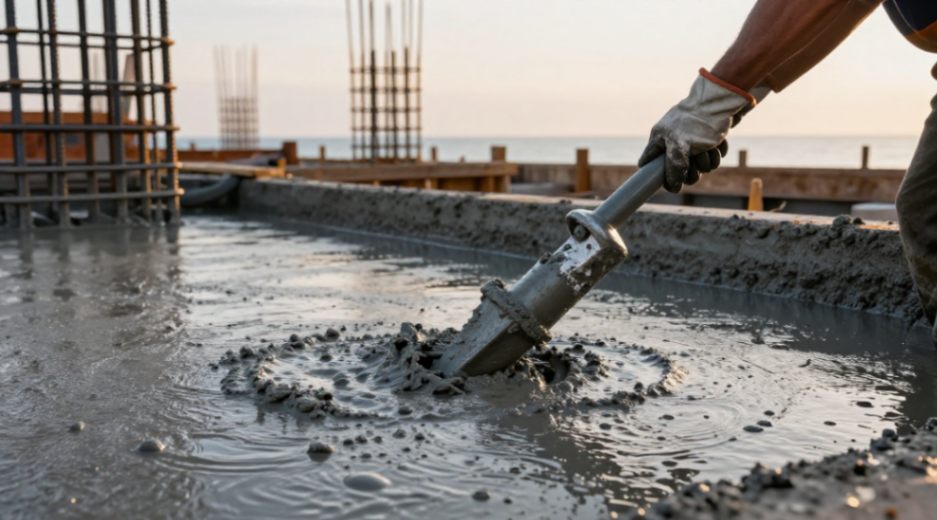
Second, you must demand perfect placement and curing. No material specification can compensate for poor workmanship. Inadequate consolidation leaves honeycombs and voids-direct highways for seawater. Insufficient curing, especially in the critical first 7 days, prevents the cement from fully hydrating and developing its intrinsic strength and density. For marine piles, foundations, and seawalls, you need a low water-to-cementitious materials ratio (typically below 0.40), meticulous vibration, and continuous moist curing. Allowing the concrete to dry out early is an unforgivable error that opens the door to rapid attack.
The False Economy of Omissions
A common temptation is to view surface coatings or waterproofing barriers as cheaper alternatives to a properly formulated, low-permeability concrete mix. This is a catastrophic miscalculation. Coatings degrade. They abrade, delaminate, and require constant maintenance and re-application. A single puncture or flaw renders the entire system useless, while the concrete beneath remains vulnerable. You are betting the structural integrity of a multi-million-dollar asset on a millimeter-thin film exposed to UV radiation, abrasion, and impact. True durability for marine environments comes from the innate, bulk properties of the concrete itself. A dense, impermeable concrete matrix with sulfate resistant cement at its heart provides passive, long-term protection that does not wear out or require constant intervention. The life-cycle cost savings are monumental, even if the initial mix cost is marginally higher.
The final warning concerns complacency with standards. ASTM C150 Type V defines a chemical composition. It does not define performance in a specific environment. Your project’s specific exposure conditions-splash zone, tidal zone, fully submerged-demand a performance-based specification that includes maximum permeability limits, minimum SCM content, and strict curing protocols. Merely citing “Type V cement” on a mix design is professional negligence. You must specify the entire system.
The Imperative Action
The evidence from decades of field performance is unequivocal. Successful marine structures are built on systems, not singular products. You cannot outsource this understanding. Your next step is non-negotiable. You must engage with a specialist who understands this holistic, material-systems approach. Do not rely on generic suppliers or standard specifications.
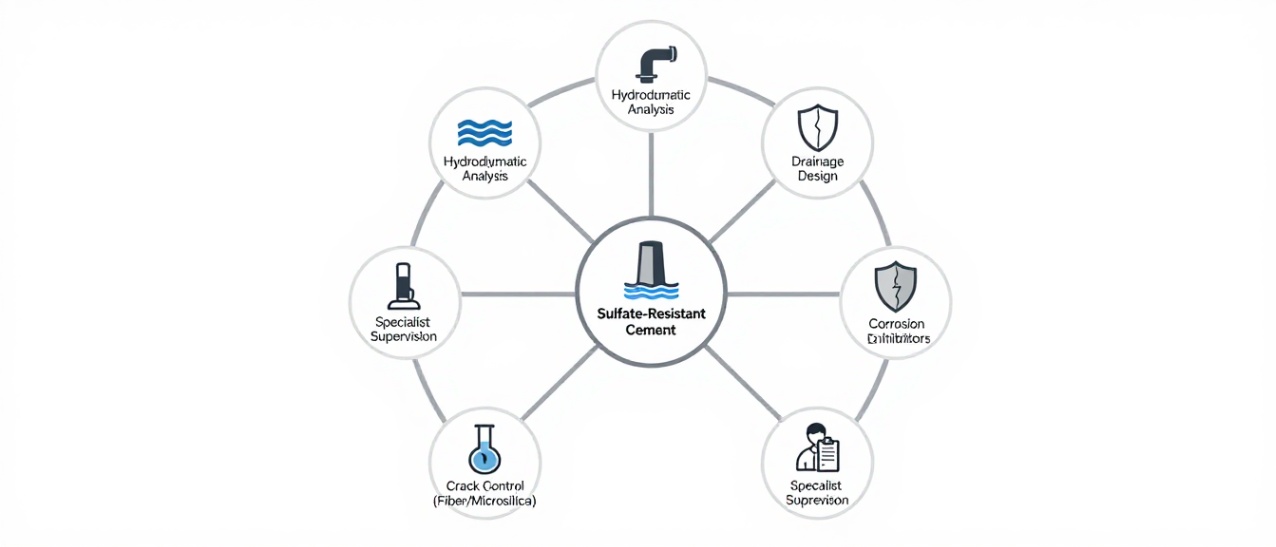
I strongly recommend consulting with our dedicated marine durability team. We do not just sell sulfate resistant cement; we engineer complete concrete solutions for aggressive environments. We will analyze your specific marine exposure, develop a performance-based mix design integrating the correct cement and SCMs, and provide rigorous specifications for placement and curing. The risk of failure is too high, and the cost of being wrong is staggering. Protect your investment and your reputation. Contact us today for a definitive consultation on your marine project. Specify wisely, or pay relentlessly.
We are the global leader in lightweight concrete and advanced engineered foam solutions. Known globally for its commitment to research, innovation, and applied expertise, we have been providing engineered foam solutions since the early 2012’s.
We can supply high-quality concrete admixture and foam concrete related products all over the world.
The company has a professional technical department and quality supervision department, a well-equipped laboratory, and equipped with advanced testing equipment and after-sales customer service center.
If you are interested, please feel free and contact us.