Professional solutions on concrete addtives, Concrete Foaming Agent, Superplasticizer, CLC Blocks Additives, and foaming machine

How to Select and Operate Industrial Foam Generating Equipment for Superior Precast Concrete
The Density Discrepancy You Can’t Ignore
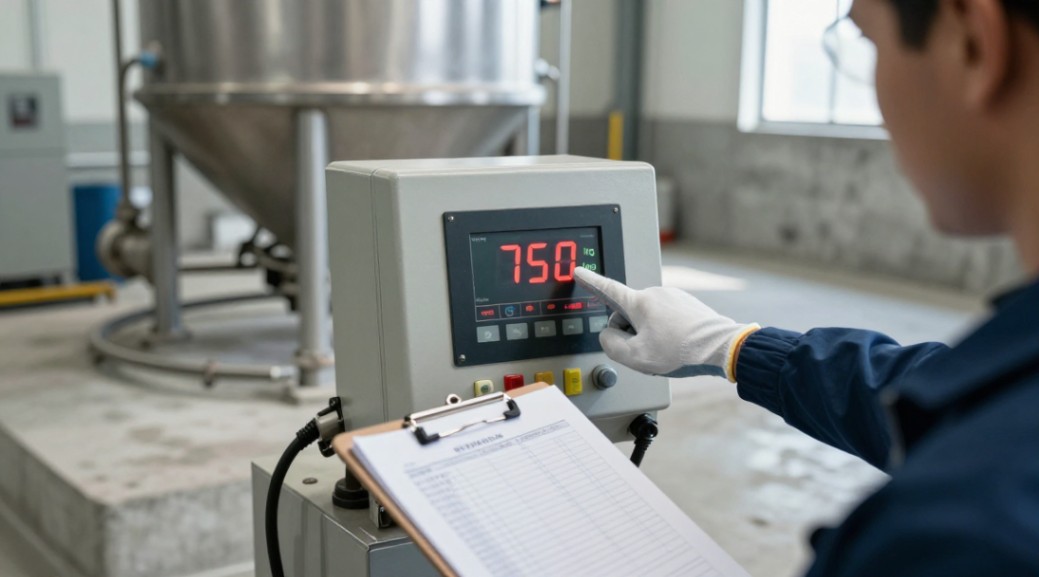
You calibrated your industrial foam generating equipment perfectly yesterday. Today, the same settings yield a foam concrete density 50 kg/m³ off target. This variability is not an outlier; it is the most common failure point in producing consistent lightweight precast concrete. Mastering this equipment eliminates guesswork and turns density into a precise, repeatable variable.
Defining the System’s Core Role
Industrial foam generating equipment for precast plants is a precision air-entrainment system. Its sole function is to produce a stable, consistent foam and inject it into a concrete base mix at a controlled rate. This process, known as foamed concrete production, replaces or supplements traditional lightweight aggregates. The result is a material with predictable density, strength, and thermal properties directly determined by the foam’s volume and quality.
Step-by-Step: How to Integrate and Operate Your Foam Generator
Step 1: Deconstruct the Core Components
Understand what you are managing. Every system has four non-negotiable parts:
- Generator: The heart. It mixes a precise ratio of foaming agent, water, and compressed air to create the foam. The mechanism-whether inline shearing or pressurized chamber-dictates bubble structure.
- Proportioning Pump: The muscle. It meters and delivers the raw foaming agent concentrate from the bulk tank to the generator.
- Foaming Agent Tank: The reservoir. A dedicated, often agitated, storage vessel for the chemical concentrate.
- Automated Control System: The brain. A PLC-based interface where you set and lock in the water-to-agent ratio and air pressure. This is your point of control for density consistency.
Step 2: Integrate with Your Batching Plant for Automation
Manual addition is obsolete. For production efficiency, the system must integrate with your plant’s PLC. The sequence is logical:
- The central batching controller calculates the required volume of foam for the target density.
- It triggers the foam generator to produce a specific volumetric output.
- The foam injects directly into the mixer or mixing truck, concurrently with other ingredients.
- The system resets, ready for the next batch. This closed-loop integration is what enables true volumetric mix production.
Step 3: Calibrate for Your Target Product Density
Calibration is not a one-time event. Follow this procedure for blocks, panels, or other elements.
- Define the Application: A 600 kg/m³ block requires a different foam volume than a 1000 kg/m³ structural topping.
- Establish the Base Mix: Lock down your cement, sand, and water ratios first. This is your constant.
- Run Controlled Trials: Produce small batches, incrementally adjusting the foam injection rate from the control panel.
- Measure and Correlate: Cast samples, measure wet and cured density, and record the exact generator settings for each. Create your own plant-specific correlation chart.
Step 4: Control the Three Critical Performance Factors
Density control depends entirely on managing these variables.
- Foam Stability: The foam must not collapse between generation and mixing. This depends on agent quality and the generator’s ability to produce a uniform bubble matrix.
- Bubble Structure: Aim for small, spherical, and closed bubbles. Large or irregular bubbles weaken the concrete matrix and reduce thermal insulation values.
- Cement Compatibility: Not all foaming agents work with all cement types or admixtures. Test compatibility before full-scale adoption. Incompatibility causes rapid foam breakdown and batch failure.
Step 5: Implement a Rigorous Maintenance Protocol
Precision equipment demands precision care. Your operational readiness checklist:
- Daily: Check compressed air filters and pressure. Verify pump seals for leaks.
- Weekly: Inspect all nozzles and mixing chambers for buildup or wear. Calibrate flow meters.
- Monthly: Perform a full system calibration against known standards. Audit foaming agent stock for shelf-life expiration.
- Always: Use a dedicated, high-performance synthetic foaming agent. Commodity detergents are a false economy; they destroy bubble structure and strength.
The Logical Comparison: Foam vs. Lightweight Aggregate
The choice is not arbitrary. Apply this reasoning.
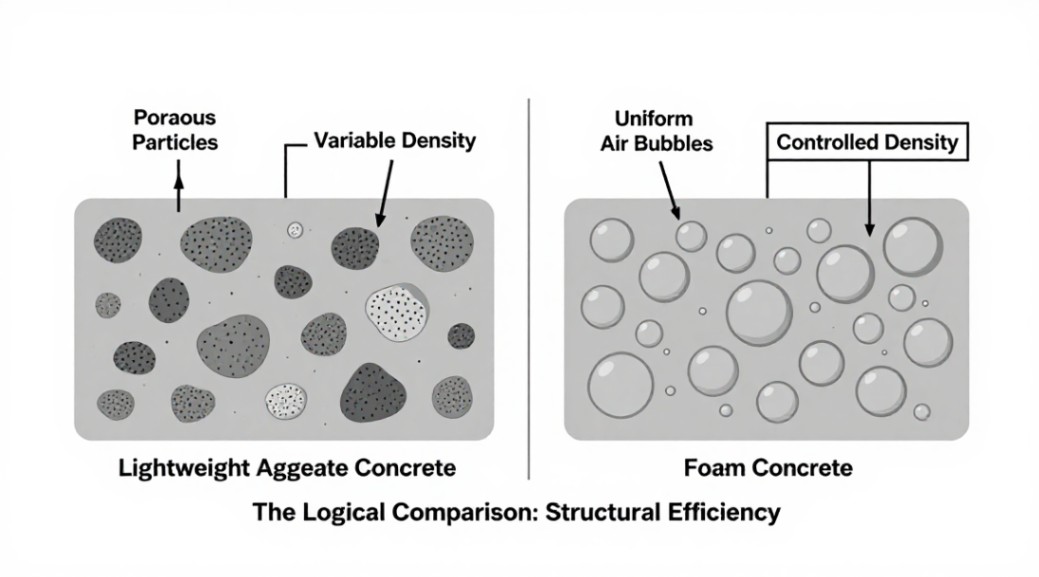
Choose foam generating equipment when you need extreme weight reduction (below 1200 kg/m³), superior thermal performance, and the ability to fine-tune density on a per-batch basis. The process offers superior flowability for complex molds.
Stick with traditional expanded clay or shale aggregates for applications where slightly higher weight is acceptable and you prioritize very high compressive strength at a given density. The aggregate provides inherent mechanical interlock.
Foam’s primary advantage is control. You adjust a dial. With aggregate, you change your entire material sourcing and grading.
Selecting Your Equipment: A Logic-Based Framework
Ignore marketing claims. Evaluate based on these operational criteria:
- Capacity Match: The generator’s output (liters of foam per minute) must meet your plant’s peak batch cycle time. Undersizing cripples productivity.
- Automation Level: Can the control system receive and execute commands from your main batcher? This is mandatory for modern plants.
- Construction Quality: Pumps and generators handling abrasive slurries require hardened materials. Stainless steel or engineered polymers are standard for critical wetted parts.
- Manufacturer Support: The provider must offer more than a manual. They must understand concrete batching and provide process validation support. This is the single most overlooked factor.
The Future is Measured and Connected
The next evolution is data transparency. Advanced industrial foam generating equipment now features IoT connectivity. This allows for real-time monitoring of key parameters: foam density at the discharge point, agent consumption per batch, and pump performance. You move from preventative maintenance to predictive analytics. You correlate foam data directly with final product strength and integrity test results, closing the quality control loop.
Your Next Action is Clear
Theoretical knowledge is insufficient. To achieve the density consistency and product performance outlined here, you must evaluate equipment under production conditions. The [Company Name] FoamMaster Pro Series is engineered to this exacting operational logic. Its closed-loop density feedback system and seamless batching plant integration eliminate the variability that plagues standard generators.
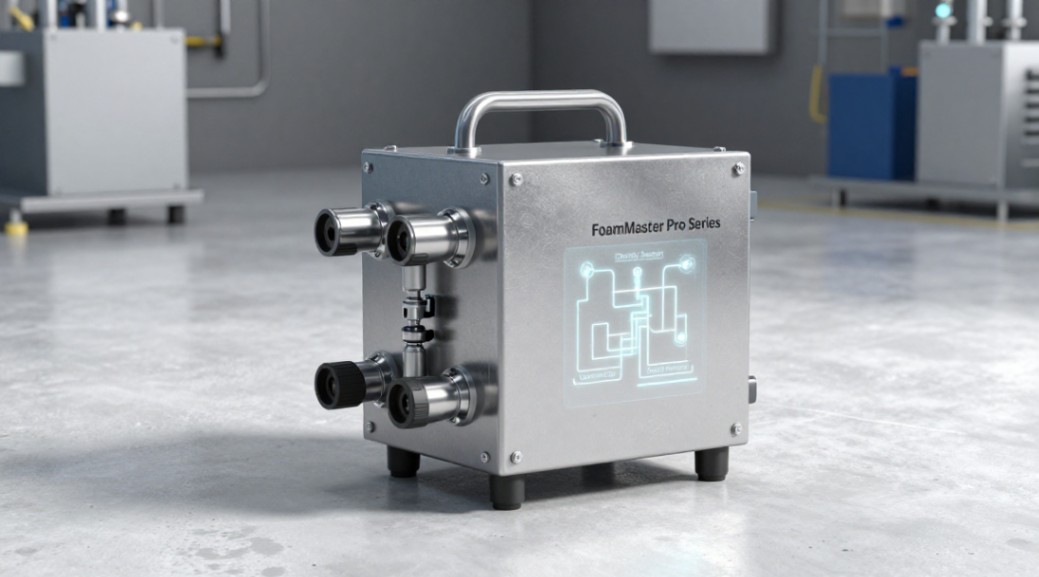
Request a live process demonstration at your facility. We will connect the FoamMaster Pro to your batching system and produce a trial batch of your specified lightweight mix. You will see the density control in real-time. Contact our engineering team today to schedule your on-site validation and receive a system specification sheet tailored to your plant’s output.
We are the global leader in lightweight concrete and advanced engineered foam solutions. Known globally for its commitment to research, innovation, and applied expertise, we have been providing engineered foam solutions since the early 2012’s.
We can supply high-quality concrete admixture and foam concrete related products all over the world.
The company has a professional technical department and quality supervision department, a well-equipped laboratory, and equipped with advanced testing equipment and after-sales customer service center.
If you are interested, please feel free and contact us.