Professional solutions on concrete addtives, Concrete Foaming Agent, Superplasticizer, CLC Blocks Additives, and foaming machine

Portable Foam Generators for On-Site Concrete: The Contractor’s Guide to Making the Right Choice
The Turning Point on the Job Site
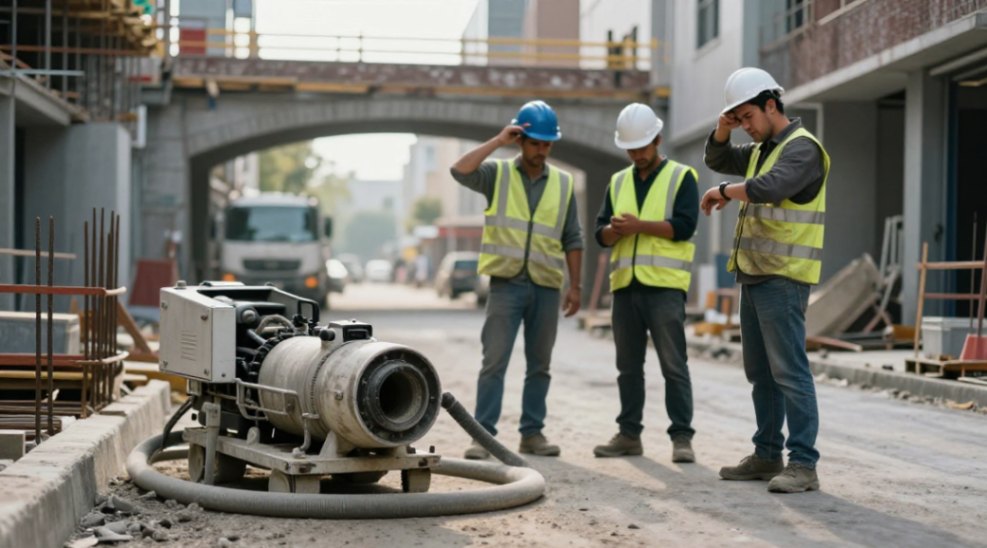
You’re looking at the quote for the next pour, and it hits you—again. The cost of trucked-in lightweight concrete feels unjustifiable. The logistics are a nightmare, with trucks blocked by low overpasses or tight urban streets. The schedule slips waiting for a load that was promised for 8 AM but arrives at noon. Worst of all, the crew is standing around, waiting, costing you money every minute. Have you experienced that knot in your stomach when the project’s budget and timeline start to unravel because of a material you can’t control? I’ve been there, on sites from industrial floors to rooftop fills, and I’ve seen how the simple act of generating foam where you need it transforms everything. It moves control from a distant plant to the palm of your hand. This isn’t just about a machine; it’s about reclaiming your project’s destiny.
Why On-Site Control Changes the Game
The core benefit of a portable foam generator for on-site concrete production is autonomy. You produce the cellular foam that creates lightweight concrete right where the pour happens. Industry analysis from firms like Global Market Insights consistently highlights that the single largest driver for mobile equipment adoption is the reduction of logistical risk. Think about it. No more being at the mercy of traffic, plant delays, or minimum order quantities that leave you with wasted material. You adjust the density batch by batch, from 800 kg/m³ for insulating roof screeds to 1600 kg/m³ for stable fill, with a twist of a valve. The consistency improves because the foam is fresh, and you integrate it with your base mix within minutes. You stop paying for transportation of 80% water and air, which is essentially what a pre-mixed lightweight concrete truck contains. The savings on fuel and carbon footprint aren’t just good for the bottom line; they’re becoming a non-negotiable for modern tenders.
The Heart of the System: Choosing Your Generator
Not all portable foam generators are created equal. Your choice hinges on a few critical specifications that dictate your on-site capability. First, examine the foam output capacity, typically measured in liters per minute. A unit rated for 400 L/min can service a continuous mixing operation, while a 150 L/min model suits smaller, batch-oriented projects. Match this to your expected pour rate. Next, the operating pressure, stated in bar or psi, is crucial. Higher pressure (6-8 bar) generally produces a finer, more stable bubble structure, which is essential for higher-strength applications. The system’s air and liquid (foaming agent solution) flow must be independently adjustable and precisely metered. Look for generators with corrosion-resistant components, especially in the pump and mixing chamber, as the foaming agent is a surfactant. Durability matters more than flashy features; a robust diesel or electric power pack that can run a full shift is worth its weight in gold.
Integration: From Component to Concrete
How does this equipment fit into your workflow? The process is methodical. You position the generator within a 50-meter hose run of your central mixing point, be it a pan mixer, ready-mix truck, or volumetric mixer. You connect a clean water supply and a dedicated line for the concentrated foaming agent, which you’ve pre-diluted to the manufacturer’s specified ratio, usually between 1:20 and 1:40. The generator draws these in, blending them with compressed air at a controlled pressure. This action creates a wet, shaving-cream-like foam. You then pipe this foam directly into the mixer containing your cement, sand, and water slurry. The integration is rapid. The entire goal is to add the foam as the last component, blending it just long enough for uniform distribution—typically 3 to 5 minutes in a forced-action mixer. Over-mixing collapses the bubbles. A skilled operator watches the slump and density, making micro-adjustments to the foam flow in real-time. This table outlines the core operational sequence:
On-Site Foam Concrete Production Sequence
| Step | Action | Key Control Parameter |
|---|---|---|
| 1. Setup | Position generator, connect water, foaming agent, and air lines. Prime system. | Ensure all connections are secure and lines are purged. |
| 2. Solution Prep | Dilute concentrated foaming agent to specified ratio (e.g., 1:30) in dedicated tank. | Accuracy is critical for consistent foam quality and cost control. |
| 3. Base Mix | Batch or mix cement, sand, and water to achieve a fluid slurry in the main mixer. | Achieve a homogenous, lump-free base before foam addition. |
| 4. Foam Generation | Start generator, set air and solution flow rates for target bubble structure and output. | Monitor pressure gauge; stable pressure indicates consistent foam. |
| 5. Integration | Pipe foam into the base mix. Mix for a set time (3-5 min). | Stop mixing immediately once uniform. Avoid over-mixing. |
| 6. Placement | Place or pump foam concrete promptly, typically within 20 minutes of mixing. | Do not re-mix or vibrate placed material excessively. |
The Direct Comparison: On-Site vs. Plant-Mix Delivery
Let’s lay the options side-by-side. Traditional pre-mix delivery from a plant seems simple. You call, they deliver. But the hidden costs pile up. You pay a premium per cubic meter for the lightweight aggregate or pre-generated foam. You pay for transportation over distance. You face strict time windows for discharge. If the pour is delayed or you need a small additional amount, you’re stuck. The material begins to set in the drum. Now, consider the on-site method with a portable foam generator. Your upfront cost is the machine rental or purchase, and the foaming agent. Your raw materials are standard cement, sand, and water. You produce exactly what you need, when you need it. You eliminate transport costs for the final product. The trade-off? You require an operator with specific knowledge, and you assume responsibility for consistent quality. For projects over 50 cubic meters, in remote locations, or with complex logistical barriers, the on-site equation almost always wins. For a one-day, 10-cubic-meter interior fill, a truck might still be simpler.
Where Mobile Foam Generation Truly Shines
The applications are where the theory proves itself. I’ve used these systems for void fills in abandoned pipelines and tunnels, where getting a ready-mix truck to the portal was impossible. We mixed and pumped the foam concrete a kilometer underground. Roof screeds and lightweight floor toppings in multi-story buildings are a perfect fit. You produce the material on the ground floor and pump it up, avoiding crane time and truck scheduling nightmares. Trench backfill for utilities, especially in sensitive areas near other structures, benefits from the low lateral pressure of foam concrete. Infrastructure rehabilitation, creating stable but lightweight embankments behind retaining walls, is another strong suit. The common thread across all these applications is a need for a specific, controlled lightweight material at a location where traditional delivery is either prohibitively expensive or physically impossible.
Operating with Confidence and Safety
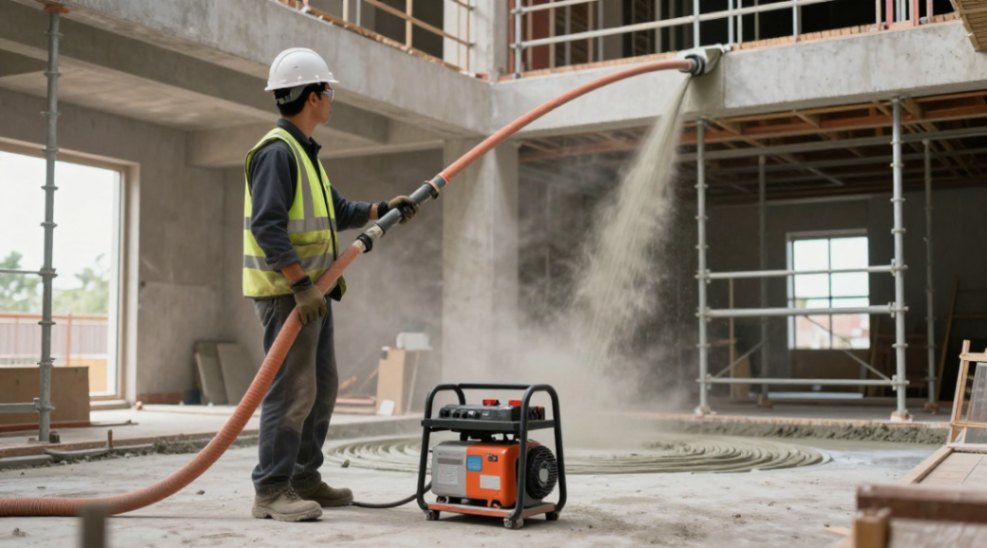
Operating a foam generator is straightforward but demands respect for the process. Safety starts with personal protective equipment: safety glasses, gloves, and hearing protection near the compressor. Before each startup, conduct a visual check. Inspect all hoses for cracks or leaks. Ensure the foaming agent tank is filled with the correct dilution and the water supply is clean and at adequate pressure. During operation, the key is monitoring. The pressure gauge should hold steady. A fluctuating gauge often signals a blockage or an empty solution tank. The foam itself should be visually consistent; if it appears watery or collapses quickly, check your agent dilution and air-to-solution ratio. Always follow a strict shutdown and flushing procedure. Run clean water through the system for several minutes to clear out any residual foaming agent. This prevents crystallization in the pumps and lines, which is the most common cause of mechanical failure.
Caring for Your Investment
Maintenance is the divider between a machine that lasts a season and one that lasts a decade. Daily, after flushing, you should lubricate any air motor or pump as per the manual. Weekly, inspect filters on the air and liquid lines and clean or replace them. Check all fittings for tightness. Monthly, take a closer look at pump seals and diaphragm integrity. Use only the foaming agent specified by the generator manufacturer. Off-brand agents might save a few dollars per liter but can contain sugars or solvents that damage seals and plastic components, leading to inconsistent foam and costly repairs. Keep a logbook. Record hours of operation, maintenance actions, and any adjustments made. This log becomes invaluable for troubleshooting and proves the machine’s care if you ever decide to sell it.
The Financial Decision: Rent, Buy, or Stay Traditional?
Let’s talk numbers, because this decision is financial. The first question is rent versus buy. Renting a portable foam generator makes sense for your first few projects, for a one-off large job, or if your workflow is seasonal. It converts a capital expense into an operating cost and often includes a well-maintained machine. Purchasing is a commitment for contractors who see a steady pipeline of suitable work. Calculate your return on investment by comparing your current all-in cost per cubic meter of delivered lightweight concrete against the cost of materials (cement, sand, agent) plus machine depreciation and operating costs. Don’t forget to factor in the saved costs of idle labor and equipment waiting for trucks. For most contractors crossing a threshold of 200-300 cubic meters per year of foam concrete application, ownership starts to look compelling. The real value, though, is strategic. It allows you to bid on and win jobs your competitors can’t touch due to access or cost.
The Future is Mobile and On-Demand
The trend is clear and accelerating. Tighter environmental regulations are pushing for reduced truck traffic and lower embodied carbon in materials. On-site production slashes transport emissions dramatically. Clients demand faster project timelines, which mobile production supports by eliminating a critical external dependency. Furthermore, the technology is becoming more reliable and user-friendly. Newer generators feature digital controls for precise density targeting and data logging for quality assurance reports. The barrier to entry is lowering. This isn’t a niche trick anymore; it’s becoming a standard tool in the progressive contractor’s arsenal for lightweight concrete solutions.
Your Path Forward
So, where does this leave you? If the pains of traditional delivery ring true, your next step isn’t to buy a machine immediately. It’s to analyze your last two or three projects that used lightweight concrete. Break down the real costs—material, transport, wait time, waste. Then, talk to equipment rental houses. Many offer demonstration units or short-term rentals. Run a trial on a controlled, small-scale part of a project. Let your crew get their hands on it. Feel the control. See the foam become concrete. The data and the hands-on experience will tell you everything you need to know to make a confident, informed decision for your business. The goal is to turn that knot in your stomach from project anxiety into the focused excitement of having a better tool for the job.
We are the global leader in lightweight concrete and advanced engineered foam solutions. Known globally for its commitment to research, innovation, and applied expertise, we have been providing engineered foam solutions since the early 2012’s.
We can supply high-quality concrete admixture and foam concrete related products all over the world.
The company has a professional technical department and quality supervision department, a well-equipped laboratory, and equipped with advanced testing equipment and after-sales customer service center.
If you are interested, please feel free and contact us.