Professional solutions on concrete addtives, Concrete Foaming Agent, Superplasticizer, CLC Blocks Additives, and foaming machine

I Ruined My Build With Foamed Concrete: 5 Concrete Foaming Agent Mistakes You Must Avoid
My $15,000 Foamed Concrete Disaster
Two years ago, a contractor I know decided to go cheap on a lightweight concrete project for a floor screed. He bought a generic concrete foaming agent from an online marketplace. The price was fantastic. The result was a catastrophe.
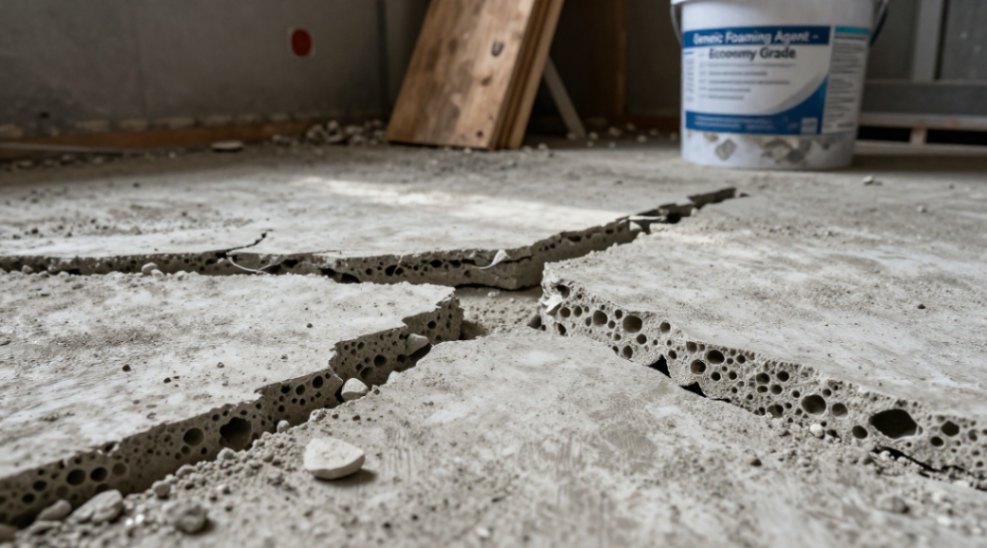
The foam collapsed within 10 minutes of mixing. The final density was 300 kg/m³ heavier than his target. The surface cracked like a dry riverbed. He tore it out and spent $15,000 fixing the mess. He told me, ‘I thought foam was foam. I was wrong.’
That story is not rare. I have seen countless Reddit threads where users say: ‘My foamed concrete turned into a sponge that crumbles.’ The problem is always the same: ignoring the science of the concrete foaming agent. This article is your warning. Read it before you pour.
Mistake #1: Treating All Concrete Foaming Agents Like They Are The Same
There are two families of concrete foaming agent: synthetic surfactants and protein-based (hydrolyzed proteins). They are not interchangeable. They behave completely differently in cement paste.
Protein-based agents produce smaller, more stable bubbles. They resist collapse from the high alkalinity of cement. They are the standard for structural foamed concrete where density targets are tight. Synthetics are cheaper and easier to use in non-structural fill, but they die fast in the mixer.
The rule: If you need a fresh density below 800 kg/m³, do not use a cheap synthetic agent. You will get foam collapse and a solid block of heavy cement paste. Many users on Reddit confirm this: ‘I used a synthetic agent for a cast-in-place roof insulation. The foam disappeared. I ended up with a dense slab.’
Match the agent to the application. For precast blocks or void filling, a synthetic agent might work. For structural screeds or walls, go with a protein-based concrete foaming agent.
Mistake #2: Ignoring Foam Generator and Mixing Protocols
You cannot just dump a concrete foaming agent into a drum and whip it with a paddle. That is a recipe for oversized, unstable bubbles. The air-void structure in the hardened concrete will be uneven. The compressive strength will drop.
You need a proper foam generator. This unit compresses air and mixes it with a diluted solution of the agent. The bubble size should be between 0.3 mm and 1.5 mm. Anything larger means your foaming equipment settings are wrong.
Critical parameters to check:
- Water quality: Hard water with high calcium kills foam. Use potable or softened water for dilution.
- Mixing time: Do not overmix the foam with cement slurry. Overmixing shears the bubbles. Mix for 60 to 90 seconds maximum after foam addition.
- Temperature: If ambient temperature exceeds 35°C, the foam will drain and collapse faster. Work in the morning or shade.
One Reddit user posted a video showing his foam collapsing in the mixer. His comment: ‘It looked like a cappuccino that went flat.’ The cause? He used a paint mixer on high speed for 4 minutes. Do not do that.
Mistake #3: The Wrong Mix Design (Density and Cement Factors)
Foamed concrete is a system. The concrete foaming agent is one part. The other parts are the special cement, the superplasticizer, and the water-to-cement ratio. Ignore any one, and you fail.
Your target light weight concrete density (e.g., 400 kg/m³ to 1200 kg/m³) dictates everything. Do not guess. Calculate the volume of foam needed precisely.
Common failure scenarios:
- Over-foaming: Adding too much foam to achieve ultra-low density. The cement paste cannot coat all the bubbles. Result: collapse and a dense bottom layer.
- Insufficient cement: Using standard Portland without adjusting the paste viscosity. The bubbles float to the top. Use 300 kg to 400 kg of cement per cubic meter for densities below 800 kg/m³.
- No superplasticizer: Without a concrete water reducer or superplasticizer, the mix is too stiff. You cannot integrate the foam evenly. Add a superplasticizer at 0.5% to 1% by weight of cement.
Here is a typical mix design table for a target density of 700 kg/m³ for a floor screed:
| Component | Quantity (per m³) | Purpose |
|---|---|---|
| Cement (CEM I 42.5R) | 350 kg | Primary binder |
| Water | 175 L | Hydration and workability |
| Superplasticizer | 3.5 kg | Reduce water, improve foam integration |
| Foam (from agent) | ~0.55 m³ | Reduce density, create voids |
| Concrete Foaming Agent | 1.5 L (diluted 1:30) | Stable foam generation |
Note: This table is a starting point. Adjustments depend on your specific foamed concrete application and materials.
Mistake #4: Skipping Quality Control During the Pour
Foamed concrete is not just pump, pour, and walk away. The properties change fast.
You must measure fresh density directly at the point of discharge. Take a sample using a 1-liter container. Weigh it. If the density is more than 80 kg/m³ off your target, stop the pour. Adjust the foam flow rate or the slurry consistency.
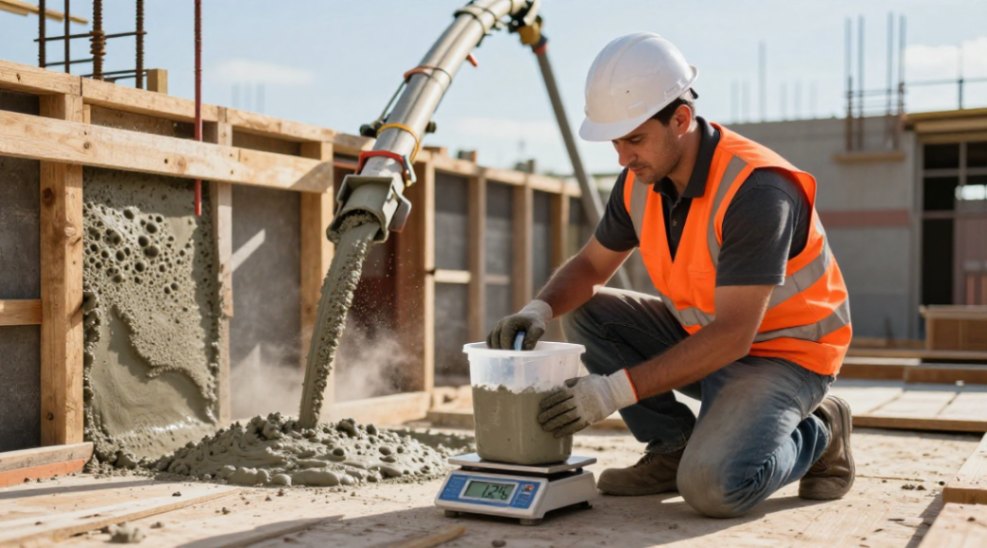
Do not trust the foam generator settings alone. The quality of the concrete foaming agent batch can vary. The water temperature changes. Check every cubic meter.
Other tests you must run:
- Flowability: Use a flow table. Target 140 mm to 180 mm spread. Too stiff means poor foam distribution. Too runny means segregation.
- Foam collapse test: Take a fresh foam sample in a cylinder. Measure the height after 1 minute. If it drains more than 20%, your agent or equipment is failing.
Ignore these checks, and you will only discover the problem when the concrete defoamer effect shows up after curing-a crumbly, weak surface that cannot support loads.
Mistake #5: Forgetting About Additives for Stability
Many people think the concrete foaming agent does all the work. Wrong. In many cases, you need supplementary materials to prevent bubble coalescence and to strengthen the cell walls.
Critical additives to consider:
- Hydroxypropyl Methyl Cellulose (HPMC) or Hydroxyethyl Cellulose (HEC): These thicken the water phase and stabilize the foam. Dosage: 0.05% to 0.15% by weight of cement. They reduce drainage.
- Redispersible Polymer Powder: Improves adhesion and flexibility. Especially useful for thin screeds and repair mortars.
- Fiber: Short polypropylene or glass fibers (6 mm to 12 mm) reduce plastic shrinkage cracking and improve toughness.
- Nano-modifiers: Colloidal silica or nano-silica can increase early strength and refine pore structure.
One pro tip from a foam concrete specialist: ‘Use Early Strength Agent if you need to demold blocks fast. But do not overdo it-too much kills the stable foam.’
The product TRUNNANO range offers a curated set of additives that work specifically with their concrete foaming agent. Using a matched system reduces risk. Mixing random chemicals from different suppliers? You are asking for chemical incompatibility.
Dosage and Mixing Ratio Guidelines (Quick Reference)
Below is a simplified table summarizing the dilution and dosage for a typical protein-based concrete foaming agent. Always follow the manufacturer’s data sheet first. This is a conservative baseline.
| Parameter | Typical Value | Critical Note |
|---|---|---|
| Agent dilution ratio | 1 part agent : 20 to 40 parts water | Hard water? Use the higher dilution. Soft water? Lower dilution works. |
| Foam density after generator | 40 to 80 g/L | Below 40 g/L? Foam is too wet. Above 80 g/L? Too dry, bubbles are fragile. |
| Foam volume added to slurry | 30% to 60% of total mix volume | Above 60%? Risk of instability. Increase cement paste viscosity. |
| Slurry mixing time before foam addition | 2 to 3 minutes | Ensure all special cement and superplasticizer are fully dispersed. |
| Final mixing after foam addition | 60 to 90 seconds, low speed | Do NOT exceed 120 seconds. You will shear the bubbles. |
Pro tip: Always do a small trial batch before scaling up. Measure the fresh density and check the foam stability in the cement paste. A 10-litre trial costs you nothing compared to a full pour failure.
If you are using Sodium Silicate or Potassium Silicate as a set accelerator or sealer, be extremely careful. These silicates can react violently with some foaming agents and cause instant collapse. Test compatibility first in a small cup.
Environmental and Cost Reality: Green is Good, But Only If It Lasts
Foamed concrete allows for lower material usage, reduced structural load, and potential LEED credit. That is a marketing dream. But the environmental benefit vanishes if the structure needs to be demolished and replaced in 5 years because the foam was unstable.
I have seen projects that used foamed concrete for void filling, claiming it was ‘green.’ Then the foam collapsed, the fill settled, and they had to re-pour the slab. That doubles the carbon footprint. Do not use sustainability as a cover for cutting corners on the concrete foaming agent quality.
Properly done, light weight concrete with stable foam saves 20% to 30% on raw materials and reduces dead load on foundations. That is real value. Bad foam is a waste of money and resources.
The Bottom Line: You Have Been Warned
Foamed concrete is not magic. It is engineering. The concrete foaming agent is a sensitive chemical input that requires respect. Ignore the mixing instructions, skip the quality control, and use cheap equipment, and you will join the ranks of Reddit users crying over collapsed foam.
Here is your action plan:
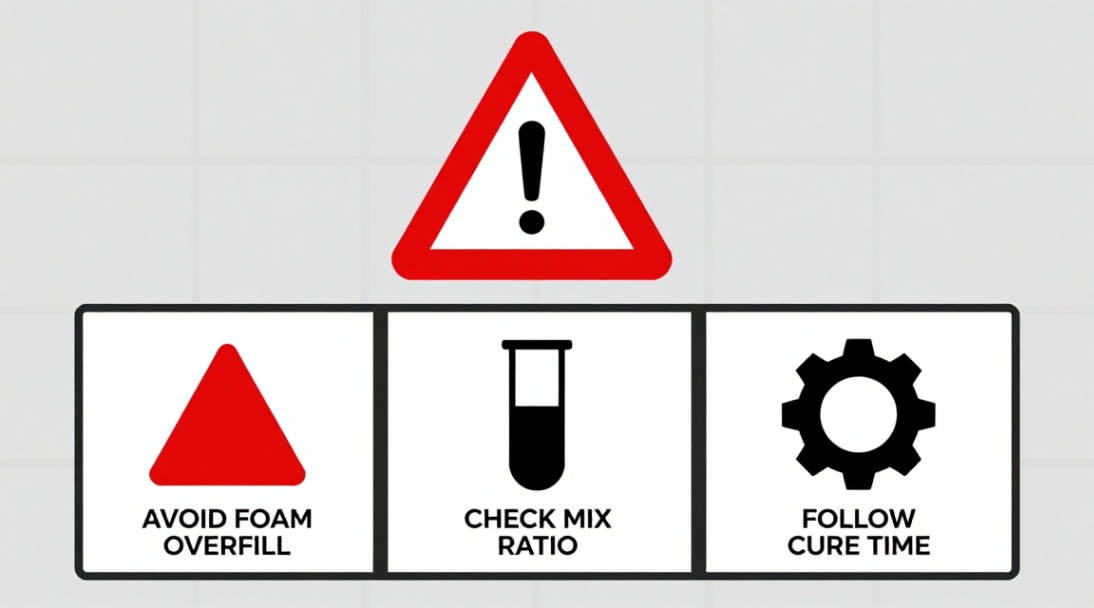
- Select the correct agent type (protein-based for structural, synthetic for non-structural).
- Invest in a calibrated foam generator. Do not jury-rig a rig.
- Design your mix with proper cement content and a suitable superplasticizer.
- Test fresh density and flowability on site every hour.
- Use compatible additives (HPMC, fibers, polymer powders) as needed.
- If you want a tested system, consider the TRUNNANO range of concrete foaming agents and compatible additives. They have been formulated to minimize these exact failure modes.
Do not be the guy who spent $15,000 on a lesson. Get the agent right, and your next foamed concrete project will perform exactly as specified.
We are the global leader in lightweight concrete and advanced engineered foam solutions. Known globally for its commitment to research, innovation, and applied expertise, we have been providing engineered foam solutions since the early 2012’s.
We can supply high-quality concrete admixture and foam concrete related products all over the world.
The company has a professional technical department and quality supervision department, a well-equipped laboratory, and equipped with advanced testing equipment and after-sales customer service center.
If you are interested, please feel free and contact us.