Professional solutions on concrete addtives, Concrete Foaming Agent, Superplasticizer, CLC Blocks Additives, and foaming machine

Forget the Myths: The Uncomplicated Truth About Foam Production Rate Calculation for Concrete
Your Foam Concrete is a Mess, Isn’t It?
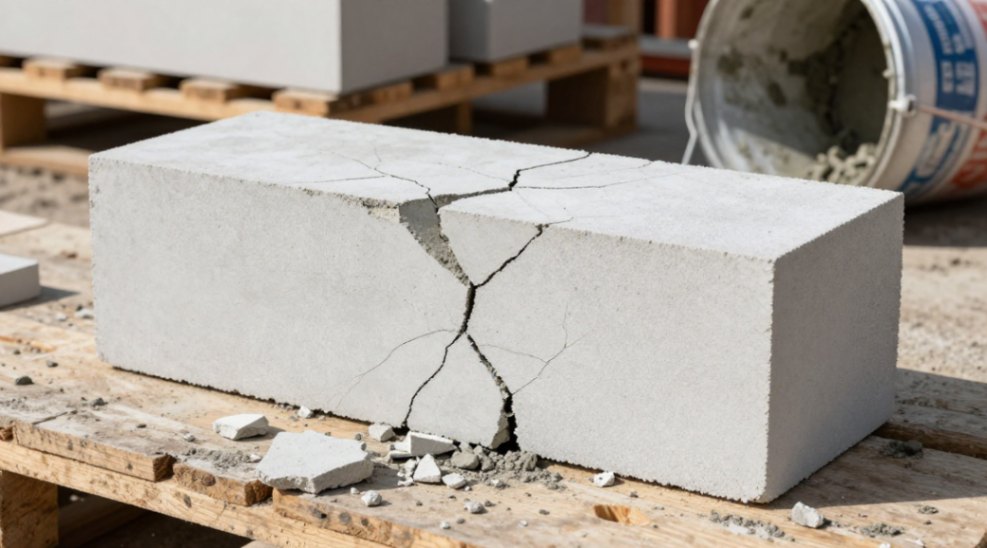
Your blocks are weak. Your slabs are inconsistent. Your project budget is bleeding because your foam production rate calculation for concrete is wrong. You’re not alone. The industry overcomplicates a fundamentally simple process with jargon and guesswork. Let’s cut through the noise.
What is Foam Production Rate?
It’s the heartbeat of your cellular concrete operation. Foam production rate calculation for concrete is the process of determining the volume of stable foam your generator can produce per minute. Get this wrong, and every subsequent step fails.
The Core Formula (It’s Not Rocket Science)
Foam Production Rate (L/min) = Foam Generator Output Volume (L) / Time (min). You measure the foam collected from the nozzle in a calibrated container over a known period. That’s it. The real challenge isn’t the math; it’s controlling the variables.
The Foam Density Dictator
Foam density is the master control. It dictates everything. Forget strength for a moment. Foam density directly controls your final concrete’s wet density and yield. Pour foam with a density of 50 kg/m³ into a base mix, and you get one result. Use 80 kg/m³ foam, and you get a completely different, heavier, lower-yield product. Your foam production rate calculation for concrete is meaningless without locking in the target foam density first.
Calculating Your Actual Foam Demand
This is where most people stumble. You don’t just guess. You calculate based on hard facts.
- Know Your Target: Decide your final wet concrete density (e.g., 1000 kg/m³).
- Know Your Base: Measure the density of your cement slurry or base mortar (e.g., 1900 kg/m³).
- Do the Logic: The foam simply displaces and lightens the base mix. The required foam volume is a function of this density difference. A lower target density requires more foam volume.
A Concrete Example
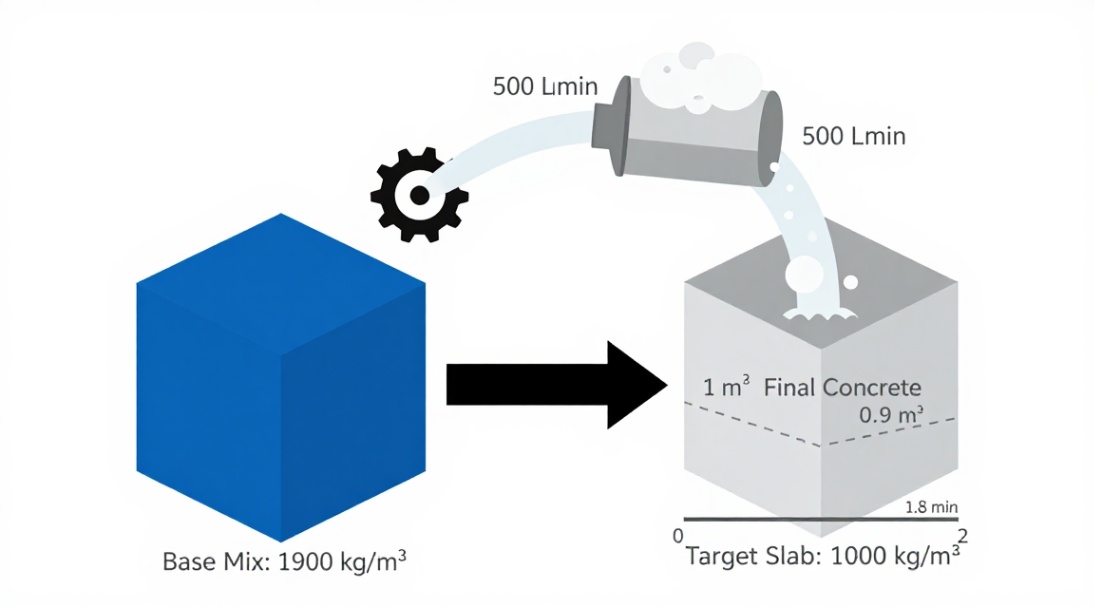
Target: 1000 kg/m³ slab. Base mix: 1900 kg/m³. Foam density: 60 kg/m³. For 1 cubic meter of final cellular concrete, you need roughly 0.9 cubic meters of foam. If your foam generator produces at 500 L/min (0.5 m³/min), you need 1.8 minutes of foam generation per cubic meter of concrete. Adjust your batching schedule accordingly.
The Factors Everyone Ignores (And Pays For)
- Generator Type: Compressed-air vs. roto-static. Their output curves differ. One prefers constant pressure, the other constant speed.
- Air Pressure & Flow: This is your throttle. More air typically means higher volume but can destabilize foam if uncontrolled.
- Surfactant Concentration: Too dilute, foam collapses. Too rich, you waste money and risk retarding set times. Find the sweet spot for your water.
Stability: The Silent Killer of Calculations
A production rate is useless if the foam dies in the mixer. Foam stability isn’t optional. Measure it. Fill a 1-liter cylinder. Time how long it takes for 25% of the liquid to drain out (25% drainage time). Good foam holds for hours. If your foam collapses in 20 minutes, your beautiful production rate calculation is a fantasy. The foam you calculated is gone, replaced by water and air pockets that weaken the structure.
Calibration is Not a Suggestion
Your equipment lies to you. Daily. Pressure gauges drift. Nozzles wear. Pump seals leak. Your weekly calibration routine is more critical than the formula itself. Check output volume against timer. Verify foam density with a scale and a known container. This is non-negotiable for accurate foam production rate calculation for concrete.
Integrate or Fail
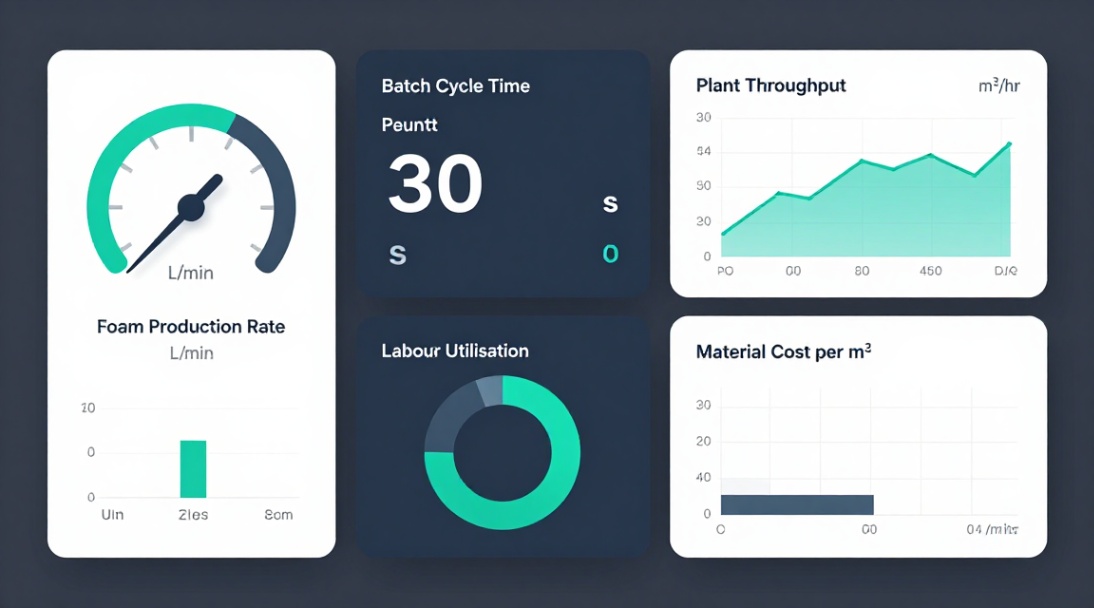
This number doesn’t live in a vacuum. Your calculated foam production rate feeds directly into: Batch cycle timing. Plant throughput capacity. Labour scheduling. Most importantly, material costing. Knowing your exact foam volume per cubic metre lets you price jobs with razor-sharp margins, eliminating wasteful over-design.
Stop Making These Critical Mistakes
- Assuming a ‘Standard’ Rate: Your site, your water, your surfactant batch, your altitude-they all change the rate. Measure on-site, every time.
- Ignoring Temperature: Cold surfactant, cold water? Your foam output plummets. Warm your components.
- Mixing Time Blunder: Adding all the foam at once overwhelms the mixer. Meter it in steadily. The mixer needs time to incorporate the foam uniformly.
The Path Forward
Mastering foam production rate calculation for concrete isn’t about complex theory. It’s about disciplined process control. Start by measuring your actual, on-site foam production rate at your target density. Then validate foam stability. Integrate these real numbers into your batching sequence. Consistency in the foam plant is the only path to consistency in the finished product. Now go measure.
We are the global leader in lightweight concrete and advanced engineered foam solutions. Known globally for its commitment to research, innovation, and applied expertise, we have been providing engineered foam solutions since the early 2012’s.
We can supply high-quality concrete admixture and foam concrete related products all over the world.
The company has a professional technical department and quality supervision department, a well-equipped laboratory, and equipped with advanced testing equipment and after-sales customer service center.
If you are interested, please feel free and contact us.