Professional solutions on concrete addtives, Concrete Foaming Agent, Superplasticizer, CLC Blocks Additives, and foaming machine

Pervious Concrete Foaming Agent Warnings: Avoid These 5 Costly Field Mistakes
Pervious Concrete Foam Q&A: The Crucial Pitfalls You Must Avoid
Let’s talk straight. A foaming agent for pervious concrete mix design isn’t just an additive; it’s the architect of your void structure. Get it wrong, and the entire system fails. We’ve seen projects collapse-literally and financially-over simple, avoidable errors. Based on countless jobsite post-mortems and online community gripes, here’s what you absolutely must not do.
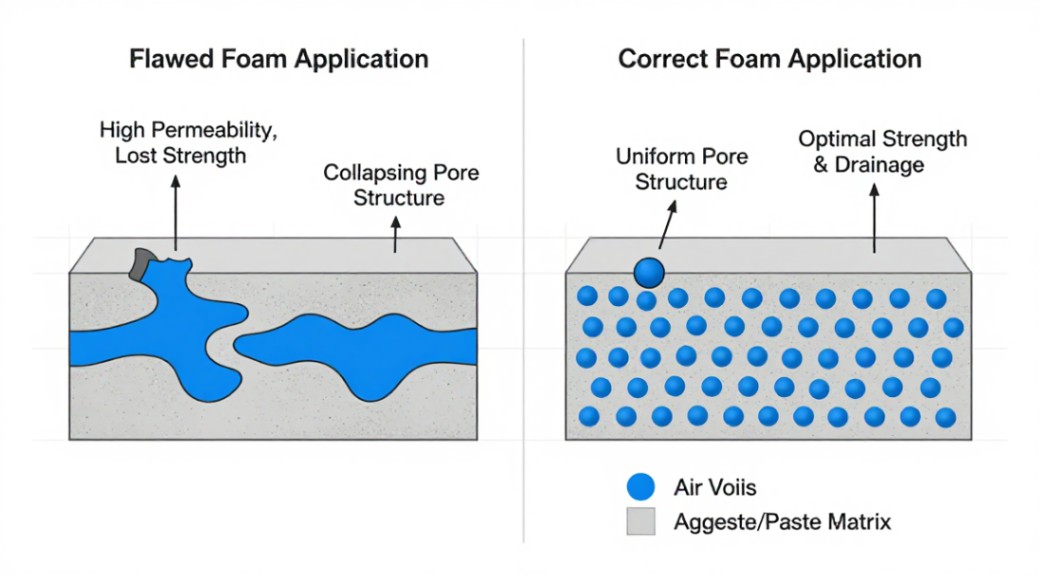
1. What is the biggest mistake when choosing a foaming agent?
Choosing based on price alone is a recipe for disaster. The key performance properties are stability, half-life, and dilution ratio. A cheap agent with poor stability will collapse during mixing or placement. You’ll lose your designed void content before the concrete even sets. On forums, you’ll see frustrated contractors saying, ‘My foam disappeared as soon as it hit the mixer.’ That’s almost always a low-stability agent. Invest in a product with proven, long-lasting bubble structure.
2. How do you destroy foam during the mixing procedure?
You murder foam by using the wrong mixing method. Never dump concentrated foaming agent directly into a drum mixer with your aggregates. This ‘throw-it-all-in’ approach creates inconsistent, weak foam. The correct approach is the pre-foaming method: use a dedicated foam generator to produce stable, dry foam, then gently fold it into the mortar base mix. The ‘wet method’ of adding diluted agent to the mixer is a common pitfall that leads to wildly variable density and permeability.
3. What’s the most dangerous error in dosage calculation?
Guessing. Never eyeball the dosage of foaming agent for pervious concrete. Dosage directly controls density, which directly controls strength and permeability. A 5% error can drop compressive strength by 20% or more. Calculate it based on your target wet density. Then, stick to that number. We’ve reviewed jobs where the crew added ‘a little extra’ foam to make the concrete easier to place. The result? A parking lot that raveled under normal traffic. The trade-off between strength and permeability is not flexible. Dial in your number and control it rigidly.
4. Why does foam sometimes fail with other mix components?
Compatibility testing is non-negotiable. You can’t assume your foaming agent will play nice with every superplasticizer, air-entraining admixture, or cement source. Chemical conflicts can destabilize foam instantly. Always run small batch tests with your exact materials before hitting the job site. A recurring theme in contractor feedback is, ‘It worked in the lab, but failed on site.’ Nine times out of ten, a material substitution-a different brand of superplasticizer, for instance-was the culprit. Test your full system.

5. What field QC test do crews most often skip (and regret)?
They skip checking the foam quality itself. The foam coming out of your generator must be ‘dry,’ with a uniform bubble size. The ‘golf ball’ test is simple: catch a pile of fresh foam in your hand. It should hold its shape without dripping water. If it’s wet and slumps, your water-to-agent ratio is off, and your concrete will be weak. Checking only the fresh concrete unit weight isn’t enough. Bad foam guarantees bad concrete. Monitor the foam at the source every single batch.
The Real-World Trade-Offs and Final Advice
Using a foaming agent for pervious concrete mix design is a balancing act. You are trading absolute strength for permeability and stormwater benefits. Alternative methods like ‘no-fines’ concrete (using no small aggregates) exist, but foam gives you far superior control over the void structure and finished surface.
The sustainability payoff is huge-reducing runoff, recharging groundwater-but only if the installation is durable. Avoid the pitfalls above by planning meticulously. Source a high-quality, stable foaming agent. Use a proper foam generator. Calculate and control your dosage. Test for compatibility. And never, ever skip quality checks on the foam itself. Your project’s longevity depends on it.
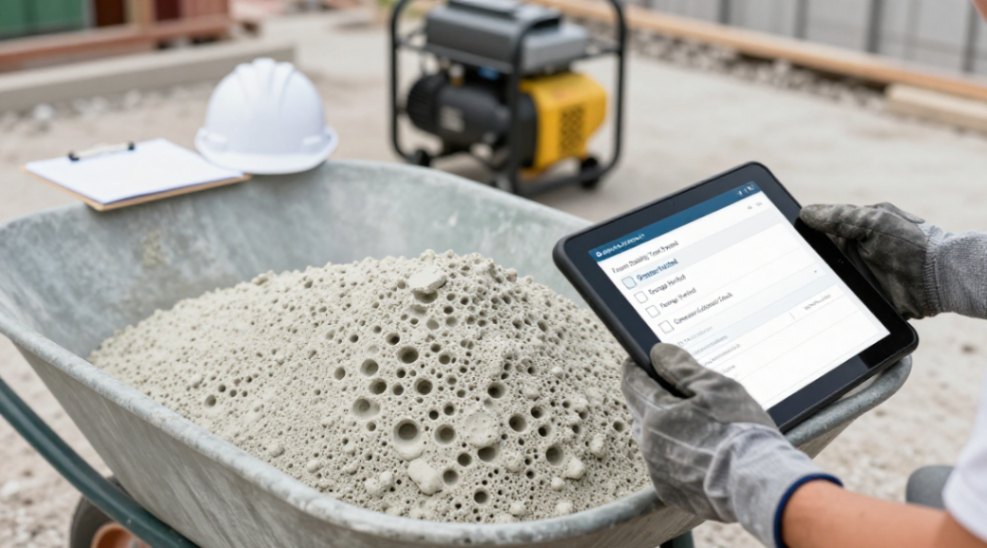
Now, take that to your next mix design meeting. Your most valuable tool isn’t just the agent; it’s the knowledge of what can go wrong and how to prevent it. Go build something that lasts.
We are the global leader in lightweight concrete and advanced engineered foam solutions. Known globally for its commitment to research, innovation, and applied expertise, we have been providing engineered foam solutions since the early 2012’s.
We can supply high-quality concrete admixture and foam concrete related products all over the world.
The company has a professional technical department and quality supervision department, a well-equipped laboratory, and equipped with advanced testing equipment and after-sales customer service center.
If you are interested, please feel free and contact us.