Professional solutions on concrete addtives, Concrete Foaming Agent, Superplasticizer, CLC Blocks Additives, and foaming machine

What is Non-Metallic Concrete Fiber? Your Complete Guide to Tougher Industrial Flooring
A Surprising Fact About Industrial Floors
Industry studies suggest that over 60% of all premature failures in concrete industrial floors relate directly to plastic shrinkage cracking and corrosion. The traditional steel reinforcement you often rely on? It can become a liability. Let’s explore a superior solution.
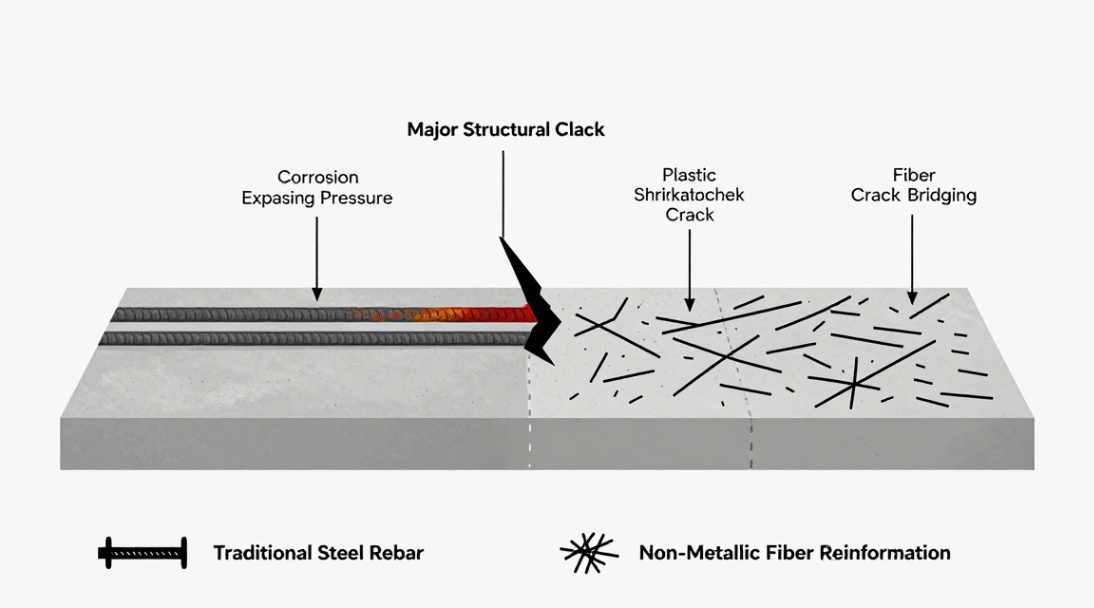
Defining Non-Metallic Concrete Fiber
Non metallic concrete fiber for industrial flooring refers to engineered micro-reinforcement, typically made from synthetic polymers like polypropylene or a blend of polyolefins. You mix these fibers, which are fine and hair-like, directly into the concrete batch. Their primary job is not to replace structural steel, but to control cracking from the moment the concrete is placed. They create a three-dimensional reinforcement network that holds the concrete matrix together as it shrinks, hardens, and endures stress. This fundamentally changes the material’s performance from the inside out.
Why It’s the Right Choice for Industrial Floors
Industrial flooring demands resilience. It must withstand punishing loads, chemical spills, abrasion from hard-wheeled traffic, and thermal shifts. Non-metallic fibers are engineered specifically for this arena. They offer a unique combination of toughness and inertness that traditional materials struggle to match. You achieve a floor that is more monolithic, more durable, and fundamentally safer in harsh environments.
Core Benefits: More Than Just Crack Control
While crack control is the headline benefit, the advantages run deeper. These fibers enhance the concrete‘s ability to absorb energy from impacts and resist surface wear. More importantly, they are completely immune to corrosion. You eliminate the risk of rust stains, concrete spalling caused by expanding rust, and the conductive hazards associated with steel fibers or mesh in environments with electrical equipment or sensitive machinery.
Non-Metallic vs. Steel Fiber: A Direct Comparison
This is where your decision becomes clear. While both materials reinforce concrete, their performance profiles differ drastically in an industrial context. Steel fibers provide excellent post-crack strength for heavy structural loads. However, for the vast majority of industrial slabs-on-grade-where durability, surface integrity, and chemical resistance are paramount-non-metallic fibers provide a more complete solution. Let’s compare the key attributes side-by-side.
| Aspect | Non-Metallic Synthetic Fiber | Steel Fiber |
|---|---|---|
| Primary Function | Plastic & shrinkage crack control, secondary reinforcement | Structural post-crack flexural/tensile strength |
| Corrosion Resistance | Excellent. Inert in virtually all chemical environments. | Poor. Susceptible to rust from water, chlorides, chemicals. |
| Crack Control Mechanism | 3D micro-reinforcement that holds concrete together during early-age shrinkage. | Bridges cracks after they form, providing residual strength. |
| Safety & Aesthetics | No rust stains, non-conductive, no corrosion spalling. | Potential for rust stains, spalling, and conductive hazards. |
| Impact on Finish | Fibers are fine and easily finished; minimal surface visibility. | Can be difficult to finish; fibers may protrude. |
| Best For (Industrial) | Warehouse slabs, chemical plants, food/beverage facilities, areas with electrical risks. | Heavy industrial pits, foundations, overlays with extreme load demands. |
Application and Best Practices for Success
Using non metallic concrete fiber for industrial flooring is straightforward, but precision matters. You must follow a proven process to unlock its full potential.
Mixing and Placement
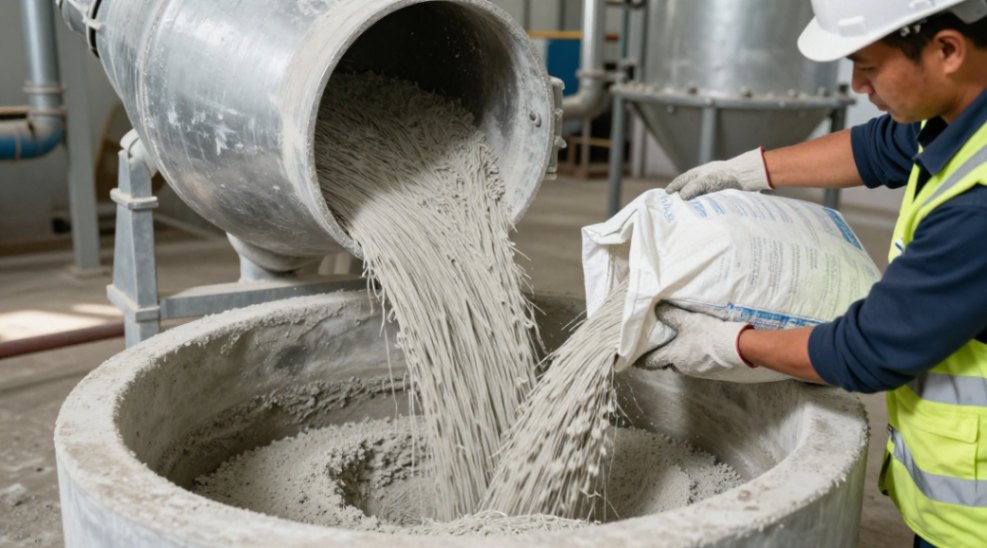
Introduce the fibers into the concrete mix at the batch plant or on-site in the truck mixer. Ensure adequate mixing time-typically 5-8 minutes at high speed-to achieve uniform dispersion. A well-dispersed mix should look like standard concrete, not “hairy.” Placement and consolidation procedures are identical to plain concrete. You can vibrate as normal.
Dosage and Performance
Dosage rates are measured in pounds per cubic yard (lbs/yd³). For standard industrial floor slabs, a dosage of 0.75 to 1.5 lbs/yd³ is common for controlling plastic shrinkage. For demanding applications requiring higher impact and abrasion resistance, dosages can range from 3.0 to 7.0+ lbs/yd³. Higher dosages create a denser fiber network, significantly improving the concrete’s toughness. Always consult the fiber manufacturer’s specifications for your project’s specific requirements.
Finishing Considerations
This is a major advantage. Properly dosed and dispersed synthetic fibers do not interfere with finishing. You can use standard power trowels. Begin finishing when the concrete has reached the proper stiffness-waiting for bleed water to evaporate remains the critical rule. The fine fibers will not ball up or clog the trowel blades like some steel fibers can.
The Smart Investment: Cost vs. Long-Term Value
Look beyond the simple material cost per cubic yard. When you factor in the total installed cost and lifecycle value, non-metallic fibers present a compelling case. They eliminate the labor and material cost of installing welded wire mesh (WWF). They reduce long-term maintenance by preventing cracks that allow water and chemicals to penetrate. They extend the floor’s service life by preventing corrosion-induced damage. For most facilities, this translates to a lower total cost of ownership and less operational downtime over 20+ years.
Your Next Step: Build a Smarter Floor
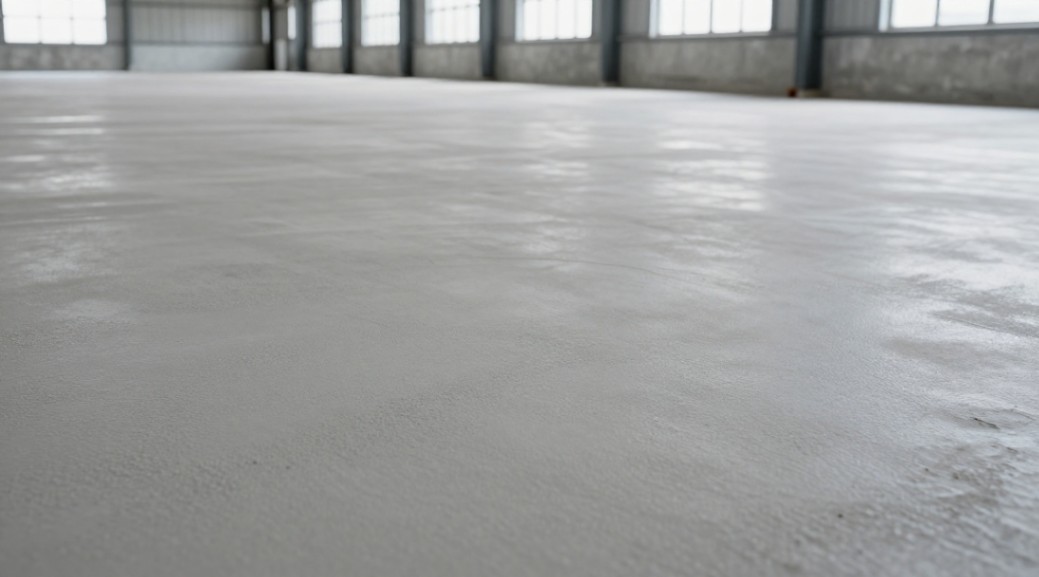
The data and decades of field performance are clear. For a durable, low-maintenance, and corrosion-proof industrial slab, non metallic concrete fiber for industrial flooring is not just an alternative-it’s often the optimal choice. You deserve a floor built for the long haul, free from the hidden threats of rust and premature cracking.
Ready to specify this for your next project? Do not treat it as a generic additive. Consult with a reputable fiber manufacturer or a concrete technologist today. Provide them with your specific service conditions-chemical exposures, load types, and joint layout-so they can recommend the precise fiber type and dosage to guarantee your floor’s success. Your toughest assets roll on this surface. Reinforce it with confidence.
We are the global leader in lightweight concrete and advanced engineered foam solutions. Known globally for its commitment to research, innovation, and applied expertise, we have been providing engineered foam solutions since the early 2012’s.
We can supply high-quality concrete admixture and foam concrete related products all over the world.
The company has a professional technical department and quality supervision department, a well-equipped laboratory, and equipped with advanced testing equipment and after-sales customer service center.
If you are interested, please feel free and contact us.