Professional solutions on concrete addtives, Concrete Foaming Agent, Superplasticizer, CLC Blocks Additives, and foaming machine

Cellular Concrete for Trench & Void Fill: The 5 Most Common (and Costly) Mistakes to Avoid
Are You Dealing with a Sinking Feeling After Backfill?
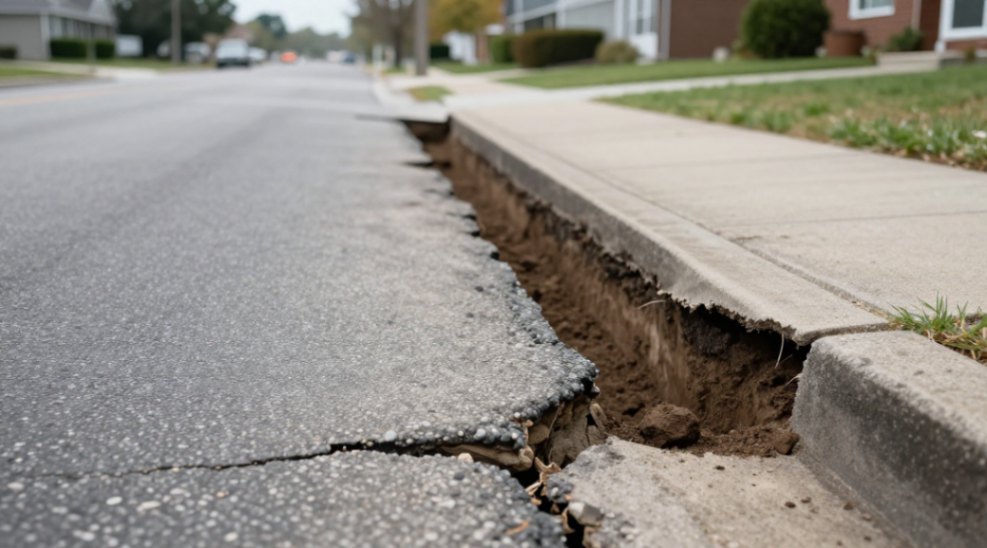
Picture this. You’ve just completed a complex utility trench installation. The pipes are in, the connections are sound. You backfill with traditional materials, compact it according to spec, and move on. Six months later, you get the call. The road has settled. The sidewalk is uneven. There’s a void under the pavement. Now you’re facing emergency repairs, traffic control nightmares, and angry stakeholders. Sound familiar? If you’ve ever lost sleep over utility trench backfill failure or mysterious voids undermining your structures, you’re not alone. This is the exact pain point that leads seasoned engineers and contractors to a superior solution: cellular concrete for trench backfill and void fill.
The #1 Mistake: Using the Wrong Material for the Job
Let’s get one thing straight. Not all lightweight fill is the same. Many confuse cellular concrete with simple flowable fill or controlled low-strength material (CLSM). This is a critical error. While flowable fill is a slurry of sand, cement, and water, cellular concrete is engineered. We introduce a pre-formed foam into a cementitious slurry. This creates a matrix of millions of microscopic, non-interconnected air cells. The result? A material with predictable, controllable properties that traditional methods simply can’t match.
Material Composition: It’s About Control
The magic of cellular concrete lies in its engineered consistency. You control three core variables: the cementitious base (which can include fly ash or slag for sustainability), water, and the stable foam. By adjusting the foam dosage, we dial in the exact wet density you need, typically ranging from 20 to 120 pounds per cubic foot (pcf). This precision is impossible with haphazard compaction of soil or variable aggregate in flowable fill. You’re not just dumping material; you’re installing a designed fill system.
Why Traditional Trench Backfill Methods Can Fail You
On Reddit construction forums and in contractor circles, the horror stories are consistent. “We compacted in 12-inch lifts, used a plate tamper, and it still sank.” “The granular backfill migrated into the surrounding soft soil, creating a void.” These are systemic failures of the method, not just poor execution. Traditional backfill-even well-compacted-exerts significant lateral pressure on your pipes and structures. It requires skilled labor to compact correctly, is highly susceptible to moisture and weather, and offers zero flowability to fill intricate spaces.
The Cellular Concrete Advantage: Lightweight and Flowing
Now, contrast that with cellular concrete. Its lightweight nature reduces lateral earth pressure by up to 75% compared to compacted soil. This is a game-saver for protecting fragile pipes, culverts, and retaining walls. It’s self-levelling and highly flowable, filling every nook, irregularity, and annular space without mechanical compaction. It eliminates the risk of poor compaction in hard-to-reach areas. The job is done right. The first time.
Avoiding Disaster in Void Fill Applications
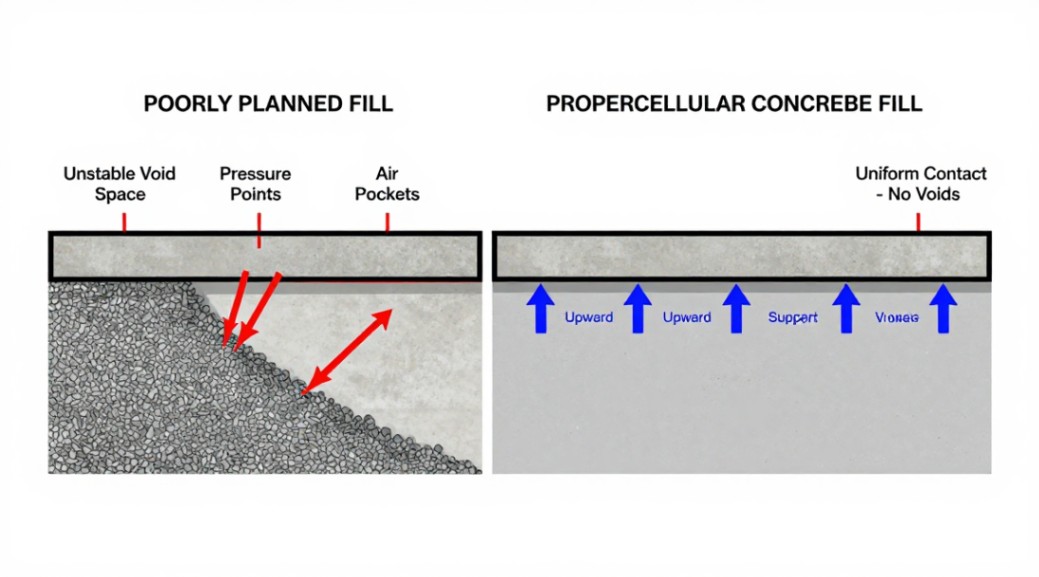
This warning is even more critical for void fill projects. Imagine trying to stabilize a void under a bridge abutment or a building slab with gravel or flowable fill. You can’t see where it’s going. You risk creating new pressure points or leaving empty pockets. I’ve seen projects where poorly planned void fill actually made the structural problem worse.
The Correct Approach: A Unified, Stable Mass
Cellular concrete flows like a thick liquid. It can be pumped hundreds of feet horizontally, filling complex, inaccessible voids completely and forming a homogeneous, stable mass. For voids under slabs, it provides uniform support without creating hard spots. Its low fluid pressure during placement means it won’t lift or damage existing structures. It’s the definitive solution for abandoned tank beds, eroded subgrades, and sinkhole remediation.
Critical Performance Specs You Must Verify
Don’t just take a supplier’s word for it. Protect your project by specifying and verifying key performance metrics. This is where you separate true engineered fill from mere “bubble mud.”
- Density: This is your primary control. Specify the required wet density (e.g., 35 pcf) for the design load and lightweight benefits.
- Compressive Strength: While you don’t need 3000 psi, you do need enough for long-term stability. Common specifications call for 50 to 150 psi at 28 days. Ensure it meets ASTM C796 and C869 standards for mixing and placing.
- Flowability & Settlement: The material should be self-leveling with minimal bleed water and no measurable settlement after curing. A proper mix shows zero segregation.
- Permeability: A well-made cellular concrete is nearly impermeable, protecting utilities from water ingress and freeze-thaw cycles.
Planning Your Project: Don’t Go It Alone
The biggest operational mistake is treating cellular concrete like a commodity you order last minute. It’s a process that requires forethought. Working closely with an experienced producer from the design phase is non-negotiable. They will help you determine the optimal density and strength, plan pump access, and sequence the pour around other trades. This collaboration turns a potential risk into a guaranteed time-saver. Projects routinely see a 50% reduction in backfill time compared to traditional methods, often paying for the material cost difference in labor savings alone.

Your Path to a Stable, Worry-Free Project
If the stories of sinking trenches and mysterious voids resonate with you, it’s time for a different approach. Cellular concrete isn’t just another material; it’s an insurance policy against costly callbacks and structural uncertainty. Start by reviewing your next vulnerable backfill or void fill scope. Then, have a conversation with a specialist producer. Bring your project details-soil reports, pipe specifications, access challenges. A good partner will provide mix designs, case studies from similar infrastructure and municipal projects, and a clear plan. Make the choice that eliminates guesswork. Choose a fill material designed for success.
We are the global leader in lightweight concrete and advanced engineered foam solutions. Known globally for its commitment to research, innovation, and applied expertise, we have been providing engineered foam solutions since the early 2012’s.
We can supply high-quality concrete admixture and foam concrete related products all over the world.
The company has a professional technical department and quality supervision department, a well-equipped laboratory, and equipped with advanced testing equipment and after-sales customer service center.
If you are interested, please feel free and contact us.