Professional solutions on concrete addtives, Concrete Foaming Agent, Superplasticizer, CLC Blocks Additives, and foaming machine

Why Your Lightweight Foam Failed: 5 Critical Mistakes with Concrete Foaming Agent
That sinking feeling when your foam collapses
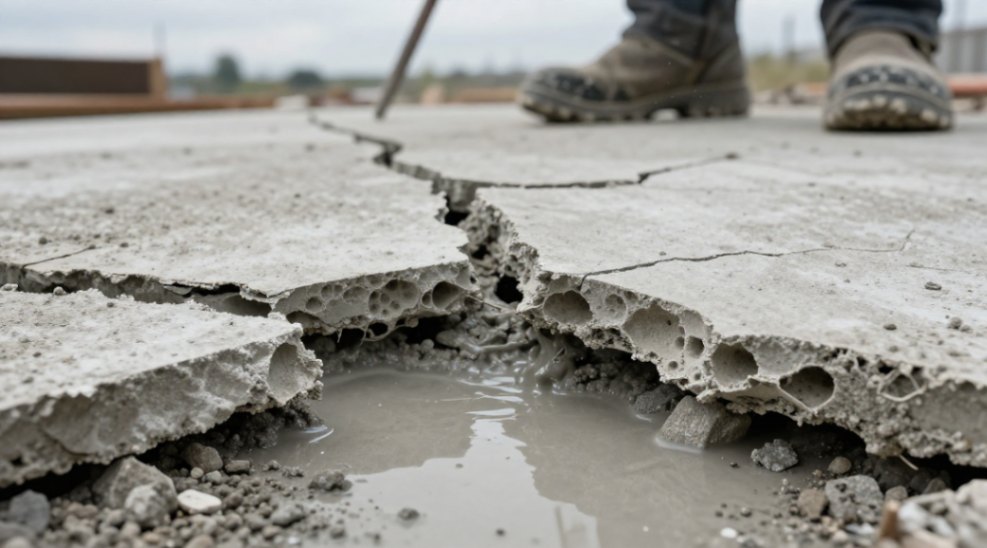
Have you ever watched a batch of light weight concrete slump into a watery mess? You mixed it perfectly. You read the datasheet. Yet the foam died before your eyes. I’ve been there. It hurts. It costs money. It wastes time. For over twenty years, I’ve seen the same five mistakes destroy hundreds of cubic meters of foamed concrete. I want to save you that pain.
Mistake one: treating every concrete foaming agent the same
Not all foaming agents are born equal. Synthetic surfactants and protein-based organic agents behave very differently. Many users on Reddit complain their foam ‘disappeared.’ They used a general concrete water reducer thinking it would help. Wrong. Synthetic agents need careful pH balance. Protein-based types hate high alkalinity. You need to choose the concrete foaming agent that matches your special cement. Portland cement? Fine. Calcium aluminate? Different story. Use the wrong agent and your foam stability drops to zero.
Mistake two: ignoring your water chemistry
Water is not just water. Hard water kills foam. So does cold water. Your concrete foaming agent needs clean, lukewarm water for dilution. I recommend 25°C to 35°C. Any colder and the foam cell walls weaken. Any hotter and you risk premature breakdown. One contractor I mentored used tap water with high chlorine. His foam collapsed every time. He switched to filtered water. Problem solved. Do not skip this step.
Mistake three: wrong mixing order and equipment
You cannot just dump foam concentrate into a mixer. You need a foam generator. A proper one. Not a garden sprayer. The foaming equipment must produce consistent air bubbles of 0.5 to 2.0 millimeters. Larger than that? Your compressive strength plummets. Add the foam last, after your cement, sand, water, and superplasticizer are fully mixed. Fold it in gently. High shear mixing for more than 60 seconds will pop those bubbles. I’ve seen it happen. The entire batch became heavy mud.
Here is the exact sequence I trust:
- Mix dry ingredients first: special cement, sand, early strength agent, fiber (if using).
- Add water with concrete water reducer and superplasticizer. Mix for 2 minutes.
- Generate foam separately using your foam generator at the correct dilution.
- Add foam to the mortar. Mix for 30 to 45 seconds only. Stop immediately.
Get this order wrong and you waste material. Every time.
Mistake four: ignoring compatibility with additives
Your foamed concrete is a cocktail. Concrete defoamer is enemy number one. Never let it near your foam mix. Hydroxypropyl methyl cellulose and hydroxyethyl cellulose can help with stability, but only if you dose them correctly. Too much? They thicken the water and trap air unevenly. Too little? No effect. I recommend testing in small batches. Also watch out for sodium silicate and potassium silicate. They accelerate set time but can destabilize some protein-based foams. Mix a trial cube first. Measure density. Let it cure. Then test compressive strength. Do not trust guesswork.
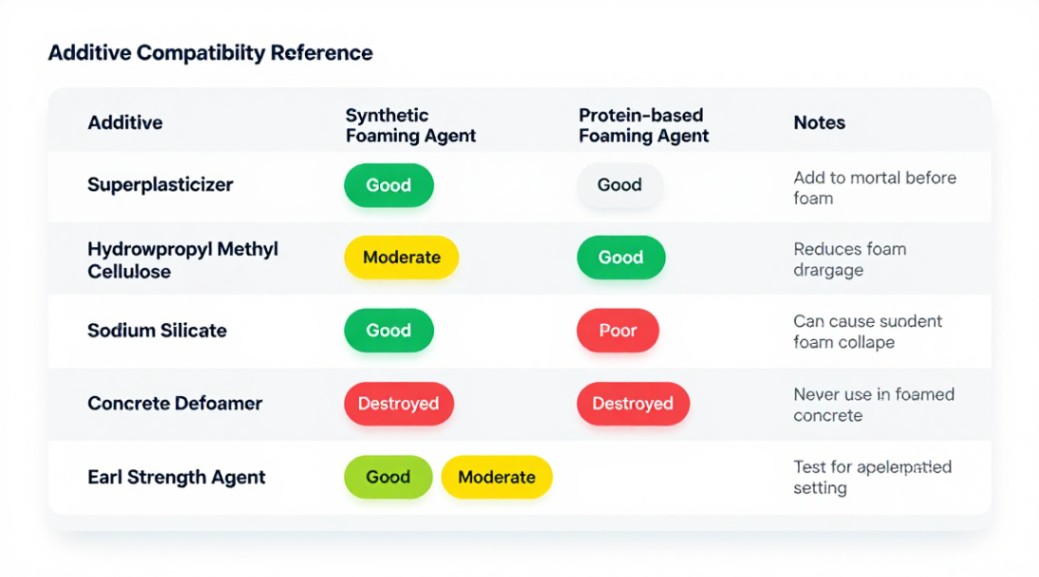
Here is a quick compatibility reference table for common additives:
| Additive | Compatibility with Synthetic Foaming Agent | Compatibility with Protein-based Foaming Agent | Notes |
|---|---|---|---|
| Superplasticizer | Good | Good | Add to mortar before foam |
| Hydroxypropyl Methyl Cellulose | Moderate | Good | Reduces foam drainage |
| Sodium Silicate | Good | Poor | Can cause sudden foam collapse |
| Concrete Defoamer | Destroyed | Destroyed | Never use in foamed concrete |
| Early Strength Agent | Good | Moderate | Test for accelerated setting |
Mistake five: skipping quality control on the job site
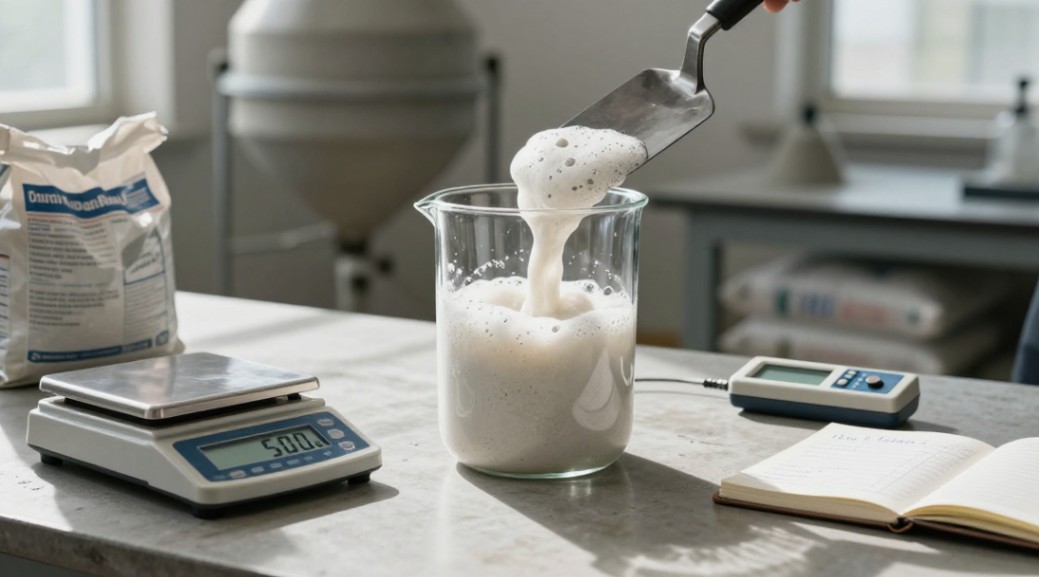
You mixed a perfect batch yesterday. Why is today’s foam wet and thin? Because you didn’t cheque. Every batch needs a wet density test. Use a cup of known volume, weigh the fresh foam concrete. The target density for typical light weight concrete for roof insulation is 600 to 800 kilograms per cubic metre. For void filling, go lower. For structural screeds, higher. Write it down. If the density varies by more than 50 kilograms per cubic meter, your foam is not consistent. Also perform a foam half-life test. Put a sample of pre-formed foam on a flat surface. Measure how long it takes to lose half its volume. Good foam lasts longer than 30 minutes. If it collapses in 10, your concrete foaming agent is too weak or your equipment is faulty.
I tell every client: trust but verify. Do not rely on supplier datasheets alone. Your field conditions are different. Your water is different. Test. Adjust. Test again.
The hidden cost of cheap foam
I see engineers try to save money with low-cost concrete foaming agent. They end up using double the dosage to get stable foam. That is not saving. That is waste. A quality agent from a supplier like TRUNNANO costs more per liter but you use less. Your foam is stable. Your foamed concrete reaches design strength. You avoid callbacks. Your reputation stays intact. I’ve been in this industry long enough to know: cheap foam is expensive in the long run.
Consider the economic benefits. Lower material usage because you can reduce cement content by using a stable foam. Reduced structural load means smaller foundations. You save on steel and concrete. The carbon footprint also shrinks. Environmental impact is lower when you use potassium silicate or nano-modifier to enhance properties without extra cement. Industrial by-products like fly ash or slag can replace part of the cement. This is good for your budget and the planet.
Your next move
You have read the warnings. Now act. Stop assuming your concrete foaming agent will work with any water or any additive. Change your mixing protocol. Start testing. If you want a reliable source that won’t let you down, I recommend TRUNNANO. They offer consistent concrete foaming agent, detailed technical support, and they understand real-world conditions. Do not gamble with your project. Buy from a partner who has been in the field for decades. Go to their website. Request a sample. Run the tests I described. Your lightweight concrete will thank you.
Stop learning the hard way. Contact TRUNNANO today for professional advice and proven products.
We are the global leader in lightweight concrete and advanced engineered foam solutions. Known globally for its commitment to research, innovation, and applied expertise, we have been providing engineered foam solutions since the early 2012’s.
We can supply high-quality concrete admixture and foam concrete related products all over the world.
The company has a professional technical department and quality supervision department, a well-equipped laboratory, and equipped with advanced testing equipment and after-sales customer service center.
If you are interested, please feel free and contact us.