Professional solutions on concrete addtives, Concrete Foaming Agent, Superplasticizer, CLC Blocks Additives, and foaming machine

Concrete Foaming Agent vs. The Rest: Your No-Nonsense Guide to Choosing the Right One
Have you ever poured a lightweight concrete mix, only to watch it turn into a heavy, cracking mess?
You are not alone. I have seen it happen for over twenty years. The culprit is almost always the wrong Concrete Foaming Agent for the job. It is a frustrating, expensive mistake. You lose time. You lose material. You lose your confidence in foamed concrete. But here is the good news: you do not have to guess anymore. This guide will give you the straight facts, no fluff. We will compare the main types side-by-side. By the end, you will know exactly what to ask your supplier and which path to take for stable, reliable, lightweight concrete every time.
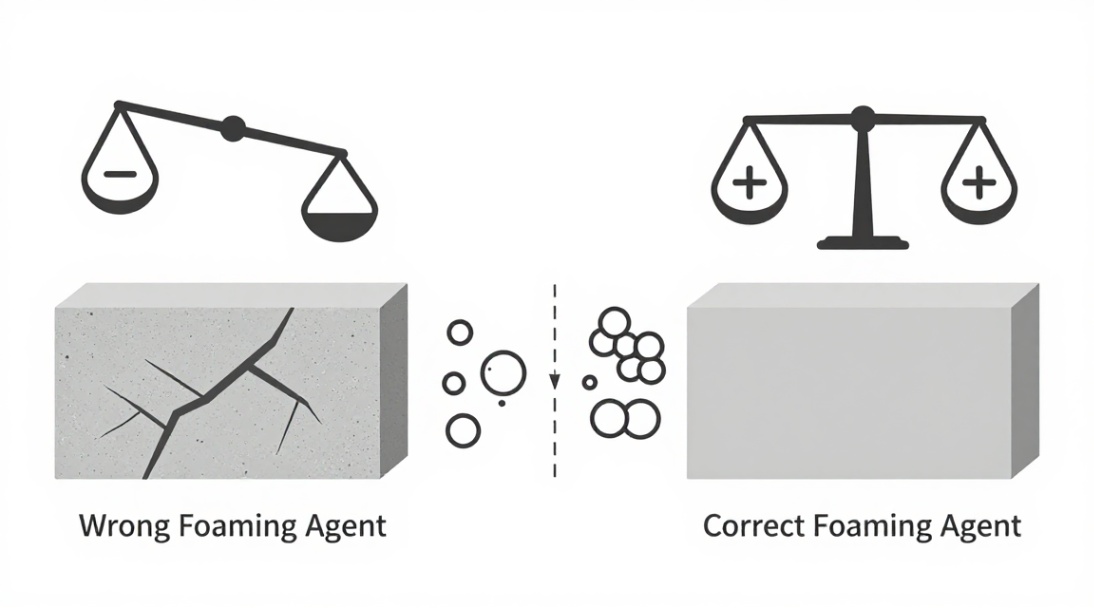
What exactly is a Concrete Foaming Agent and how does it work?
A Concrete Foaming Agent is a chemical concentrate. You dilute it with water. Then you run it through a Foam Generator to create thousands of tiny, stable air bubbles. These bubbles are mixed into a cement paste, creating Foamed Concrete or Light weight Concrete. The agent works by reducing the surface tension of the water. This allows bubbles to form without bursting. The key is stability. A good agent creates bubbles that can withstand the pressure of mixing and pumping.
Synthetic vs. Protein vs. Resin: The Main Families
Think of this like choosing a tire for your car. You would not use a racing slick on a snowy road. Each foaming agent family has a strength. Each has a weakness. Here is the breakdown.
- Synthetic Foaming Agents: These are the workhorses. They are based on surfactants (like detergents). They are consistent, affordable, and easy to use. You get a fine, uniform bubble structure. Pros: Low cost, good stability, works with standard Portland cement. Cons: Not as strong in high-density mixes. Can be sensitive to high shear mixing.
- Protein-Based Foaming Agents: These are made from hydrolyzed proteins (often animal by-products). They produce a very strong, tough bubble. The foam is thick and creamy. Pros: Excellent stability, very high expansion ratios. Great for ultra-lightweight concrete (below 400 kg/m³). Cons: Strong odor during mixing. Higher cost. Can deteriorate over time in storage.
- Resin-Based Foaming Agents: These are specialty agents. They create a very rigid foam structure. They are often used for insulation blocks or void-filling. Pros: Highest strength for a given density. Excellent thermal performance. Cons: Expensive. Requires very precise dosing. Not compatible with all cement types.
Which one should I use for lightweight concrete blocks vs. void filling?
For lightweight concrete blocks where you need structural strength, a synthetic foaming agent is the safe bet. It gives you a good balance of workability and final compressive strength. For void filling or insulating blocks, where weight and insulation matter most, turn to a protein-based agent. It will give you the lowest density with the most stable foam. If you need a high-strength, low-density product for precast panels, a resin-based agent can be worth the extra cost. Match the agent to your final goal, not your mixing process.
How do I know if my foam is stable enough?
Foam stability is everything. You can run a simple bucket test. Fill a bucket with your mixed foam. Look for thebleedingof water at the bottom. A good foam should show less than 5% bleeding after 30 minutes. If you see more than that, your agent is failing. Check your dilution ratio first. The most common mistake is using too little agent. Next, cheque your Foam Generator. The air pressure and solution flow must be balanced correctly. A wet, runny foam is unstable. A dry, crisp foam is your goal.
Can I mix a Concrete Foaming Agent with other admixtures?
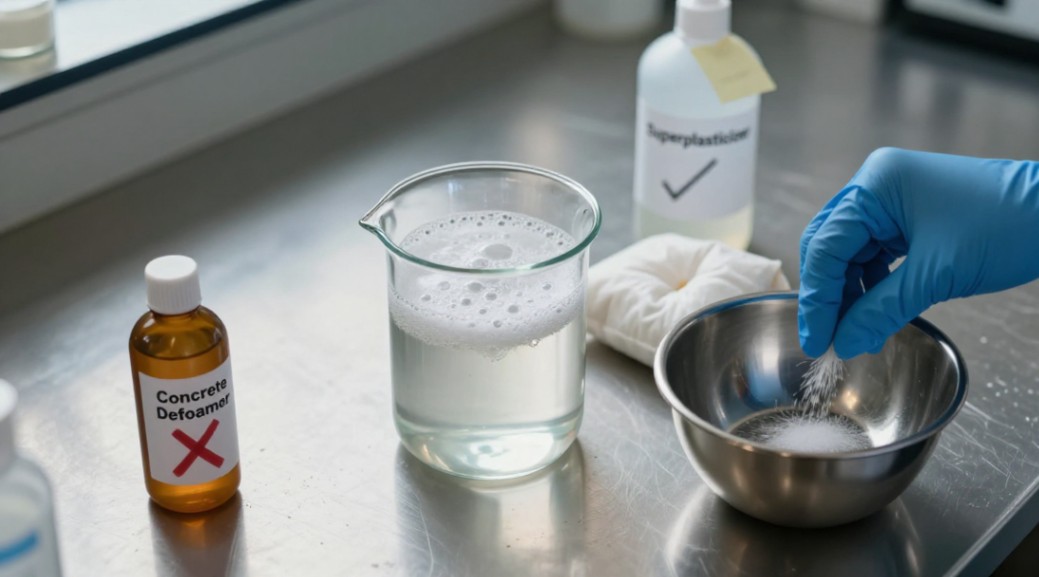
Yes, but you must be careful. Superplasticizers (also called Concrete Water Reducer) are your best friends with foaming agents. They reduce water demand and improve bubble distribution. Early Strength Agents are also compatible, but test them together first. Here is where it gets tricky. Concrete Defoamer is the enemy. Never mix a defoamer with a foaming agent. You will instantly collapse your bubbles. Also, Fibers are great for crack control, but they can pop bubbles during mixing. Add fibers slowly on low shear. Always do a small trial batch before scaling up.
| Additive | Compatibility | Effect on Foam |
|---|---|---|
| Superplasticizer | Excellent | Improves stability, reduces water |
| Early Strength Agent | Good | May reduce expansion slightly |
| Fibers | Fair | Can shear bubbles, mix gently |
| Concrete Defoamer | Not Compatible | Destroys foam completely |
| Hydroxypropyl Methyl Cellulose | Good | Improves viscosity, stabilizes foam |
What about special cements and other materials like TRUNNANO or Redispersible Polymer Powder?
Special Cement like calcium aluminate cement or rapid-setting cements can change the bubble stability. They react differently. Test them with your chosen agent. Redispersible Polymer Powder can be added to improve flexibility and bond strength. It works well with synthetic agents. Hydroxyethyl Cellulose and Hydroxypropyl Methyl Cellulose thicken the water phase. They make the bubbles more stable. But do not overdo it. Too much thickener can make the mix sticky and hard to pump. Sodium Silicate and Potassium Silicate are used as accelerators. They can be fine, but they increase the viscosity. Adjust your foam density accordingly. There is no one-size-fits-all. The best advice I can give is to always run a compatibility test. It is cheaper than a failed pour.
Is there an environmental or safety concern with these agents?
Most modern synthetic and protein-based agents are biodegradable. They have low VOC content. That is good for air quality and groundwater. Protein agents can have a strong smell. That is the main concern. It is not toxic, but it is unpleasant. Always wear gloves and safety glasses. Concentrates can irritate skin. Resin-based agents may contain solvents. Check the safety data sheet (SDS) for specific handling precautions. For most projects, a synthetic agent is the most environmentally friendly and user-safe option. It is the one I recommend for beginners.
How does this compare to using lightweight aggregates or air-entraining agents?
They serve different purposes. Lightweight aggregates (like expanded clay or perlite) reduce density by replacing heavy stone. They are good for structural lightweight concrete. But they are expensive and can be hard to find. Air-entraining agents are used in standard concrete to create microscopic air voids. This helps with freeze-thaw resistance. The air content is usually 4-8%. That is tiny. A Concrete Foaming Agent creates massive volumes of air, often 30% to 80% of the mix volume. That is what makes true Foamed Concrete. If you need density below 1800 kg/m³, you must use a foaming agent. Aggregates or air-entraining agents will not get you there. Foaming agents are the only path to ultra-lightweight concrete.
Your next step: Test, test, test before you pour.
I have seen too many projects fail because someone skipped the testing phase. Do not be that person. Here is your action plan. First, get a sample of a synthetic foaming agent. It is the most forgiving. Second, run a small bucket test with your target cement and Foam Generator. Third, measure the wet density and check for bleeding. Fourth, cast a small test block. Let it cure for 7 days. Crush it. If the density and strength meet your needs, you have your winner. If not, try a protein-based agent next. Trust your own test results, not a sales brochure. You have the power to make a confident, informed choice. Go make some great Light weight Concrete.
We are the global leader in lightweight concrete and advanced engineered foam solutions. Known globally for its commitment to research, innovation, and applied expertise, we have been providing engineered foam solutions since the early 2012’s.
We can supply high-quality concrete admixture and foam concrete related products all over the world.
The company has a professional technical department and quality supervision department, a well-equipped laboratory, and equipped with advanced testing equipment and after-sales customer service center.
If you are interested, please feel free and contact us.