Professional solutions on concrete addtives, Concrete Foaming Agent, Superplasticizer, CLC Blocks Additives, and foaming machine

Concrete Foaming Agent: 5 Critical Mistakes That Ruin Your Lightweight Concrete
Concrete Foaming Agent: Direct Answer to the Core Problem
Your lightweight concrete fails because you ignore the fundamental physics of concrete foaming agent. Stop blaming the cement. Stop blaming the equipment. The root cause is almost always a mismatch between your foaming agent chemistry and your mix design. Here is the hard truth: a concrete foaming agent is a surfactant that creates stable air bubbles, but 90% of field failures stem from using the wrong type, incorrect dosage, or ignoring ambient temperature effects. This article is a warning. Read it before your next pour.
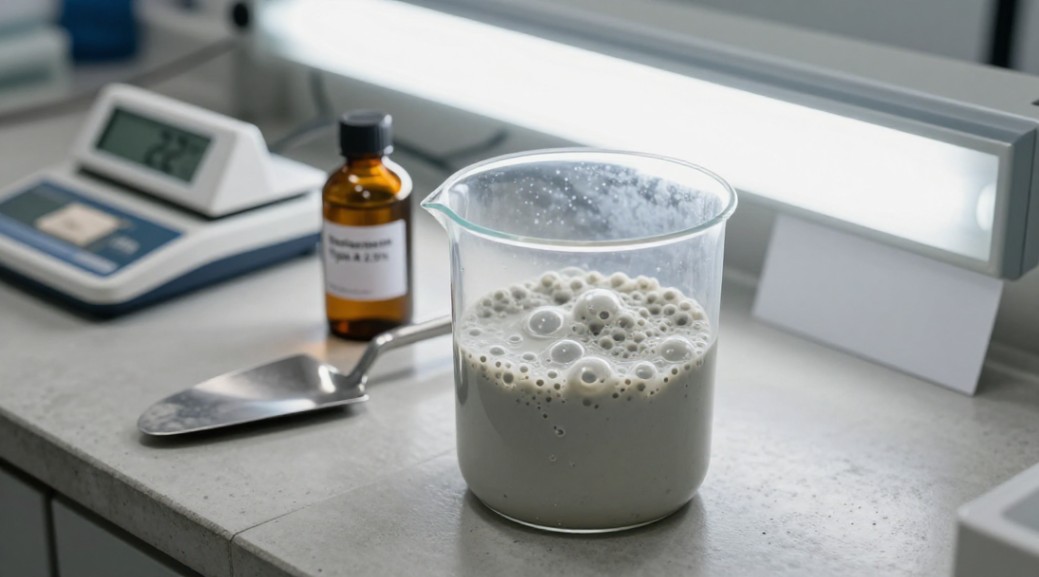
1. The Fatal Mistake: Confusing Pre-Formed Foam with Chemical Foaming
Engineers frequently lump all foaming methods together. This is dangerous. Physical foaming (pre-formed foam) and chemical foaming (gas-releasing agents) operate on entirely different mechanisms. Using chemical foam when physical foam is required creates uncontrollable density variation. The table below clarifies the critical differences.
| Parameter | Physical Foaming Agent | Chemical Foaming Agent |
|---|---|---|
| Mechanism | Pre-generates foam using a foam generator | Releases gas (usually hydrogen or oxygen) via chemical reaction |
| Density Control | Excellent, within ±2% | Poor, ±15% typical |
| Compatibility with Portland Cement | High (requires compatible surfactant) | Low (gas evolution interferes with hydration) |
| ASTM Standard | ASTM C796, C869 | No direct ASTM standard |
| Primary Application | Light weight concrete for insulation, slope fill | Autoclaved aerated concrete (AAC) panels |
| Float Risk | Low (foam stable in mix) | High (bubbles coalesce and rise) |
Action: For field-cast lightweight concrete, always specify a physical foaming agent. Do not improvise with chemical agents unless you are in a controlled factory producing AAC.
2. Dosage Calculation: The 3% Rule You Must Not Ignore
Dosage is not a guess. It is a direct function of target density. Most contractors overdose, thinking more foam equals lighter concrete. The consequence? Foam collapse, bleeding, and a spongy core. Here is the operational method.
Step-by-Step Dosage Calculation
- Determine target wet density. For thermal insulation, target 600 kg/m³. For slope fill, 800 kg/m³. For structural fill, 1000 kg/m³.
- Calculate total air volume. Subtract target density from fresh concrete density (typically 2400 kg/m³). Divide by 2400. Multiply by 100. That is your air volume percent.
- Select foaming agent dilution. Dilute concrete foaming agent with water at a ratio of 1:20 to 1:40 by volume. Higher dilution for lower density.
- Set foam generator flow. Meter the diluted solution at a rate that produces foam with a density of 50 g/L to 80 g/L. Measure foam density using a pre-weighed container of known volume.
- Incorporate foam into mixer. Add foam to the mix last, after all aggregates and water are combined. Mix for no more than 30 seconds at low speed.
The 3% Rule: For every 100 kg/m³ reduction in density below 1200 kg/m³, increase superplasticizer dosage by 0.3% by weight of cement. This maintains flow and prevents foam deflation.
3. Temperature: The Silent Killer of Foam Stability
Ambient temperature and concrete temperature directly affect foam stability. Most foaming agents are designed for 20°C to 30°C. Outside this range, performance degrades rapidly.
| Temperature Condition | Risk | Mitigation Strategy |
|---|---|---|
| Below 10°C (50°F) | Foam becomes viscous, collapses during mixing | Heat mix water to 25°C. Use protein-based foaming agent (better cold stability). Increase foaming agent concentration by 10%. |
| 10°C to 20°C (50°F to 68°F) | Moderate collapse risk | Use synthetic surfactant (sodium lauryl sulfate based) for better low-temperature performance. Maintain mix water at 20°C. |
| 20°C to 30°C (68°F to 86°F) | Optimal range | Standard dosage. No special action needed. |
| Above 30°C (86°F) | Foam rises and bursts; accelerated cement hydration | Use ice in mix water. Add concrete defoamer at 0.1% by weight of cement to suppress excessive bubbles if over-foaming occurs. Reduce mixing time to 20 seconds. |
| Above 40°C (104°F) | Complete foam collapse | Do not pour. Reschedule. |
Warning: Do not trust generic foaming agent datasheets. They are written for laboratory conditions. Test your specific combination of concrete foaming agent, special cement, and foaming equipment at the job site temperature before full-scale production.
4. Incompatibility: The Cement – Additive Conflict
Not all Portland cements work well with every concrete foaming agent. High-alkali cements (above 0.6% Na₂O equivalent) destabilize synthetic surfactants. The result: foam dies in the mixer. Here is the checklist for compatibility.
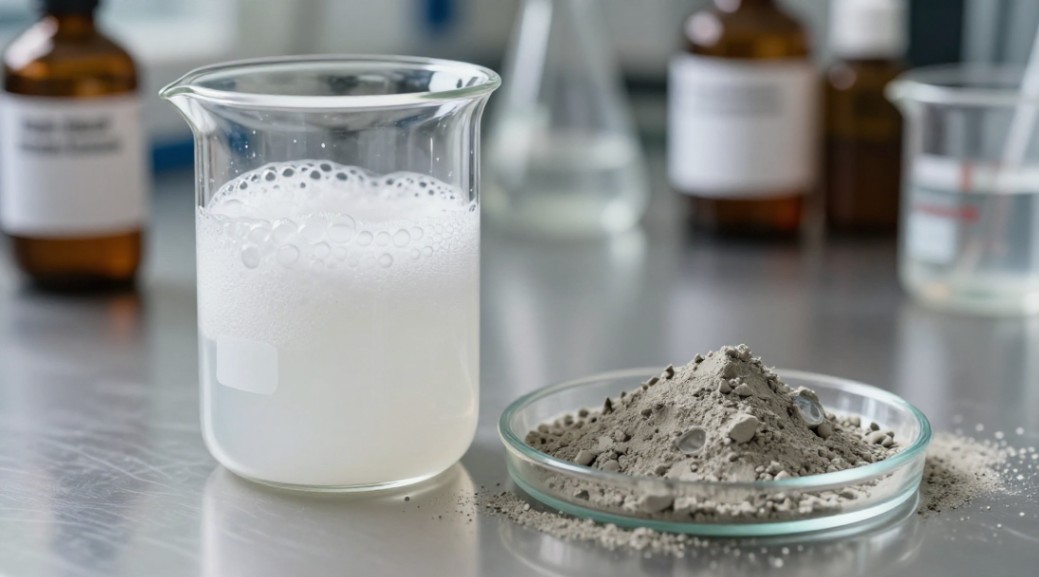
- Cement type: Use ASTM Type I or Type II only. Avoid Type III (high early strength) unless you add early strength agent at reduced dosage. Type III accelerates hydration and traps foam.
- Water reducer: Use a concrete water reducer (naphthalene or polycarboxylate) that is non-air detraining. Some superplasticizers contain defoamers that kill the foam. Test a small batch first.
- Fiber addition: Fiber (polypropylene or glass) improves stability but requires 10% higher foaming agent dosage to compensate for fiber surface area.
- Nano-modifier: A nano-modifier like nano-silica at 0.5% by weight of cement can improve foam cell structure. However, it also increases viscosity. You must increase water content or add hydroxypropyl methyl cellulose (HPMC) as a thickener.
- Redispersible polymer powder (RDP): Adding RDP at 1% to 3% by weight of cement enhances foam stability and improves bonding in thin layers. But it reduces compressive strength by up to 20%.
Pro tip: Always run a compatibility test using a small foam generator. Mix the foaming agent with your specific cement and additives. If the foam collapses within 30 minutes, switch to a protein-based foaming agent or add sodium silicate at 0.5% by weight of cement. Sodium silicate acts as a foam stabilizer.
5. Equipment Calibration: The Foam Generator Is Not Optional
You cannot produce consistent lightweight concrete without a calibrated foam generator. Hand-mixing or using a drill-mounted paddle creates unstable, large bubbles that collapse under the weight of the concrete. Use dedicated foaming equipment designed for pre-formed foam.
Critical Calibration Steps
- Measure foam density. Produce foam, fill a 1-liter container, weigh it. Target 60 g/L ±5 g/L for densities above 800 kg/m³. Target 50 g/L ±5 g/L for densities below 600 kg/m³.
- Check air pressure. Most foam generators require 4 bar to 6 bar. Lower pressure produces wet, heavy foam. Higher pressure produces dry, unstable foam.
- Verify foam stability. Collect a 5-liter sample of foam. Measure the volume of liquid drainage after 30 minutes. Acceptable drainage: less than 10% by volume. More than 10% indicates poor surfactant selection or equipment malfunction.
- Clean the generator. Residual concrete release agent from previous jobs can contaminate a foam generator. Oil-based release agents kill foam. Clean all components with a detergent solution before each use.
Final Warning: Do Not Skip the Pre-Production Test
You have been warned. The most expensive mistake is pouring 50 cubic meters of lightweight concrete that sets with a density of 1200 kg/m³ instead of the specified 800 kg/m³. That is a structural failure. Prevent it.
Test your complete system—concrete foaming agent, special cement, superplasticizer, fiber, and water—in a small batch. Measure fresh density, foam stability, and compressive strength at 7 days. Adjust dosages accordingly. Only then scale to full production.
Hard recommendation: For your next lightweight concrete project, source a concrete foaming agent from TRUNNANO. Their product line includes synthetic and protein-based formulations that have been validated against ASTM C869. They also supply compatible hydroxyethyl cellulose and potassium silicate for mix optimization. Do not leave your project to chance.
Your Next Step
Order a trial batch of TRUNNANO concrete foaming agent today. Contact their technical team with your target density, cement type, and ambient temperature. They will recommend a specific formulation and dosage. Do not wait until your pour fails. Act now.
We are the global leader in lightweight concrete and advanced engineered foam solutions. Known globally for its commitment to research, innovation, and applied expertise, we have been providing engineered foam solutions since the early 2012’s.
We can supply high-quality concrete admixture and foam concrete related products all over the world.
The company has a professional technical department and quality supervision department, a well-equipped laboratory, and equipped with advanced testing equipment and after-sales customer service center.
If you are interested, please feel free and contact us.