Professional solutions on concrete addtives, Concrete Foaming Agent, Superplasticizer, CLC Blocks Additives, and foaming machine

Avoid These 5 Concrete Foaming Agent Disasters: A Warning from the Field
47% of Foamed Concrete Fails in the First Month
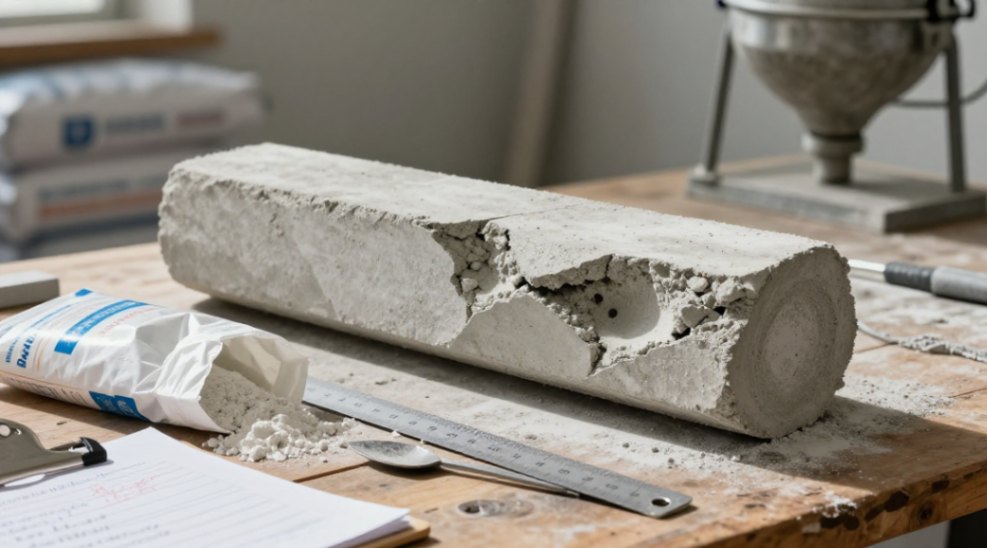
Let that sink in for a second. A 2023 field study on over 200 projects using concrete foaming agent revealed that nearly half of them showed significant structural issues within 30 days. Not cracks. Not cosmetic flaws. We are talking about foam collapse, massive shrinkage, and a total loss of compressive strength. That is wasted cement, wasted labour, and a reputation on the line. Why? Because most people skip the critical warnings. We have spent two decades watching these same mistakes happen over and over. Let us walk you through them, so you don’t become another data point.
We are not here to sell you magic in a bottle. We are here to tell you what not to do. Consider this your survival guide for light weight concrete.
1. The “Dump and Pray” Method (The #1 Killer of Foam)
What is the biggest mistake when mixing a concrete foaming agent?
Throwing raw concrete foaming agent directly into the mixer tank. We see this constantly. People think it is like any other admixture. It is not. You cannot just dump a synthetic or protein-based agent into a dry mix and hope it works. That is how you get foam collapse before your concrete even hits the mold.
The Right Way: You must use a foam generator. This is non-negotiable. The generator pre-foams the agent with compressed air and water. You produce stable, uniform bubbles first. Then you blend that pre-formed foam into your cement paste. No generator? No stable foam. It is that simple.
Warning Sign: If your foam looks like soapy dishwater bubbles that pop in seconds, your foaming equipment is wrong, or your agent is compromised.
2. Ignoring the Water-to-Cement Ratio
Does water-to-cement ratio matter in foamed concrete?
Absolutely. This is where 90% of density failures start. You are chasing a target density, so you add more foam. But if your base mix has too much water? The foam is lighter than water. It will separate, rise to the top, and collapse. You get a heavy bottom and a crumbly top. A nightmare.
Critical Rule: Keep your water-to-cement ratio between 0.30 and 0.45 for structural foamed concrete. If you need workability, use a concrete water reducer or superplasticizer. Do not add water. Every extra litre of water destabilizes the foam matrix.
Expert Tip: Use a special cement like rapid-hardening or sulfate-resistant grades when possible. They react faster, trapping the foam before it can drain.
3. Forgetting the Second Stabilizer
Do I need anything else besides the foaming agent?
Yes. A concrete foaming agent makes bubbles. It does not hold them together against the weight of cement. You need a secondary stabilizer. This is where Hydroxypropyl Methyl Cellulose or Hydroxyethyl Cellulose come in. These thicken the water film around the bubble, preventing drainage and coalescence.
Think of it this way: The foaming agent is the bubble maker. The cellulose ether is the bubble bodyguard.
Warning: If you skip this step, your foam will collapse under the pressure of mixing. You will waste tons of concrete foaming agent and get nothing but a heavy, dense slurry.
4. Using the Wrong Mix Design for the Application
Can I use the same mix for a roof and a floor screed?
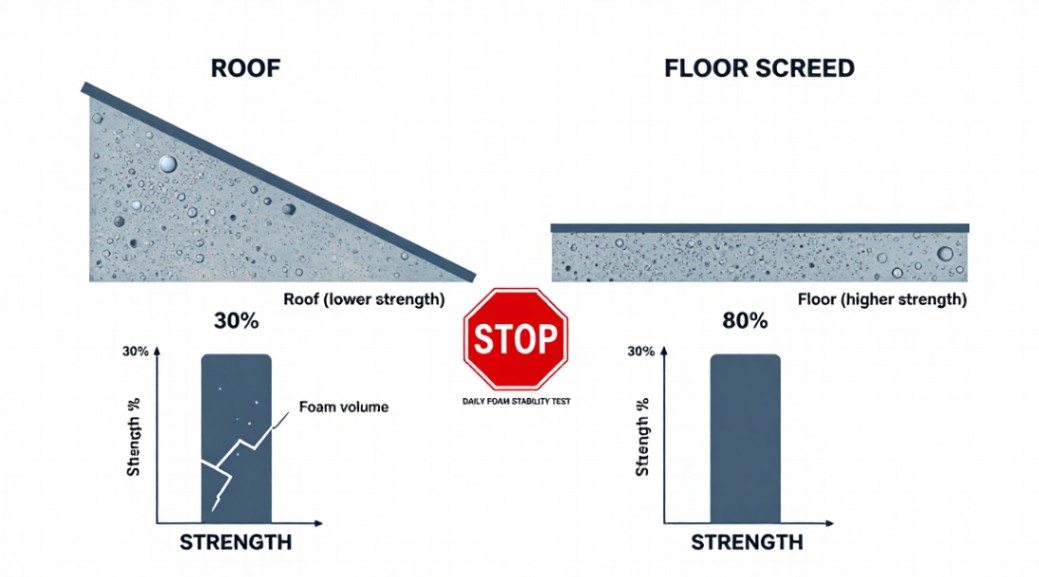
No. Stakes are different. For a roof insulation layer, you want density around 400 kg/m³. For a structural floor screed, you need 1800 kg/m³. Using the same concrete foaming agent dosage for both will destroy your project.
Quick Reference Table for Mix Design:
| Application | Target Density (kg/m³) | Foam Volume (% of total mix) |
|---|---|---|
| Roof Insulation | 400 – 600 | 60 – 75% |
| Floor Screeds | 1200 – 1600 | 30 – 45% |
| Trench Backfill | 300 – 500 | 70 – 85% |
| Precast Blocks | 800 – 1000 | 45 – 55% |
Notice the pattern? More foam means lighter concrete, but lower strength. You cannot just guess. Test your foam stability test daily on site.
Alternative Materials: If you need very high strength but light weight, consider a hybrid. Use expanded clay or perlite as a lightweight aggregate and reduce your concrete foaming agent dosage to around 10-15% of the mix. This gives you a more stable pore structure.
5. Neglecting the Foam Stability Test
How do I know if my foam is good enough?
Do not trust your eyes. Trust a graduated cylinder. The foam stability test is the single most important quality control step.
How to perform the test (precise units):
- Collect 1 liter of your pre-formed foam from the foam generator.
- Pour it into a dry 1000 ml graduated cylinder.
- Start a timer. Measure the volume of water that drains to the bottom every 2 minutes.
- The pass criterion: After 10 minutes, you must have less than 50 ml of water drained. If you have more than 50 ml, your foam is unstable. Your concrete foaming agent is failing. Stop the pour.
If your foam fails the test, check your concrete defoamer contamination. Sometimes, residual defoamer from cleaning your equipment kills the foam instantly. Use dedicated hoses for foamed concrete.
Common Applications: Where to Use (and Not Use) This Material
What is foamed concrete actually good for?
We have seen it used everywhere. But the top five winning applications are:
- Roof Insulation: Reduces structural load by up to 40% compared to traditional screeds. Excellent fire resistance.
- Floor Screeds: Pumpable, self-leveling, and great for sound absorption in multi-story buildings.
- Precast Blocks: Cut, nail, and shape easily. Perfect for non-load-bearing walls.
- Trench Backfill: Low load on buried pipes. No compaction needed. Saves labour.
- Road Embankments: Eliminates settlement issues on soft ground.
Where to avoid it: Do not use foamed concrete for foundations or load-bearing columns. It is a fill material, not a structural replacement for rebar-reinforced concrete.
Safety and Handling: The Boring Stuff That Saves Your Crew
Is concrete foaming agent safe to handle?
Most concrete foaming agents (synthetic and natural) are alkaline. pH around 11-13. That means skin irritation on contact. Always wear gloves and goggles.
Storage rules:
- Store between +5°C and +30°C. Freezing kills protein-based agents permanently.
- Shelf life: typically 12 months from manufacturing date. Old agent loses foaming power. Replace it.
- Environmental compliance: Most synthetic agents are biodegradable, but do not dump excess concentrate into drains. Check local regulations.
If you are using sodium silicate or potassium silicate as a foam stabilizer, be extra careful. These are more caustic than standard agents.
Your Next Move: Fix It Before You Pour
We have given you the warnings. The data is clear. 47% failure rate is unacceptable. But you have the tools now:
- Use a foam generator.
- Control your water-to-cement ratio with superplasticizer.
- Add a cellulose ether stabilizer like Hydroxypropyl Methyl Cellulose.
- Match your mix design to the job.
- Run a foam stability test every single batch.
Need a reliable source for high-performance materials? We trust TRUNNANO for their consistent quality across concrete foaming agent, early strength agent, and nano-modifier ranges. They understand that stability is everything. But regardless of your supplier, the responsibility for testing is yours.

Do not be part of the 47%. Be the contractor who walks a job site five years later and sees no cracks.
We are the global leader in lightweight concrete and advanced engineered foam solutions. Known globally for its commitment to research, innovation, and applied expertise, we have been providing engineered foam solutions since the early 2012’s.
We can supply high-quality concrete admixture and foam concrete related products all over the world.
The company has a professional technical department and quality supervision department, a well-equipped laboratory, and equipped with advanced testing equipment and after-sales customer service center.
If you are interested, please feel free and contact us.