Professional solutions on concrete addtives, Concrete Foaming Agent, Superplasticizer, CLC Blocks Additives, and foaming machine

Early Strength Concrete Admixture for Cold Weather: A Contractor’s Guide to Winter Success
What is an Early Strength Concrete Admixture for Cold Weather?
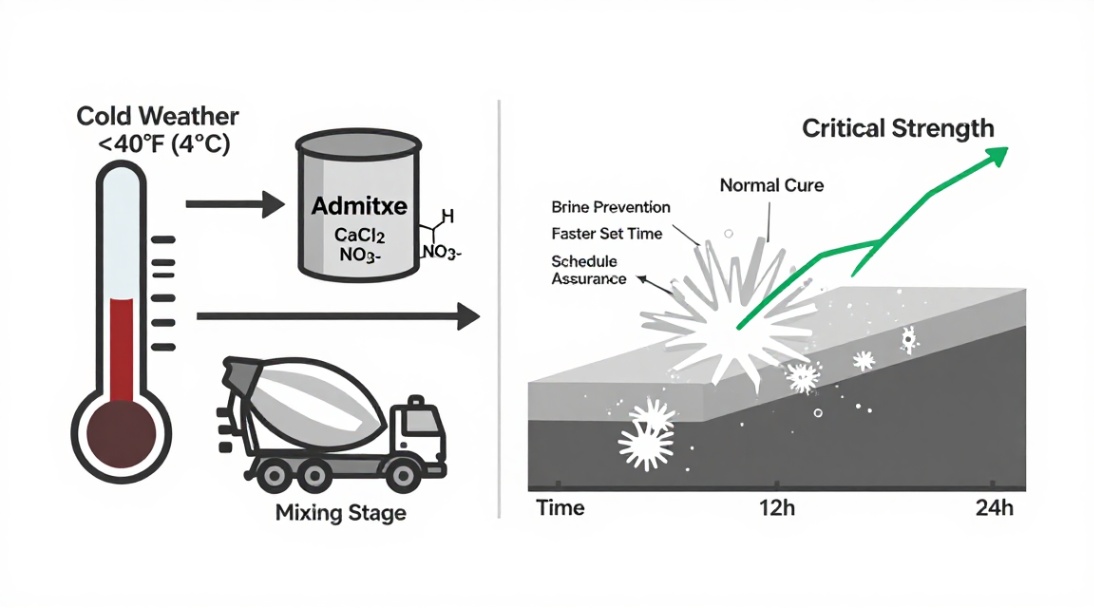
An early strength concrete admixture for cold weather is a chemical additive you mix into concrete to make it harden faster and gain critical strength rapidly when temperatures drop below 40°F (4°C). This prevents the fresh concrete from freezing and ensures your project stays on schedule.
Cold Weather Concrete Problems: Why You Need an Accelerator
Concrete curing is a chemical reaction. Cold temperatures slow this reaction down. Imagine trying to start a fire with damp wood. It sputters. Cold weather does the same to cement hydration. The water in the mix can freeze before the concrete gains strength, causing permanent damage. Formwork stays on longer. Schedules stretch. Costs rise. An early strength admixture acts like a catalyst, reigniting that chemical fire to get the reaction moving at a safe, productive pace.
How Do Early Strength Admixtures Work?
These admixtures target the chemistry of cement. They work by increasing the rate of silicate and aluminate reactions within the first 24 to 72 hours. This rapid initial reaction generates heat internally and builds a strong microstructure faster. The concrete reaches its “critical strength”-the point where it can resist freezing damage-much sooner. This process is purely chemical acceleration, not just insulation.
Common Chemical Accelerators: Calcium Chloride & Non-Chloride
You have two main choices. Calcium chloride (CaCl₂) is a classic, highly effective accelerator. Use it at a typical dosage of 1% to 2% by weight of cement. It works fast and is cost-effective. But it can corrose embedded steel and is not for prestressed concrete. Non-chloride accelerators, based on nitrates, nitrites, or organic compounds, are the safe alternative for all reinforced concrete. They prevent corrosion. Their dosage range is similar, but always follow the manufacturer’s specific guidelines.
Best Practices for Using Admixtures in Cold Weather
Mixing and placing concrete with accelerators requires precise steps. Get this right for consistent results.
1. Dosage and Mixing
Measure the admixture liquid by volume, typically in fluid ounces (fl oz) or milliliters (mL) per 100 lbs (45 kg) of cement. Never guess. Add it to the mixing water or directly into the mixer drum. Ensure a full, uniform mix for at least the manufacturer’s specified time, usually 5 minutes or more.
2. Placement and Curing
Place the concrete promptly. Even with an accelerator, you must protect it. Use insulated blankets or heated enclosures to maintain a minimum concrete temperature of 55°F (13°C) for the first 72 hours. The admixture helps it gain strength; you must provide the environment for it to do so.
Key Benefits Beyond Just Speed
- Freeze Protection: Achieves critical strength (usually 500 psi / 3.5 MPa) before the first freeze event.
- Faster Formwork Removal: Strip forms in hours, not days. Reuse them sooner.
- Improved Scheduling: Sequence floors, open areas to traffic, and meet deadlines even in winter.
- Reduced Heating Costs: Less reliance on fuel-intensive temporary heaters and enclosures.
Potential Drawbacks and Compatibility
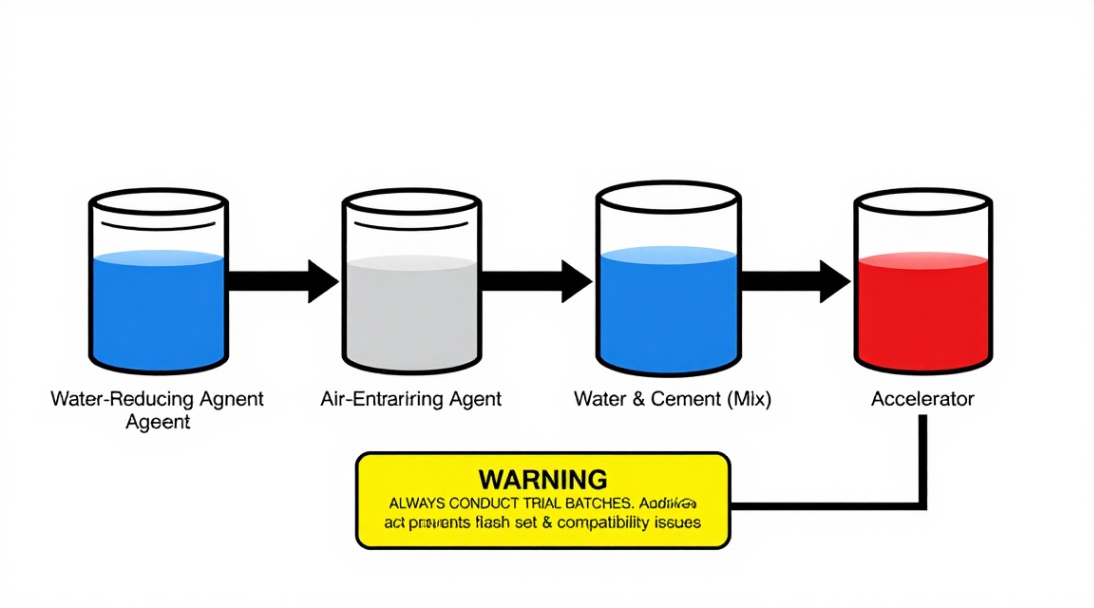
Accelerators are powerful tools. Respect them. Using too much can cause flash set, making the concrete unworkable. Always conduct trial batches with your specific cement and aggregate. Some accelerators may reduce ultimate 28-day strength if misapplied. Check compatibility with other admixtures like water reducers or air-entraining agents. Mix them in the correct order, usually the accelerator last.
Early Strength Admixtures vs. Other Cold Weather Methods
Accelerators are not a replacement for good practices; they enhance them. Compare the approaches:
Accelerating Admixtures
Chemical solution. Works from within the concrete. Primary benefit is rapid strength gain for scheduling. Best for: Achieving early formwork removal and critical strength.
Insulated Blankets & Enclosures
Physical solution. Traps the concrete’s own heat. Primary benefit is temperature maintenance. Best for: Protecting placed concrete over extended periods.
Supplementary Heating
Energy-intensive solution. Adds external heat to air or surfaces. Primary benefit is creating a warm microclimate. Best for: Extreme cold or when initial concrete temperature is too low.
The most effective strategy combines a non-chloride accelerator with insulated curing. You get fast initial gain and sustained protection.
Performance Data and What to Expect
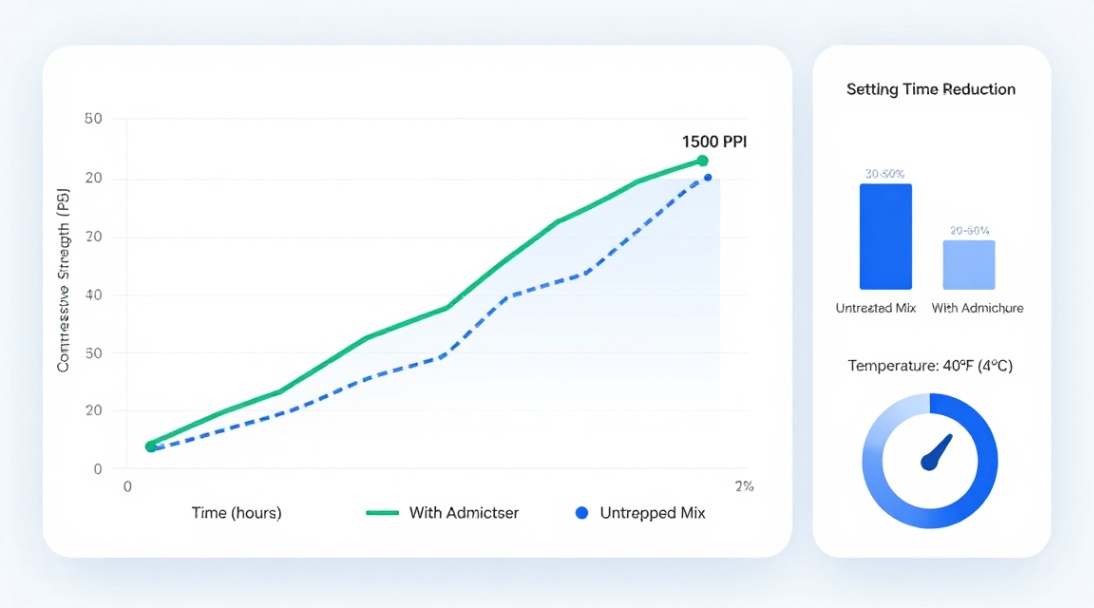
A quality early strength admixture can deliver measurable results under proper conditions. Setting times can be reduced by 30% to 50%. More importantly, strength at 24 hours can be doubled or tripled compared to an untreated mix in the same cold environment. For example, achieving 1500 psi (10 MPa) in 24 hours at 40°F (4°C) is a realistic target with a well-proportioned mix and correct admixture use. This allows for safe form removal and reduced risk.
Your Path to Confident Winter Concreting
Winter does not have to stop your concrete work. Early strength admixtures provide the chemical assurance you need. Start with a non-chloride type for reinforced concrete. Run a trial batch with your materials. Follow the dosage instructions meticulously. Combine the admixture with diligent curing practices. This approach gives you control over the schedule and the quality, turning a cold-weather challenge into a routine, successful operation.
We are the global leader in lightweight concrete and advanced engineered foam solutions. Known globally for its commitment to research, innovation, and applied expertise, we have been providing engineered foam solutions since the early 2012’s.
We can supply high-quality concrete admixture and foam concrete related products all over the world.
The company has a professional technical department and quality supervision department, a well-equipped laboratory, and equipped with advanced testing equipment and after-sales customer service center.
If you are interested, please feel free and contact us.