Professional solutions on concrete addtives, Concrete Foaming Agent, Superplasticizer, CLC Blocks Additives, and foaming machine

5 Critical Backfill Mistakes to Avoid and How Lightweight Concrete Solves Them
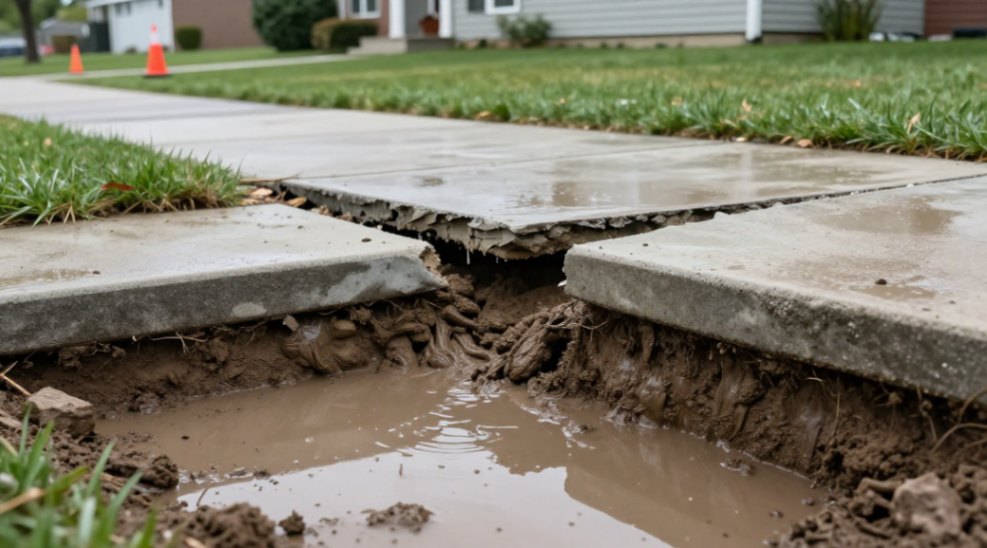
The Story of a Sinking Sidewalk
I watched the crew pack a utility trench with what they called “good native soil.” It rained the next week. The compacted soil turned to mud, settled six inches, and left a dangerous, uneven sidewalk. The repair cost twice as much as the original job. We’ve all seen variations of this story. That frustration is why I want to talk frankly about backfill. It’s the unseen foundation for everything above it, and choosing the wrong material is a gamble you can’t afford. Let’s talk about the smarter choice: non-structural lightweight concrete for backfill.
1. Don’t Just Fill a Hole. Control the Earth.
The biggest mistake? Treating backfill like empty space to be stuffed. It’s not. It’s a structural component that interacts with its surroundings. Think about that utility trench next to a building foundation. Every pound of standard backfill you compact in there presses sideways against the wall. This is lateral earth pressure. Use dense material, and you risk damaging or overloading adjacent structures. Lightweight backfill solves this by drastically reducing the load.
- The Wrong Move: Using heavy, dense soils or conventional CLSM (Controlled Low-Strength Material) next to sensitive walls or underground pipes.
- The Logical Fix: Non-structural lightweight concrete uses aggregates like expanded shale, clay, or slate. These are literally kiln-fired to be full of tiny air voids. The result is a material that can be 25-50% lighter than standard mixes, slashing lateral pressure.
- The Core Benefit: You protect existing structures. You get predictable, low pressure every time.
2. Don’t Ignore the Settlement Guarantee (or Lack Thereof)
Granular backfill settles. It’s not a question of “if,” but “how much.” Even with perfect compaction in a controlled lab, real-world conditions-water, vibration, time-will cause movement. Relying on compacted soil for a final grade is asking for depressions, cracks, and callbacks. Lightweight concrete sets. It doesn’t require compaction to achieve its final form, eliminating this variable.
- The Wrong Move: Assuming 95% Proctor density will last forever and betting your project’s finish grade on it.
- The Logical Fix: A properly designed lightweight backfill concrete flows into place, fills every irregularity (no honeycombing), and then hardens. Its long-term performance in resisting settlement is inherent. You place it, it stays.
- Critical Spec: We typically aim for a compressive strength between 50 and 150 psi for non-structural applications. Strong enough to hold shape, weak enough to be excavated later if needed.
3. Don’t Underestimate the Water
Water is the enemy of conventional backfill. It washes fines away, creates voids, induces frost heave, and turns soil into a sponge that loses all bearing capacity. If your backfill needs drainage layers, filter fabric, and perfect grading just to survive, it’s a complicated system prone to failure. Lightweight concrete has a different relationship with water.
- The Wrong Move: Using free-draining but unstable stone that allows fines migration, or clay that holds water and expands.
- The Logical Fix: The lightweight aggregate in the concrete is inherently porous, but the cement paste binds it all together. This creates a mass with lower permeability than loose gravel but without the expansive properties of clay. It resists washout and provides a degree of thermal insulation that reduces frost penetration.
- Placement Tip: You place it like a very thick slurry. No need for complicated layering and compaction testing. One homogenous pour does the job.
4. Don’t Only Look at the Bag Price
Yes, the cubic yard price of lightweight concrete mix is higher than a pile of dirt. This stops many people. It’s a classic blunder. The true cost is in total installed performance. Let’s break down the logic.
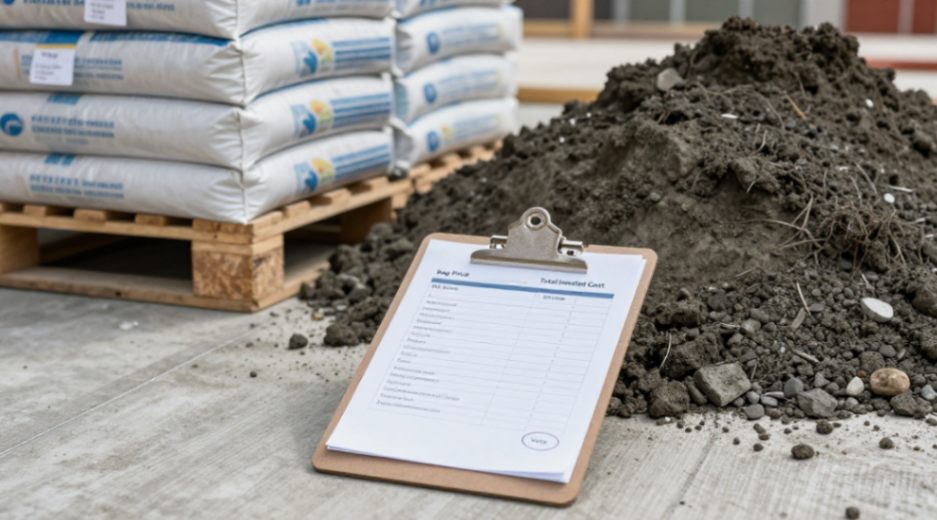
- Transport: It’s lighter. You can haul more cubic yards per truckload, reducing delivery trips.
- Labor: No compaction crews. No testing labs rolling in for density checks. You pour, maybe lightly screed, and you’re done. The labor savings are massive.
- Speed: The job finishes in hours or days, not weeks of layer-by-layer compaction.
- Risk Mitigation: This is the big one. What’s the cost of a failed backfill? Re-excavation, redesign, repair, and liability. Lightweight concrete nearly eliminates this risk category. The cost-benefit tips strongly positive on projects with access challenges, tight timelines, or adjacent structures.
5. Don’t Wing the Mix Design
You can’t just throw some styrofoam beads into a cement mixer. A successful non-structural lightweight concrete for backfill requires a precise, batched mix design from a knowledgeable ready-mix supplier. This is the most technical, non-negotiable step.
- The Wrong Move: Trying to mix it on-site or accepting a generic “lightweight” mix without a spec.
- The Logical Fix: Work with your ready-mix partner. Specify the target density (often 90-120 pcf), the required flowability (slump), and a maximum strength. Mention the specific aggregate (expanded shale is common).
- Key Specs to Discuss:
- Density: The core property. 100 pcf is a common target.
- Slump: High, often 8+ inches, for easy placement without segregation.
- Cement Content: Enough to coat aggregates and provide stability, but minimal to control cost and heat.
- Admixtures: Water reducers or hydration stabilizers may be used to improve workability.
Making the Shift: Your Path to a Better Backfill
After decades of seeing projects succeed and fail, the pattern is clear. The extra thought upfront pays off exponentially down the line. The next time you have a tricky backfill-a deep utility trench, an area around a sensitive pipeline, a fill behind a retaining wall-challenge the assumption that “dirt is cheap.”
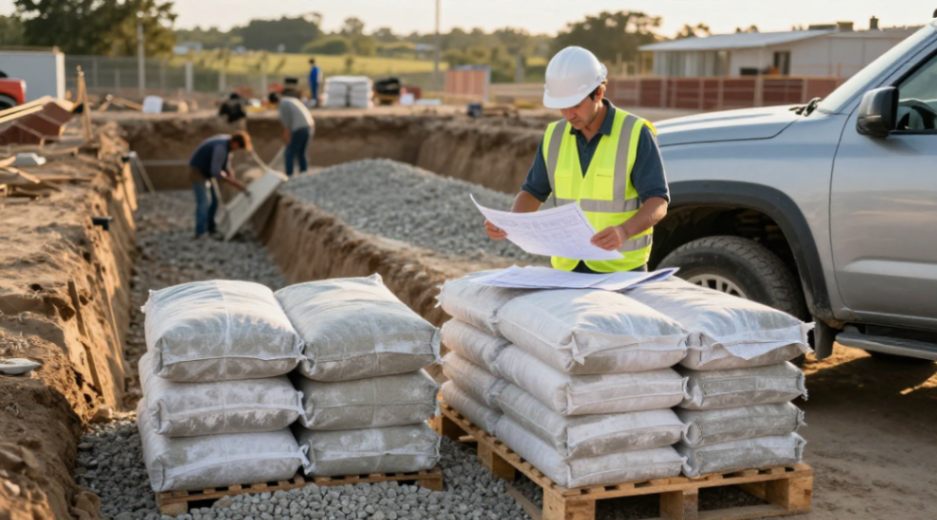
Start the conversation with your engineering team and your local ready-mix supplier about non-structural lightweight concrete. Bring them the challenges: the weight restriction, the settlement sensitivity, the water table issue. Let them provide a mix design and a quote based on the complete job cost, not just material. You’ll find it’s not just a specialty product; it’s the logical choice for durable, low-risk, and surprisingly economical backfill. Stop filling holes. Start building stable ground.
We are the global leader in lightweight concrete and advanced engineered foam solutions. Known globally for its commitment to research, innovation, and applied expertise, we have been providing engineered foam solutions since the early 2012’s.
We can supply high-quality concrete admixture and foam concrete related products all over the world.
The company has a professional technical department and quality supervision department, a well-equipped laboratory, and equipped with advanced testing equipment and after-sales customer service center.
If you are interested, please feel free and contact us.