Professional solutions on concrete addtives, Concrete Foaming Agent, Superplasticizer, CLC Blocks Additives, and foaming machine

Why Non-Toxic Redispersible Polymer Powder is Mandatory for Modern, Healthy Construction
You’ve Specified Low-VOC Materials, But Is Your Polymer Powder Truly Non-Toxic?
Have you ever completed a beautiful renovation, only for occupants to complain of lingering odors or eye irritation? Perhaps you’ve struggled to meet strict LEED v4.1 Indoor Environmental Quality credits because a “standard” polymer powder contained hidden plasticizers or formaldehyde donors. These experiences point to a critical but often overlooked detail: the toxicity profile of the redispersible polymer powder (RDP) used in your dry-mix mortars. This article dissects the technical and commercial necessity of genuinely non-toxic redispersible polymer powder, grounded in two decades of formulation expertise.
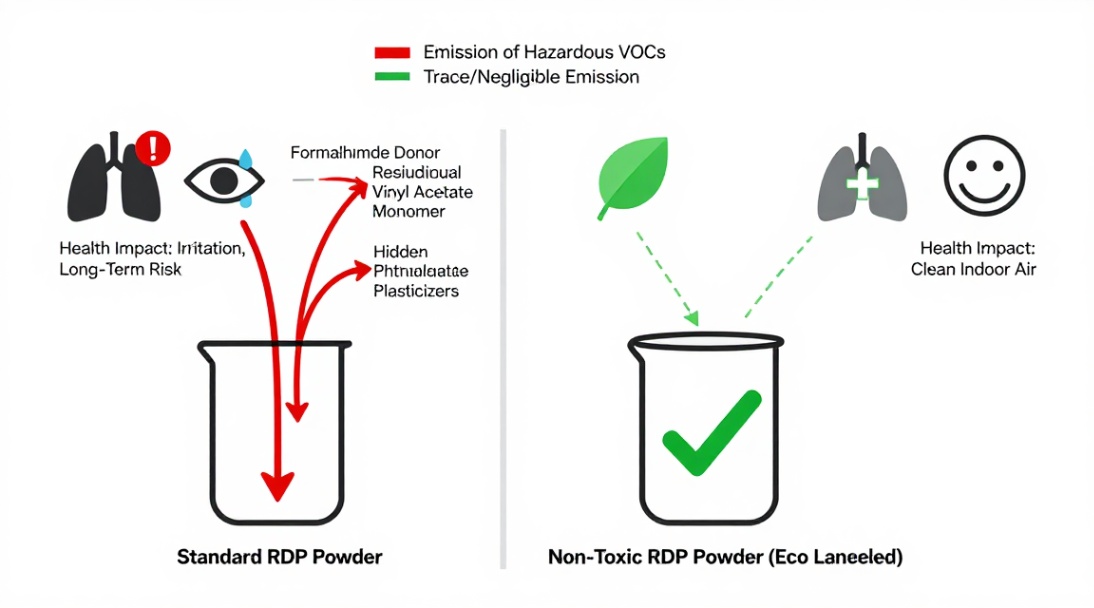
1. What exactly defines a ‘non-toxic’ redispersible polymer powder?
A truly non-toxic redispersible polymer powder is defined by its absence of harmful substances throughout its lifecycle. This includes raw materials, the polymerization process, and the final dispersed polymer film in the cured mortar. Key criteria are:
- Zero Added Formaldehyde: Not just ‘low’ emission. The powder must use non-formaldehyde release coagulants and protective colloids during manufacturing.
- VOC-Free & SVOC-Free: Contains no volatile or semi-volatile organic compounds, such as plasticizers like DBP or film-forming agents that off-gas.
- APEO-Free: Manufactured without alkylphenol ethoxylates, which are persistent environmental toxins.
- Heavy Metal Compliant: Complies with the strictest global regulations for heavy metal content (e.g., EN 71-3 safety of toys).
2. How does this powder improve indoor air quality (IAQ) versus traditional RDP?
Traditional RDPs often rely on vinyl acetate-ethylene (VAE) copolymers that may use polyvinyl alcohol (PVOH) with residual acetate groups or other additives that slowly hydrolyze, releasing acetic acid (vinegar odor) or trace formaldehyde. A non-toxic redispersible polymer powder, typically based on advanced VAE or acrylic chemistry with high-purity PVOH, eliminates these emission pathways. A 2022 study by the Healthy Building Network noted that specifying ultra-low emission polymers in dry-mix materials can reduce the total VOC burden of an interior by up to 40% compared to standard formulations.
3. Can it comply with LEED, BREEAM, and WELL Building standards?
Absolutely. It is a strategic enabler for compliance. LEED v4.1 Low-Emitting Materials credit requires testing per CDPH Standard Method v1.2 or similar. WELL Building Standard mandates even stricter VOC thresholds. Genuine non-toxic redispersible polymer powder allows mortar manufacturers to submit products for certification with a high degree of confidence. It directly addresses the material ingredient reporting and optimization credits by excluding substances on prohibited lists like the Living Building Challenge Red List.
4. Does ‘non-toxic’ mean a compromise in performance?
This is a common misconception. Performance is non-negotiable. A premium non-toxic redispersible polymer powder enhances key mortar properties through optimized polymer chemistry:
- Flexibility & Crack Bridging: Improves flexibility and reduces elastic modulus, allowing the mortar to absorb substrate movement without cracking.
- Adhesive Strength: Increases tensile adhesion strength by 100-200% on critical substrates like concrete and EPS/XPS insulation boards.
- Water Resistance: Forms a continuous, hydrophobic polymer film that reduces capillary water absorption, enhancing durability in wet areas.
- Workability: Acts as a rheology modifier, improving smooth application and open time without needing additional cellulose ethers.
5. In which applications is it most critical?
Its use is critical anywhere occupant proximity or moisture exposure is high.
5.1. Interior Tile Adhesives and Grouts
This is the highest priority. Bedroom, bathroom, and kitchen tiles are in constant close contact with occupants. Using a non-toxic powder ensures no long-term off-gassing contributes to poor IAQ.
5.2. Self-Leveling Underlayments (SLU)
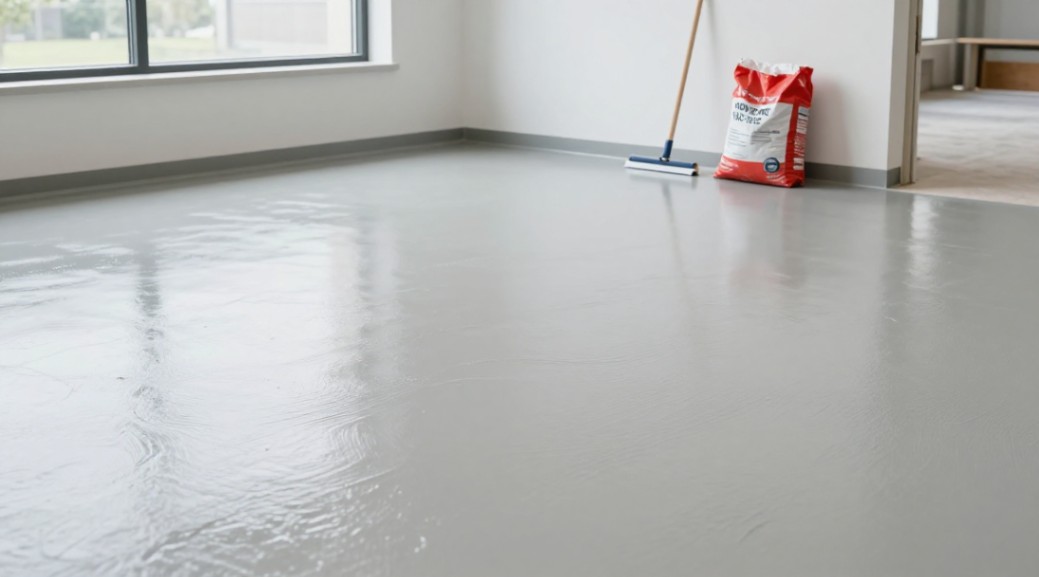
Large-area pours can emit significant VOCs if formulated with standard binders. Non-toxic RDP is essential for green hospital, school, and residential projects where slabs are poured indoors.
5.3. Thermal Insulation Rendering Systems (ETICS)
While exterior, the adhesive and base coat are often applied from the interior side during renovations. Worker safety during handling and occupant safety during application are paramount. It also improves long-term weather resistance.
6. What about worker safety during mixing and application?
Traditional powder dust can be an irritant. Non-toxic powders minimize this risk at the source. More importantly, they eliminate exposure to hazardous substances during the high-dust activity of mixing. This reduces liability on-site and aligns with modern occupational health and safety protocols that look beyond just silica dust.
7. How do I verify a product’s ‘non-toxic’ claims?
Demand transparent, third-party documentation. Do not accept a generic MSDS alone. Require:
- A detailed Voluntary Emissions Certificate from an accredited lab (e.g., using ISO 16000 chamber methods).
- A full Declaration of Ingredients listing all components down to 1000 ppm.
- Certifications like Eurofins Indoor Air Comfort Gold, Cradle to Cradle Certified, or UL ECOLOGO.
- Verification of phthalate-free and alkylphenol-free status.
8. What is driving market demand for these advanced powders?
Regulatory pressure is the primary driver. The EU’s stricter Classification, Labelling and Packaging (CLP) regulations and California’s Proposition 65 push manufacturers toward safer chemistries. Secondly, informed architects and homeowners now demand material transparency. Finally, the rise of building material digital product passports will make undisclosed toxic components a significant liability. Future trends point to bio-based or carbon-negative polymer powders, but today, verified non-toxicity is the baseline.
The Bottom Line for Specifiers and Manufacturers
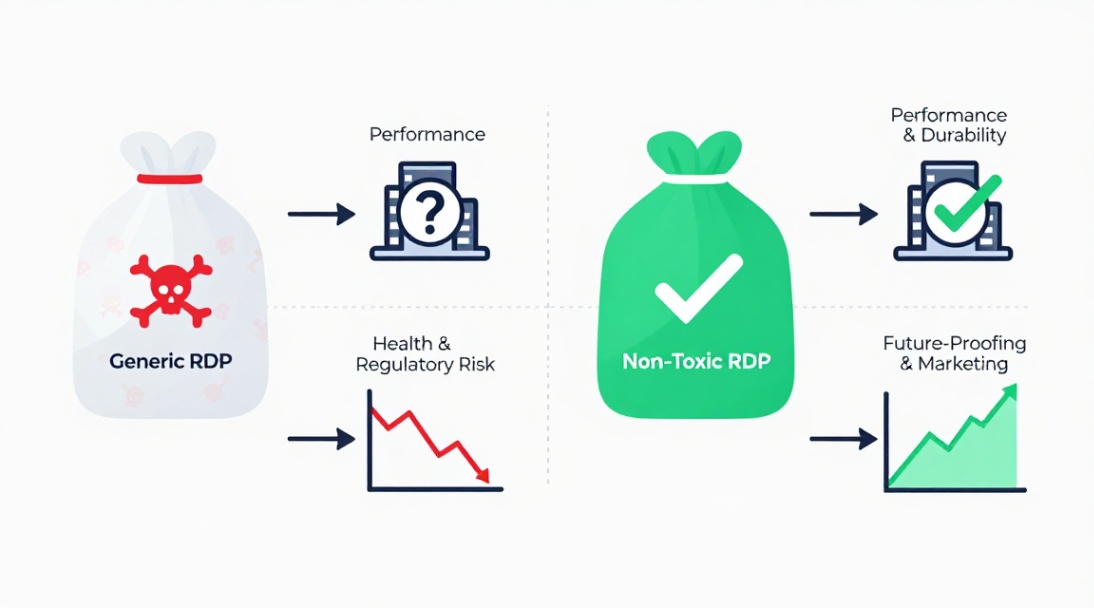
Specifying a generic redispersible polymer powder is a significant blind spot in creating healthy buildings. The performance argument is settled; these powders match or exceed traditional options. The health, regulatory, and marketing advantages are decisive. For manufacturers, reformulating with a genuine non-toxic redispersible polymer powder future-proofs your product portfolio. For contractors and specifiers, it de-risks projects and delivers on the promise of sustainable, healthy construction.
Ready to eliminate toxic compromises from your formulations?
The data and standards are clear. The next step is action. Do not rely on supplier marketing claims. Request the third-party test certificates and full ingredient disclosure for every polymer powder you currently use or specify. Compare them against the criteria outlined here. If your supplier cannot provide this documentation within 48 hours, your project’s air quality and compliance are at risk. For a technical dossier on a market-leading, fully-certified non-toxic redispersible polymer powder backed by emission certificates and decades of field performance, contact our specialist team now. We provide formulation support to ensure your transition is seamless and performance is guaranteed.
We are the global leader in lightweight concrete and advanced engineered foam solutions. Known globally for its commitment to research, innovation, and applied expertise, we have been providing engineered foam solutions since the early 2012’s.
We can supply high-quality concrete admixture and foam concrete related products all over the world.
The company has a professional technical department and quality supervision department, a well-equipped laboratory, and equipped with advanced testing equipment and after-sales customer service center.
If you are interested, please feel free and contact us.