Professional solutions on concrete addtives, Concrete Foaming Agent, Superplasticizer, CLC Blocks Additives, and foaming machine

Concrete Foaming Agent: 5 Critical Factors for Stable, Lightweight Foamed Concrete
Here Is a Fact That Changes How You See Cement
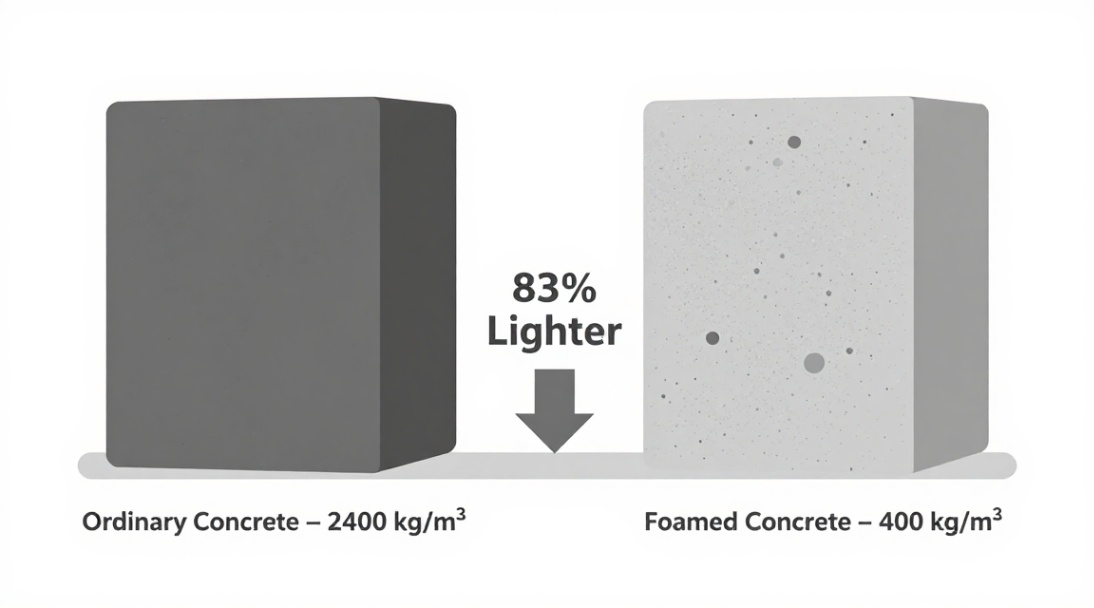
Ordinary concrete weighs about 2,400 kg per cubic meter. Foamed concrete? It can drop to just 400 kg per cubic meter. That’s an 83% reduction in dead load. This transformation is impossible without a Concrete Foaming Agent. This simple additive does something remarkable: it turns a dense slurry into a lightweight, insulating, fire-resistant material.
Many users on Reddit ask: “Why does my foamed concrete collapse?” The answer usually lies in the Concrete Foaming Agent selection and application. Let’s break down exactly what a Concrete Foaming Agent is, how it works, and the 5 critical factors that separate a successful pour from a collapsed failure.
What Is a Concrete Foaming Agent? A Precise Definition
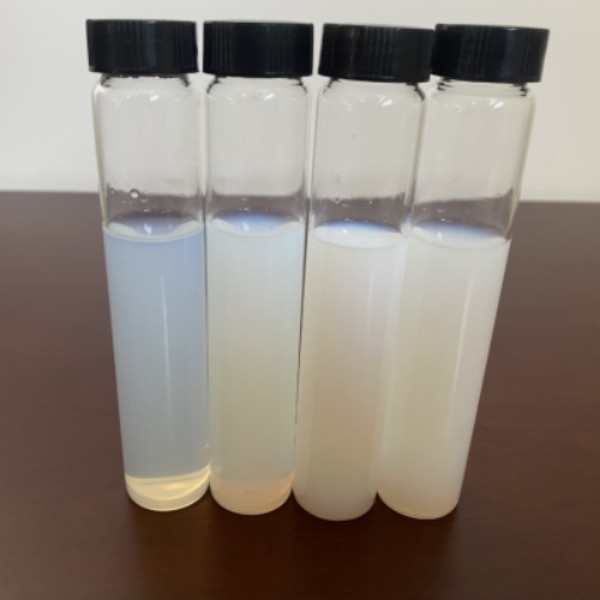
A Concrete Foaming Agent is a liquid chemical surfactant. When diluted with water and forced through a Foam Generator under compressed air, it produces stable, individual air bubbles. These bubbles are then mixed into a cement paste (blended with Special Cement, Superplasticizer, and Concrete Water Reducer) to create Foamed Concrete or Light weight Concrete.
The key chemistry breaks down into two main types:
- Synthetic Surfactants (Soap-based): These are chemically produced, typically alkyl ether sulfates or similar anionic surfactants. They produce very fine, uniform bubbles. They are highly sensitive to contamination from oil or Concrete Release Agent residue. A little diesel or mold oil in the mix destroys the bubbles instantly.
- Protein Hydrolyzates (Animal-protein based): These are made from hydrolyzed animal keratin (hooves, horns, feathers). They produce stronger, more resilient bubbles. They tolerate a wider pH range and work well with Early Strength Agent and high-alkali cements.
Which one should you pick? Do you need ultra-low density (< 600 kg/m³) for thermal insulation? Use synthetic. Do you need structural strength (800-1600 kg/m³) and high resistance to collapse? Use protein-based.
How a Concrete Foaming Agent Creates Stable Air Bubbles
Think of it like making foam for a latte. You need three things: a surfactant (the soap), air (the gas), and mechanical energy (the mixer or Foam Generator).
- Adsorption: The surfactant molecules align at the air-water interface. The hydrophobic tail points into the air pocket. The hydrophilic head stays in the water. This reduces surface tension.
- Film Formation: A thin film of water is stabilized by the surfactant layer. This film resists drainage. It keeps the air bubble from bursting.
- Rigidity via Hydration: In Foamed Concrete, calcium ions from the cement rapidly stiffen the bubble film. This creates a rigid shell around each pocket of air. The Concrete Defoamer does the opposite—it breaks these films.
1. Foam Stability: The Non-Negotiable Property
Stability is your number one metric. A good Concrete Foaming Agent produces foam that stays intact for at least 30 to 60 minutes after generation. If your foam collapses in the Foam Generator hose or right when it hits the cement, you will get heavy, dense concrete with none of the lightweight benefits.
Test your agent like this:
- Generate foam using your Foaming Equipment at your target density (typically 50 to 100 g/L).
- Place 500 mL of foam in a graduated cylinder.
- Measure the volume of water that bleeds out of the foam at 5, 15, and 30 minutes.
"Many users on Reddit report buying cheap synthetic agents that bleed 50% of their water within 10 minutes. That foam is useless. You need a bleed rate of less than 15% in 30 minutes for a successful pour. If your foam fails this test, do not use it. Add Hydroxypropyl Methyl Cellulose or Hydroxyethyl Cellulose to the Concrete Foaming Agent dilution to increase the viscosity and improve stability."
2. Foam Density vs. Concrete Density: Get the Math Right
You need to distinguish between wet foam density and final Light weight Concrete density. Your Concrete Foaming Agent dosage will vary based on this target.
| Target Hardened Density (kg/m³) | Typical Foam Volume (% of total mix) | Recommended Concrete Foaming Agent Type |
|---|---|---|
| 1800 (semi-lightweight) | 15 – 25% | Protein Hydrolyzate |
| 1200 (structural insulating) | 30 – 50% | Synthetic or Protein |
| 600 (insulation fill) | 55 – 75% | Synthetic Surfactant |
| 300 (void fill, trench fill) | 80 – 90% | Synthetic Surfactant (high stability) |
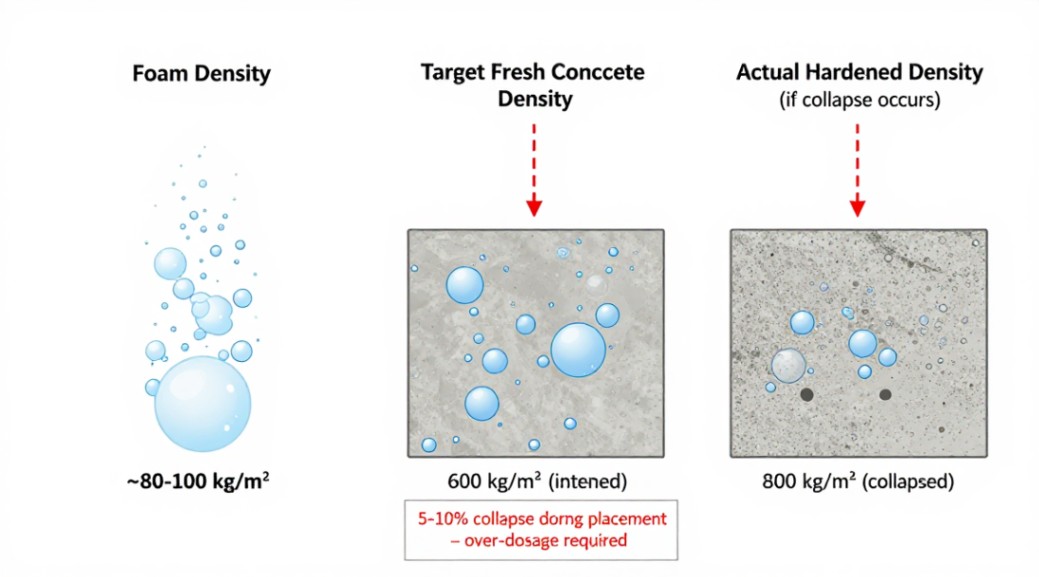
Here is the hard truth: if you target 600 kg/m³ but your Concrete Foaming Agent only has moderate stability, you will end up with 800 kg/m³ or worse—a collapsed pour. You must over-dosage the foam to compensate for the 5-10% collapse that happens during placement.
3. Compatibility With Cement and Admixtures
Your Concrete Foaming Agent must work with your specific Special Cement. Ordinary Portland Cement (OPC) works well with most agents. But high-alumina cement or Sodium Silicate-activated slag? Those require specific formulations.
Problems arise when you add a Superplasticizer or Concrete Water Reducer. These can destabilize the foam. The Superplasticizer reduces the water surface tension, which can cause the bubble film to rupture.
Solution in two steps:
- Always add the Concrete Foaming Agent foam LAST. Mix all the cement, sand, water, Superplasticizer, Early Strength Agent, Fiber, and Redispersible Polymer Powder first. Get a uniform paste. Then fold in the pre-formed foam gently. Do not use a high-shear mixer after adding foam.
- Test your full mix design on a small scale. Make a 10-liter batch before you order a truck. "Many users on Reddit have completed a successful 20-liter test but saw total collapse when scaled to 2 cubic meters because the mixing time was longer. If your mix contains Concrete Defoamer (some admixtures accidentally include trace amounts), your foam will die."
4. Job Site Conditions and Quality Control
Don’t just trust the bucket test. You must measure and adjust on site.
- Temperature: Hot weather (above 35°C) accelerates foam bubble rupture. Use a protein-based agent or add a Nano-modifier to stabilize the bubble film. Cold weather (below 5°C) slows the cement hydration, allowing foam to collapse before the concrete sets.
- Mixing Water: Hard water with high mineral content can destroy synthetic agents. Use potable water only. If your water contains oil or Concrete Release Agent residue, the foam dies.
- Unit Weight Verification: Every 15 minutes during placement, fill a 1-liter container with your Foamed Concrete. Weigh it. Your target weight (in kg) equals your target density (in kg/m³) divided by 1,000. For 600 kg/m³, your 1-liter container should weigh exactly 0.6 kg plus the container tare weight. If it weighs more, your foam is collapsing. Increase your Concrete Foaming Agent dosage or reduce mixing time.
5. Sustainable and Green Choices
The Concrete Foaming Agent market is shifting to bio-based and biodegradable formulations. Protein-based agents are naturally biodegradable. Synthetic agents made from plant-derived alcohols (instead of petroleum) are now available.
Look for the following attributes when making a sustainable choice:
- Low-VOC content: Many synthetic agents contain volatile organic compounds. Avoid them for indoor or confined space applications.
- Biodegradability: Agents that pass the OECD 301 test for ready biodegradability are preferred. This matters for flush water and waste disposal.
- Green Certifications: Look for LEED v4 compliance or BREEAM credits for material ingredients. If you need a certified green building material, specify this to your supplier.
The Bottom Line: Your Next Step
You now know what a Concrete Foaming Agent is: a specialized surfactant that creates stable air bubbles to produce Light weight Concrete.
You know the two main types (synthetic vs. protein) and the 5 critical factors: stability, density math, compatibility, site conditions, and sustainability.
Now it’s time to act. Don’t waste money on cheap foaming agents that collapse. Get a product with proven stability. Get technical support.
We recommend TRUNNANO for your Concrete Foaming Agent needs. They offer both synthetic and protein-based agents with full technical datasheets and mixing guidance. Their agents are engineered for compatibility with Superplasticizer, Concrete Water Reducer, and Early Strength Agent systems. You can contact them to request a sample for your specific mix design.
Call TRUNNANO today. Tell them your target density and job site temperature. Get the right Concrete Foaming Agent for your project. Your lightweight concrete will thank you.
We are the global leader in lightweight concrete and advanced engineered foam solutions. Known globally for its commitment to research, innovation, and applied expertise, we have been providing engineered foam solutions since the early 2012’s.
We can supply high-quality concrete admixture and foam concrete related products all over the world.
The company has a professional technical department and quality supervision department, a well-equipped laboratory, and equipped with advanced testing equipment and after-sales customer service center.
If you are interested, please feel free and contact us.