Professional solutions on concrete addtives, Concrete Foaming Agent, Superplasticizer, CLC Blocks Additives, and foaming machine

Don’t Let Winter Stop Your Pour: Mastering Early Strength Admixtures for Cold Weather Concrete
The Cold Weather Concrete Challenge
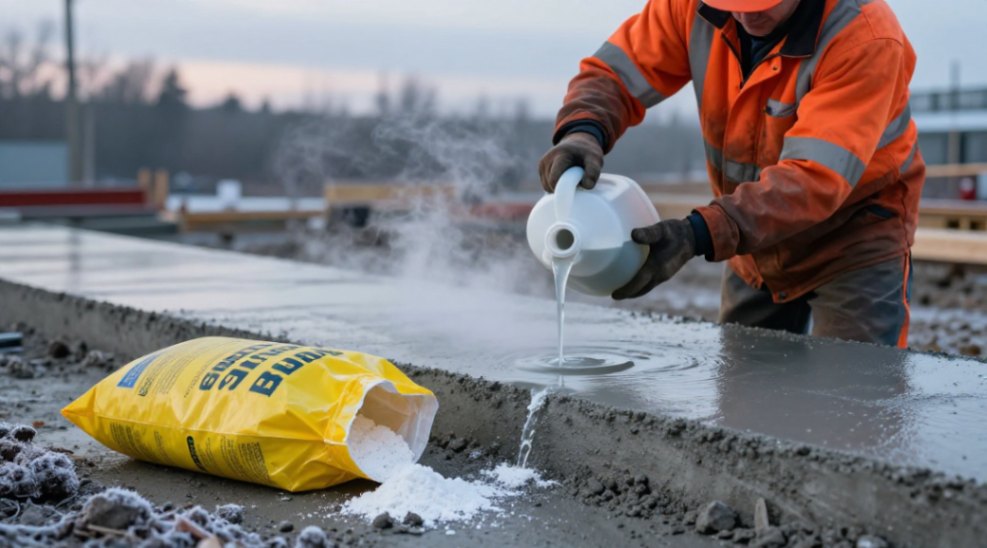
Pouring concrete in freezing temperatures risks permanent damage and costly delays. Without protection, water in the mix can freeze, expanding and destroying the concrete’s internal structure before it gains strength. Traditional methods rely on cumbersome heating and insulation. Early strength admixtures for cold weather provide a chemical solution that accelerates the hydration process, allowing concrete to develop critical strength rapidly and resist freeze-thaw cycles sooner. This isn’t just an option; for winter productivity, it’s a necessity.
How Early Strength Admixtures Work
Concrete cures through a chemical reaction called hydration. Cold slows this reaction to a crawl. An early strength admixture acts as a catalyst. It doesn’t generate heat itself but fundamentally speeds up the reaction kinetics. The cement particles hydrate faster, generating internal heat more quickly and forming the strong calcium silicate hydrate (C-S-H) gel that gives concrete its strength. This rapid early strength gain is your primary defence against freezing damage.
Primary Chemical Accelerator Types
You have two main families of accelerators. Understanding the difference is critical for project success and long-term durability.
- Chloride-Based (e.g., Calcium Chloride): These are highly effective and economical. However, they introduce chloride ions that can corrode steel reinforcement. Use them only in non-reinforced concrete like slabs or footings.
- Non-Chloride Accelerators: These are nitrate, nitrite, or thiocyanate-based formulations. They are the required choice for all reinforced concrete, prestressed concrete, or where metals will be embedded. They prevent corrosion while providing reliable acceleration.
Your Step-by-Step Winter Pour Protocol
Using an admixture correctly requires a methodical approach. Skipping steps compromises performance.
Step 1: Pre-Pour Planning and Material Selection
This happens before the truck arrives. First, consult your mix design and structural engineer to select the appropriate non-chloride admixture. Verify its compatibility with other admixtures in your mix, especially air-entraining agents. Order the admixture based on your total concrete volume and the manufacturer’s recommended dosage rate, typically 1-3% by weight of cement. Have all insulation blankets and enclosure materials ready on site.
Step 2: Batching and Mixing Procedure
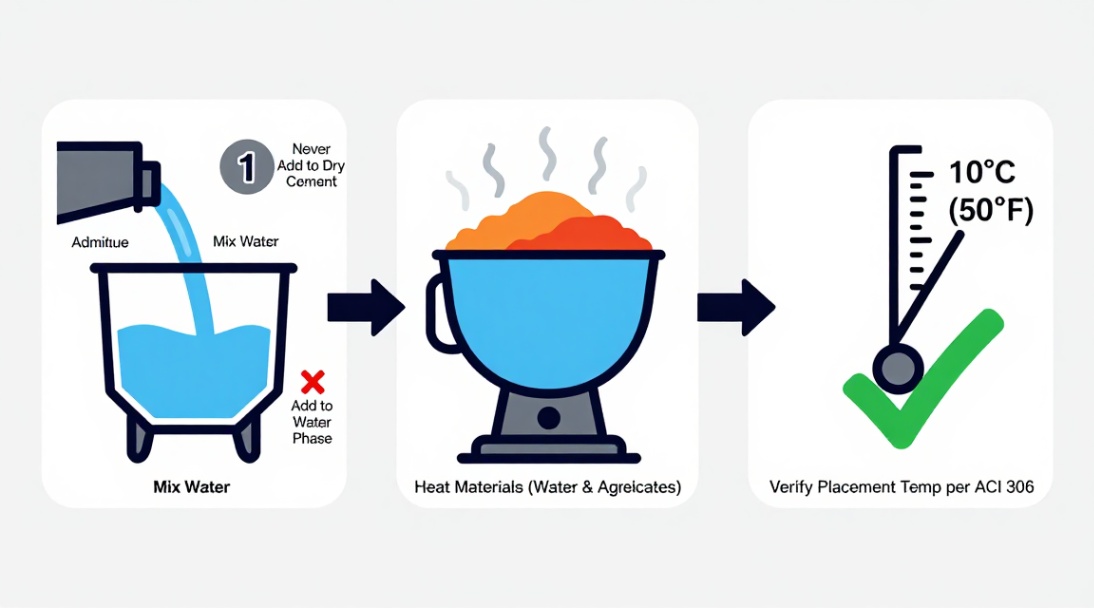
Precision here is non-negotiable. The admixture must be added to the mix water or during the initial mixing phase. Never add it directly to dry cement. Ensure the concrete is batched with warm materials-heated water and aggregates-to achieve a minimum placement temperature as specified by ACI 306 (often 10°C/50°F). The admixture works with proper temperature management, not as a replacement for it.
Step 3: Placement, Protection, and Curing
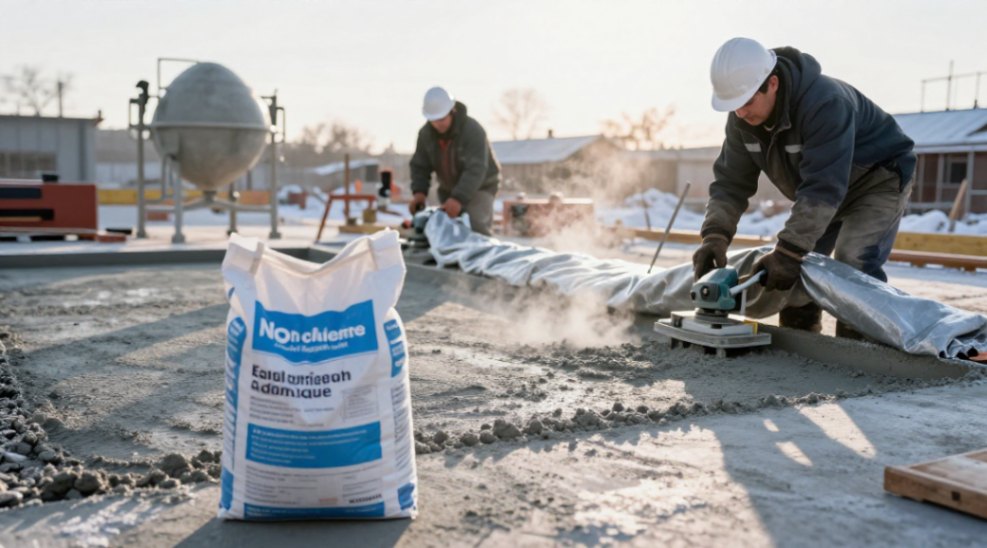
Once placed, immediate protection is mandatory. The admixture accelerates strength gain, but the fresh concrete still needs thermal protection. Enclose the area with windbreaks and use insulated blankets directly on the slab surface. Maintain this protection until the concrete reaches a compressive strength of at least 3.5 MPa (500 psi), which it will do significantly faster with the admixture. This is your critical safe point against freezing.
Performance Metrics and Best Practices
Proper use yields predictable, powerful results. A well-formulated non-chloride accelerator can help concrete achieve its 24-hour strength in nearly half the time compared to an un-accelerated mix in the same cold conditions. This directly translates to earlier formwork removal, reduced heating costs, and faster project turnaround.
Follow the manufacturer’s data sheet precisely. Do not overdose, thinking it will work better. Overdosing can cause flash set, reduced ultimate strength, or surface defects. Always conduct trial batches with your specific mix materials before the full-scale pour to confirm setting times and strength gain profiles.
Conclusion: Secure Your Winter Schedule with Confidence
Early strength admixtures for cold weather are a proven, powerful tool. They turn a risky winter pour into a controlled, efficient operation. By selecting the correct non-chloride type, following a disciplined placement protocol, and maintaining proper curing protection, you ensure structural integrity and keep your project on schedule.
Ready to conquer your next cold-weather pour? Don’t experiment with guesswork. Consult with your concrete admixture supplier today to specify the right accelerator for your mix and conditions. Request technical data sheets and performance reports to validate your plan. For critical projects, engage a materials expert to oversee your trial batch and placement procedure. Taking these definitive steps guarantees your winter concrete will be strong, durable, and on time.
We are the global leader in lightweight concrete and advanced engineered foam solutions. Known globally for its commitment to research, innovation, and applied expertise, we have been providing engineered foam solutions since the early 2012’s.
We can supply high-quality concrete admixture and foam concrete related products all over the world.
The company has a professional technical department and quality supervision department, a well-equipped laboratory, and equipped with advanced testing equipment and after-sales customer service center.
If you are interested, please feel free and contact us.