Professional solutions on concrete addtives, Concrete Foaming Agent, Superplasticizer, CLC Blocks Additives, and foaming machine

The Ultimate Guide to Sulfate Resistant Cement for Marine Environments
Does Your Marine Concrete Crumble Too Soon?
You watched them pour the concrete for the pier, the seawall, the pilings. It looked monolithic and permanent. Yet, within a few years, cracks spiderweb across the surface. The concrete softens, flakes, and loses its structural integrity. What went wrong? This premature deterioration likely wasn’t due to poor workmanship or heavy loads. The silent culprit was a chemical attack from seawater, a relentless process that standard concrete cannot withstand. This failure isn’t just an eyesore; it’s a significant financial and safety liability. Fortunately, you have a powerful tool to prevent it. That tool is sulfate resistant cement for marine environments.
The Anatomy of a Silent Attack
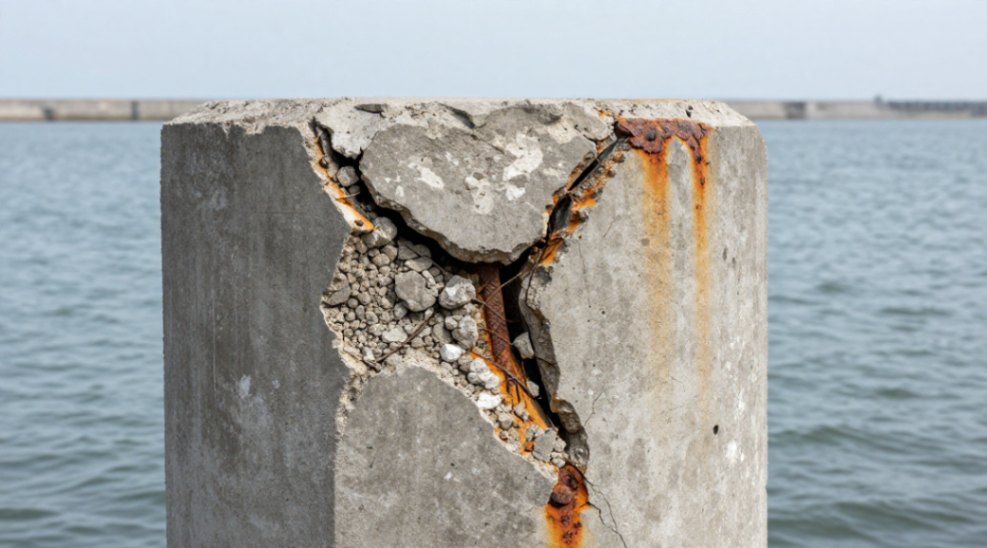
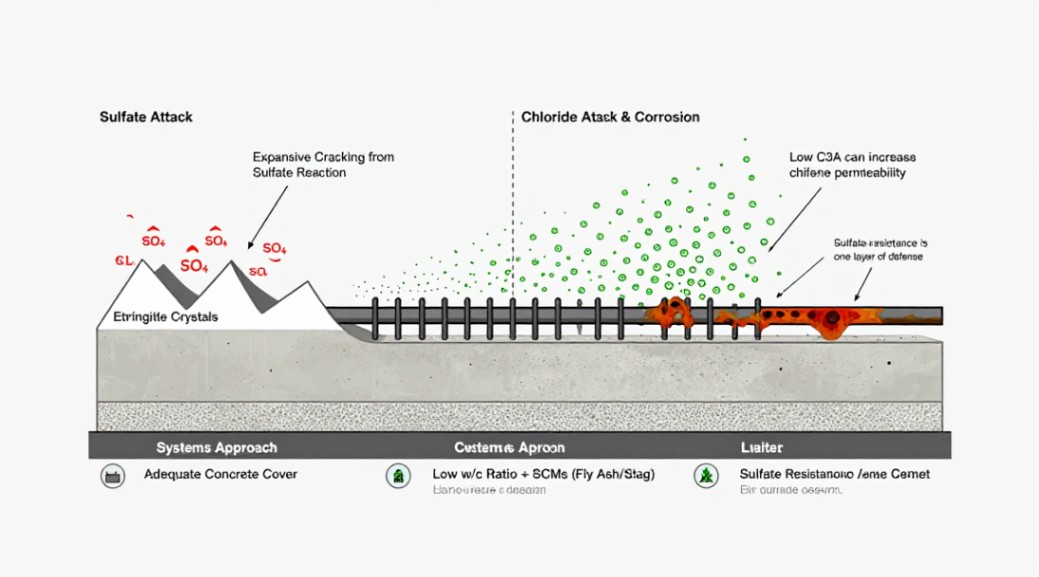
To understand the solution, you must first understand the enemy. Seawater isn’t just salty water; it’s a complex, corrosive soup rich in sulfate ions (SO4²⁻), chlorides, and magnesium. The primary assault comes from sulfate attack. When sulfates from seawater penetrate concrete, they react with two key hydration products: calcium hydroxide and tricalcium aluminate (C3A). This reaction forms expansive crystalline compounds like ettringite and gypsum. These crystals grow, generating immense internal pressure. This pressure cracks the concrete from within, creating pathways for more seawater to ingress. It’s a vicious, self-accelerating cycle that leads to spalling, loss of strength, and eventual failure.
How Sulfate Resistant Cement Fights Back
Sulfate resistant cement isn’t a magical new material. It’s a precise re-engineering of Ordinary Portland Cement (OPC) to eliminate its greatest weakness. The key lies in drastically limiting the amount of tricalcium aluminate (C3A). Standard OPC might contain 8-12% C3A, which is highly reactive with sulfates. Sulfate resistant cement, such as Type V per ASTM C150, restricts C3A to 5% or less. With less of this reactive compound available, the formation of destructive ettringite is minimized. The cementitious matrix becomes denser and less permeable, further slowing the ingress of aggressive ions. Industry reports, such as those from the Portland Cement Association, consistently show that concretes made with Type V cement exhibit a service life extension of 200% or more in severe sulfate exposures compared to standard mixes. The mechanism is straightforward: remove the fuel, and you stop the fire.
Where It Shines: Marine Applications
This cement is not a universal replacement for all projects. Its value is unlocked in specific, high-stakes marine applications where failure is not an option. Think of the foundation piles for a coastal bridge, constantly submerged in tidal zones. Consider a jetty or seawall, bearing the full brunt of waves and spray. Submerged pipelines, offshore platform legs, and tidal energy structures all face this same aggressive environment. In these scenarios, using sulfate resistant cement for marine environments is not a luxury; it’s the baseline for responsible design. It provides the foundational durability upon which all other protective measures, like high-quality mix design, proper cover, and adequate curing, can build a truly resilient structure.
Beyond Sulfates: The Chloride Consideration
However, a critical nuance often catches engineers off guard. While sulfate resistant cement excels against sulfate attack, it does not directly prevent chloride-induced corrosion of the steel reinforcement. In fact, its low C3A content can slightly increase concrete permeability to chlorides. This is not a flaw, but a call for a systems approach. In chloride-rich marine environments, sulfate resistance is just one layer of defense. You must complement it with a low water-to-cement ratio, the use of supplementary cementitious materials (SCMs) like fly ash or slag to refine the pore structure, and adequate concrete cover over the rebar. The cement handles the sulfate threat, while the overall mix design and detailing manage the chloride threat.
Making It Work: The Non-Negotiables
Specifying the right cement is only 30% of the battle. The remaining 70% depends on execution. Sulfate resistant cement requires even greater discipline during placement and curing. Its chemistry demands consistent, thorough hydration. Inadequate curing will create a weak, porous surface that nullifies the cement’s inherent benefits. You must plan for extended moist curing periods, especially in the critical first 7 days. Mix design is equally crucial. Simply swapping in Type V cement into a standard 4,000 psi mix is insufficient. The goal is to create a dense, impermeable barrier. This requires a low water-cement ratio (typically 0.40 or lower), high-quality aggregates, and often, the strategic incorporation of SCMs to enhance long-term durability and reduce heat of hydration.
The Final, Critical Decision
Look at your project drawings. Look at the waterline. If your concrete will be submerged, splashed, or buried in sulfate-rich soils near the coast, the choice is clear. Standard concrete is a liability waiting to manifest. The incremental cost of sulfate resistant cement for marine environments is negligible compared to the astronomical expense of repairs, litigation, and reputational damage from a premature failure. This isn’t about buying cement; it’s about purchasing long-term performance and peace of mind. You are investing in the structural integrity of your project for decades to come.
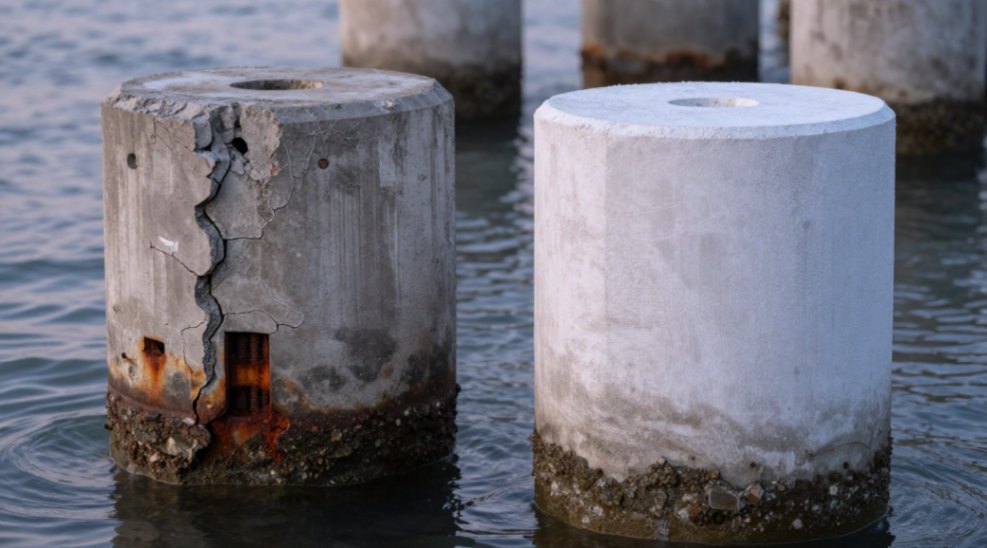
Don’t gamble with marine durability. The data, the chemistry, and decades of field performance all point to one solution. To ensure your next marine structure stands the test of time, you must start with the right foundation. Consult with your ready-mix supplier today and insist on a concrete mix design centered on ASTM C150 Type V sulfate resistant cement. Specify it on your plans, enforce it during construction, and build a legacy of resilience, not repair.
We are the global leader in lightweight concrete and advanced engineered foam solutions. Known globally for its commitment to research, innovation, and applied expertise, we have been providing engineered foam solutions since the early 2012’s.
We can supply high-quality concrete admixture and foam concrete related products all over the world.
The company has a professional technical department and quality supervision department, a well-equipped laboratory, and equipped with advanced testing equipment and after-sales customer service center.
If you are interested, please feel free and contact us.