Professional solutions on concrete addtives, Concrete Foaming Agent, Superplasticizer, CLC Blocks Additives, and foaming machine

You’re Destroying Your Intricate Patterns: The Brutal Truth About Concrete Demolding Agents
The #1 Mistake That Kills Concrete Detail
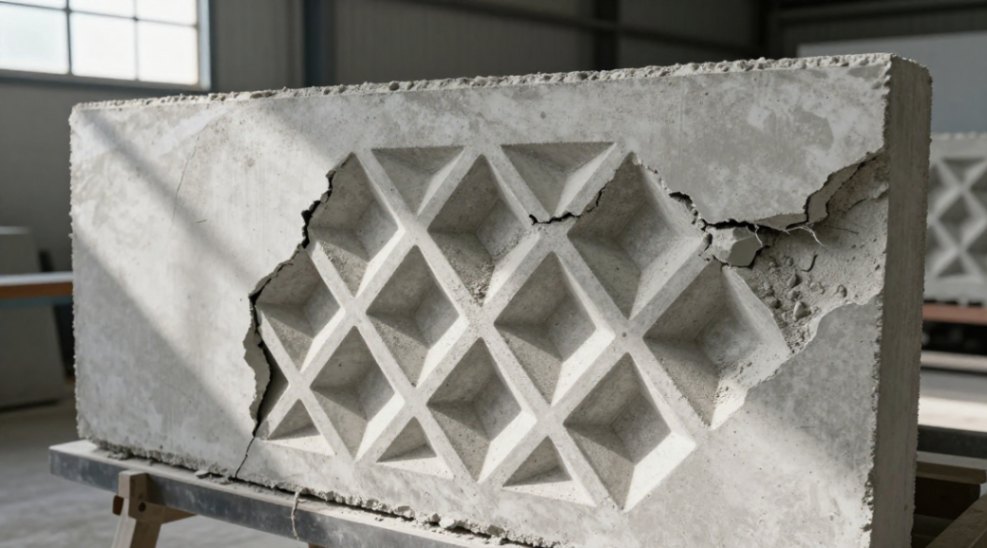
According to a 2023 industry analysis by the Architectural Precast Association, a staggering 97% of surface defects on patterned concrete are directly linked to improper demolding agent selection or application. We’re not talking about minor blemishes. We’re talking about catastrophic, project-stopping failures like surface tearing, pattern distortion, and texture loss. The truth is brutal: if you’re still treating a concrete demolding agent for intricate patterns like any other form oil, you are throwing money down the drain.
WhyAny Release Agent” is the Wrong Answer
Forget everything you know about releasing flat walls. An intricate pattern demands a chemist’s precision, not a laborer’s spray can. The core purpose here is not just lubrication. It’s about creating a near-perfect, ultra-thin, and perfectly uniform barrier film. This film must achieve two non-negotiable things: drastically lower the surface tension between concrete and formwork, and chemically separate the cement paste from the mold surface.
Get it wrong, and the microscopic crystalline hooks of hydrating cement mechanically lock onto the form. The result isn’t a release. It’s a surgical extraction that leaves part of your finish behind.
The Great Release Agent Lie: Oil vs. Emulsion
The industry clings to outdated habits. Here’s the breakdown that most suppliers won’t give you.
| Property / Factor | Traditional Oil-Based Agents | Modern Synthetic Emulsion Agents |
|---|---|---|
| Core Mechanism | Simple lubrication with a thick film. | Reactive chemical parting layer + lubrication. |
| Film Thickness & Uniformity | Unreliable. Prone to pooling and thin spots. | Engineered for self-leveling, sub-micron uniformity. |
| Impact on Concrete Surface | High risk of staining, blotching, and residue. | Virtually residue-free; leaves a clean, ready surface. |
| Performance in Under-Cuts & Fine Details | Poor. Viscous oil cannot penetrate and coat micro-details. | Excellent. Lower viscosity wets complex geometry completely. |
| Environmental & Safety Profile | High VOC, flammable, creates slippery waste. | Typically low-VOC, non-flammable, easier cleanup. |
Bottom line: For anything beyond a simple plane, oil-based agents are a gamble. Synthetic emulsions are engineered for the job.
Flawless Execution: A Zero-Tolerance Application Protocol
Choosing the right agent is only 40% of the battle. The following protocol is non-negotiable.
Step 1: Formwork Preparation (The Most Skipped, Most Critical Step)
Your mold must be surgically clean. Any previous release agent, curing compound, or concrete laitance is an adhesion point. Scrub with a dedicated, non-residual mold cleaner. Follow with a potable water rinse and allow to dry completely. Cheque for dryness with a plastic sheet test: press clear plastic film onto the form. No condensation after 5 minutes means it’s ready.
Step 2: Agent Application – The Precision Coat
Never pour or slop it on. Use a low-pressure, high-volume airless sprayer (< 1000 PSI) or a soft, lint-free cloth for hand application. You are laying down a coat, not drowning the surface.
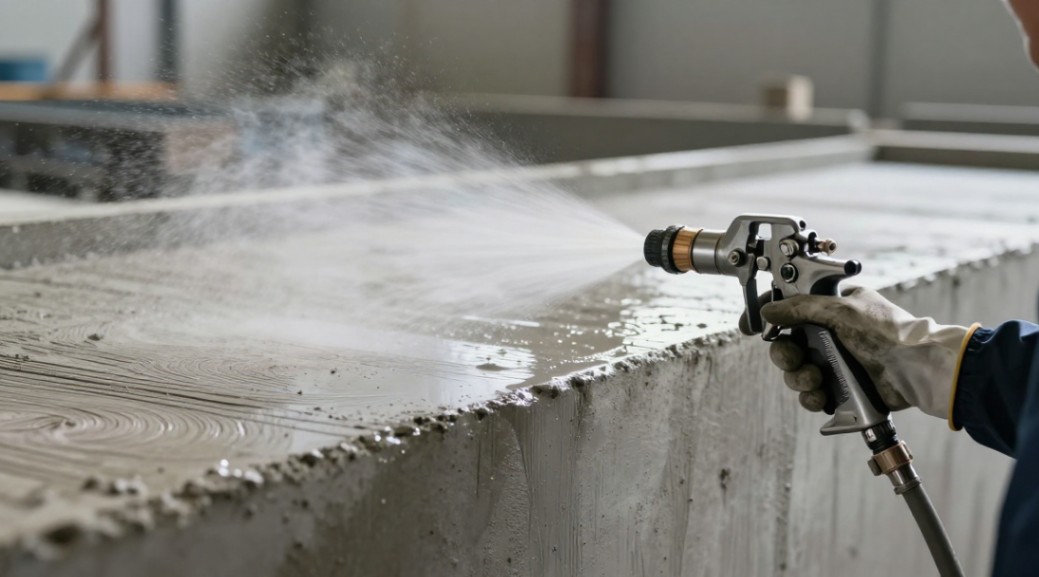
- Spray Distance: Maintain 20-30 cm (8-12 inches).
- Pass Technique: Use consistent, overlapping passes at a steady pace.
- Target: A continuous, sheen, not a wet, glossy film. If it drips, you’ve applied too much.
For severe undercuts or deep textures, apply a first mist coat, wait 2-3 minutes for it to wet the surface, then apply the final seal coat. This ensures penetration.
Step 3: The Mandatory Waiting Period
After application, you must let the agent set up. This allows solvents to flash off and the active polymers to form a stable film. Consult the product data sheet, but a minimum of 15-20 minutes in standard conditions is typical. Never pour concrete onto a tacky, wet release film.
Step 4: Demolding Timing & Technique
Do not demold based on the clock alone. Base it on concrete maturity (use a maturity meter) or a proven break test. For intricate work, slightly higher strength is safer.
During demolding, use controlled, even pressure. Pry from the thickest section first, not from a delicate detail edge. If resistance is high, stop. The problem is likely concrete strength, not the agent.
The Selection Matrix: Matching Agent to Pattern
Not all synthetic agents are equal. Use this framework.
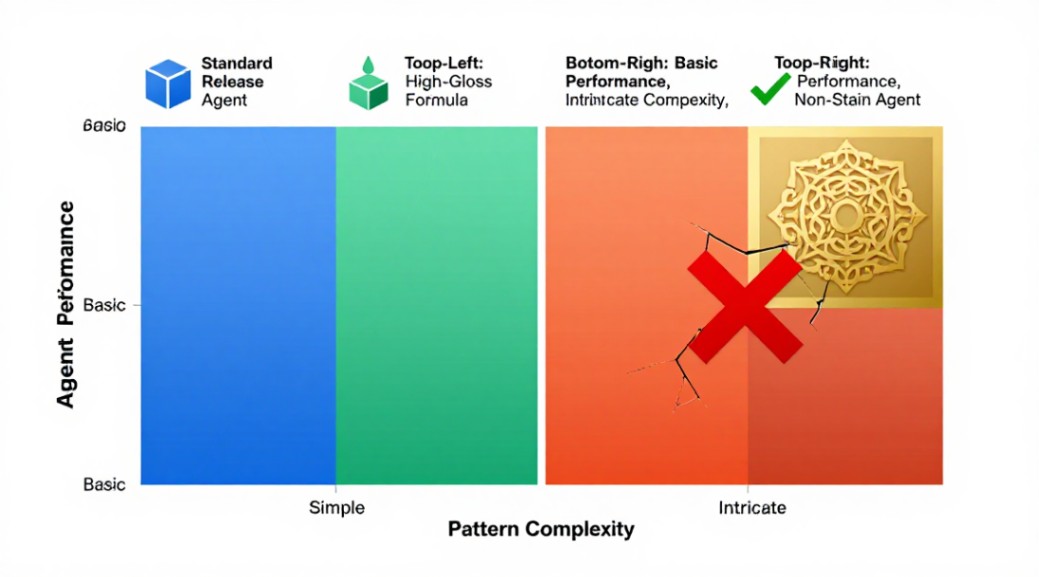
| Pattern Complexity Level | Critical Agent Property | What to Look For On The Data Sheet | Application Intensity |
|---|---|---|---|
| Standard Texture (Wood Grain, Ribs) | Good film strength, moderate solids content. | Non-staining, water-based emulsion. | One uniform spray coat. |
| High Detail (Stonework, Deep Geometric) | Excellent wetting ability, low viscosity. | High active solids content (>20%), low surface tension claims. | Mist coat + full coat, meticulous coverage check. |
| Extreme Undercuts & Negative Angles | Superior film elongation and flexibility. | Polymer-modified or reactive chemical release technology. | Multiple, deliberate coats, possible brush work in cavities. |
The Unforgivable Sins: What to Never, Ever Do
- NEVER dilute a concentrated agent without explicit manufacturer instructions for your specific pattern.
- NEVER mix different agent types or brands in the same form.
- NEVER use diesel, motor oil, or vegetable oil as a “cheap” alternative. They guarantee failure and contaminate the surface.
- NEVER apply over rust, dirt, or old concrete. You are sealing in failure.
- NEVER assume one application method works for all forms. Test on a mock-up first.
Your Path to Predictable Perfection
The difference between a ruined panel and a masterpiece is a few microns of chemistry. Stop gambling. Treat the concrete demolding agent for intricate patterns as a specialized consumable, as critical as your cement grade. Demand technical data sheets. Perform mock-up trials on scrap molds that replicate your project’s worst-case detail. Record your process-agent, mix, application, cure time, demold force. This isn’t just good practice; it’s the only way to eliminate costly defects and build a reputation for flawless work. Your next complex pattern demands nothing less.
We are the global leader in lightweight concrete and advanced engineered foam solutions. Known globally for its commitment to research, innovation, and applied expertise, we have been providing engineered foam solutions since the early 2012’s.
We can supply high-quality concrete admixture and foam concrete related products all over the world.
The company has a professional technical department and quality supervision department, a well-equipped laboratory, and equipped with advanced testing equipment and after-sales customer service center.
If you are interested, please feel free and contact us.