Professional solutions on concrete addtives, Concrete Foaming Agent, Superplasticizer, CLC Blocks Additives, and foaming machine

Non-Structural Lightweight Concrete Backfill: What Every Contractor Must Know to Avoid Costly Mistakes
I watched a senior project manager’s face go pale. A brand-new retaining wall, backfilled just weeks prior with a “lightweight flowable fill,” already showed signs of distress. The culprit? A mix design that prioritized low cost over proper density and strength control. The resulting settlement wasn’t just an engineering headache-it was a six-figure lesson learned the hard way. This experience is far too common. Non-structural lightweight concrete for backfill is a fantastic solution, but treat it like just “cheap fill” and you’re asking for trouble. Let’s talk about what you absolutely must avoid.
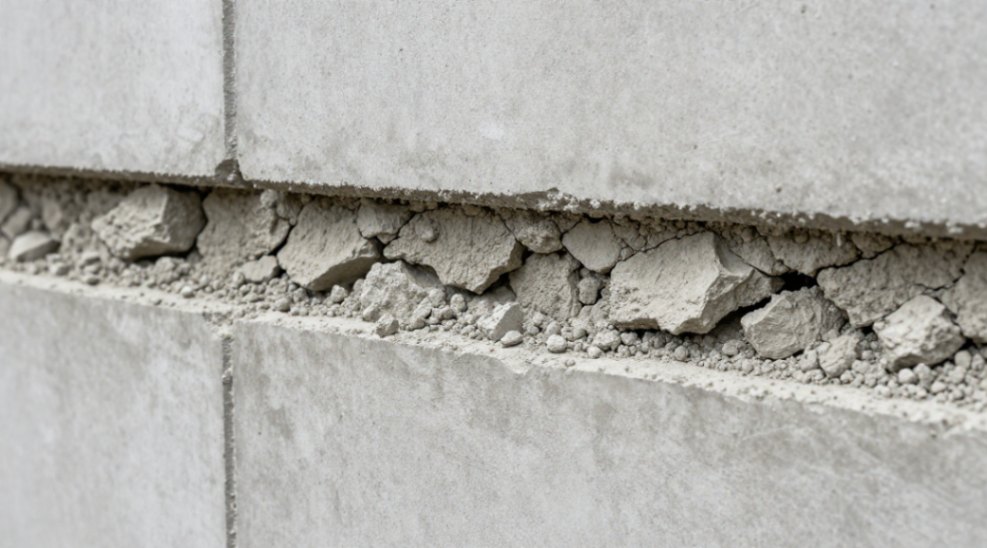
The Core Concept and Where Projects Go Wrong
Non-structural lightweight concrete for backfill is a controlled, low-density mixture. Its primary job is to replace compacted soil. We achieve this low density by using lightweight aggregates like expanded shale, clay, or slate. This isn’t just about being “light.” It’s about creating a material that flows, self-levels, and exerts minimal lateral pressure on adjacent structures like foundation walls, bridge abutments, or underground utilities.
The biggest mistake we see? Treating the target density as a mere suggestion. You cannot swap aggregate types willy-nilly. A mix designed for 90 pcf with expanded shale will behave completely differently if you substitute a cheaper, lower-density aggregate without recalibrating the entire design. The consequences range from excessive shrinkage and cracking to a complete lack of the necessary bearing capacity for the subgrade.
Critical Property Trade-offs: A Warning Guide
Every advantage comes with a caveat. Ignoring these trade-offs is a direct path to project failure. Let’s break down the common pitfalls.
| What You Want | The Common Mistake | The Reality & Risk |
|---|---|---|
| Low Lateral Pressure | Assuming any lightweight mix works. | An overly weak mix can liquefy under hydrostatic pressure. You need adequate cohesive strength to resist buoyancy and water flow. |
| Rapid Placement & Labour Savings | Pouring without proper confinement or preparation. | The material will flow where you don’t want it-into drainage pipes, under adjacent footings. Always use proper forms or trench boxes. |
| Superior Drainage | Using a high-fines mix for ‘smoothness’. | Too many fines clog the pore structure. You lose the controlled permeability benefit and create a bathtub effect around structures. |
| Thermal Insulation | Expecting it to replace dedicated insulation. | While better than compacted soil, its R-value is modest. Don’t spec it as a primary frost-protection layer without rigorous thermal calculation. |
| Settlement Resistance | Skipping the required compressive strength tests. | A typical spec calls for 50 to 200 psi compressive strength. Below this range, long-term creep and settlement are almost guaranteed. Verify the mix with cylinders. |
The High-Stakes Game of Mix Design & Placement
Getting the Mix Wrong
“Just add more water” is the siren song of the jobsite. For lightweight backfill, it’s a shipwreck in waiting. Excess water reduces strength, increases shrinkage, and can cause aggregate segregation. The mix design is a precise balance of cementitious content, water-cement ratio, and aggregate gradation to hit target density and strength. As one lab manager told me, “If you’re not testing for unit weight and strength every 50 cubic yards, you’re not placing backfill-you’re placing a liability.”
Botching the Placement
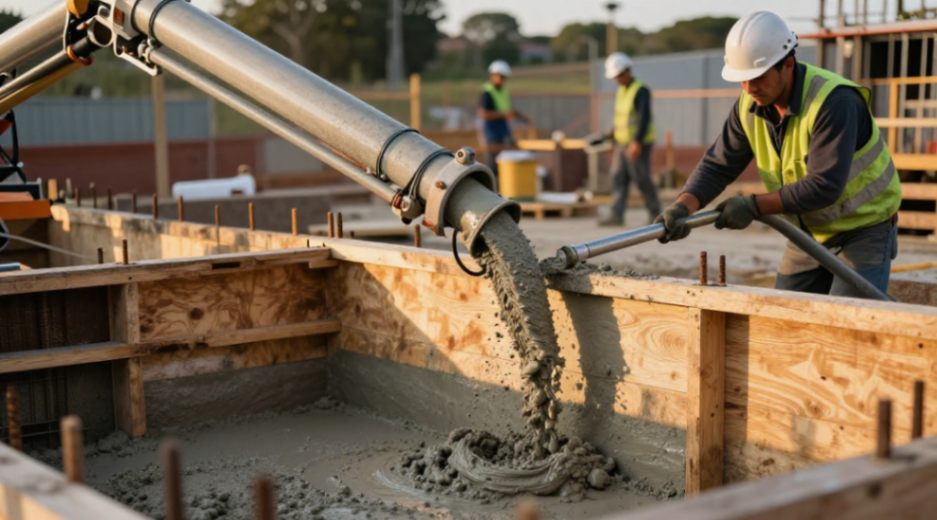
Pumping is common, but pressure must be managed. High-pressure pumping can fracture lightweight aggregates, changing the density and properties of the in-place material. The placement must be continuous and in controlled lifts to prevent cold joints that become planes of weakness. Remember, this material sets. You don’t get a second chance to compact it tomorrow.
Making the Smart Choice: A Framework, Not a Guess
So when does lightweight concrete backfill make sense? Use this framework, not just a gut feeling.
- Tight Access & Complex Geometries: Behind abutments, around intricate utility manifolds, or in trenches with unstable walls where compaction is impossible.
- Utility Trenches in High-Traffic Areas: Where you need to reopen streets fast. It cures quickly and requires no compaction testing.
- Sensitive Structures: When you must absolutely minimize lateral load on existing foundations or retaining walls.
The cost-benefit analysis rarely favors lightweight concrete on material cost alone. You win on speed, reduced labor, eliminated compaction testing, and long-term performance. A 2022 industry report highlighted that projects using specified lightweight backfill saw a 15-30% reduction in backfill-related schedule delays. The savings on overhead and risk avoidance dwarfed the higher material cost.
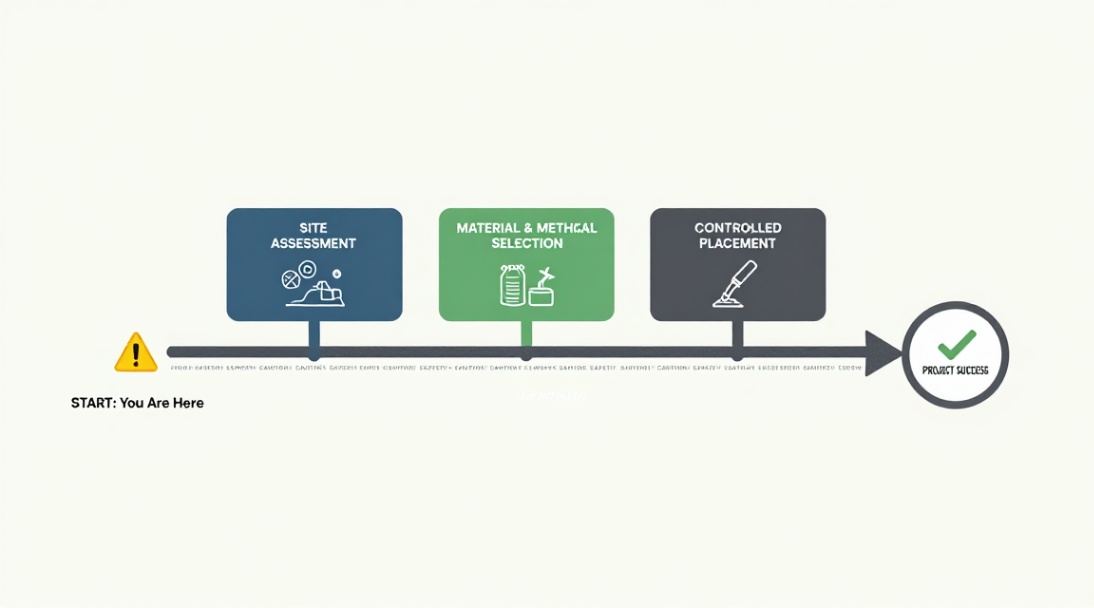
Your Action Plan: How to Proceed Safely
We’ve covered the warnings. Here’s your path forward to harness this technology without the peril.
- Write a Tight Spec. Reference ASTM C330 for aggregates and C94 for ready mix. Specify required in-place density, compressive strength (e.g., 100 psi at 28 days), and maximum lift height.
- Partner with a Knowledgeable Producer. Not every ready-mix plant understands lightweight backfill. Find one that does and involve them in pre-pour meetings.
- Test, Test, Test. Perform field unit weight checks and cast cylinders for strength verification. This is your only proof of compliance.
- Plan the Placement. Ensure access for the pump truck, have confinement methods ready, and plan for continuous placement.
The goal isn’t to scare you away from lightweight concrete backfill. It’s to empower you to use it correctly. This material solves real, expensive problems. But it demands respect for its specific nature. Ignore the warnings, and you’ll learn them the expensive way. Follow the disciplined approach, and you’ll gain a powerful tool for faster, more reliable, and more resilient backfill operations.
We are the global leader in lightweight concrete and advanced engineered foam solutions. Known globally for its commitment to research, innovation, and applied expertise, we have been providing engineered foam solutions since the early 2012’s.
We can supply high-quality concrete admixture and foam concrete related products all over the world.
The company has a professional technical department and quality supervision department, a well-equipped laboratory, and equipped with advanced testing equipment and after-sales customer service center.
If you are interested, please feel free and contact us.