Professional solutions on concrete addtives, Concrete Foaming Agent, Superplasticizer, CLC Blocks Additives, and foaming machine

Cellular Concrete Backfill Is Killing the Status Quo. Here’s the Truth They Don’t Tell You.
The Crack That Changed Everything
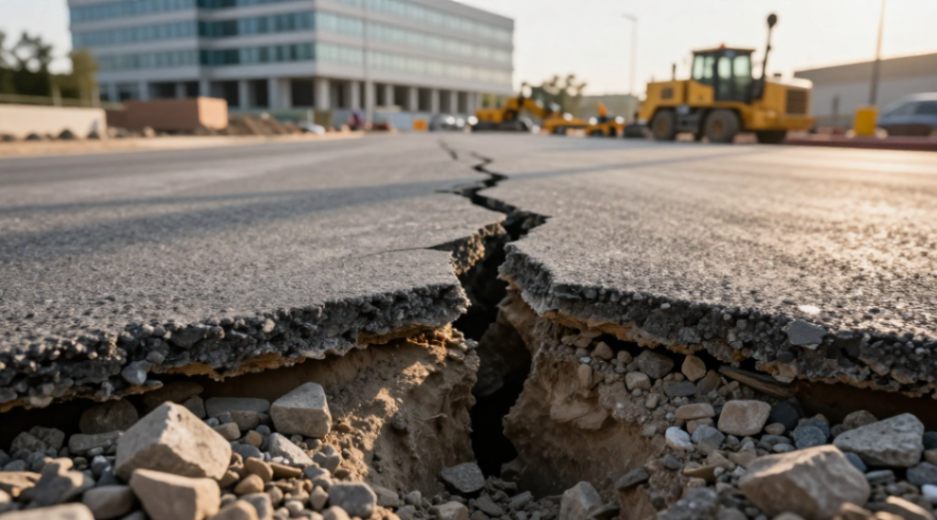
Twenty years ago, I stood at the edge of a utility trench on a brand-new hospital site. The compacted granular backfill looked perfect. Six months later, a 40-foot section of pavement above it settled three inches. The forensic report blamed ‘inadequate compaction.’ I called bullshit. The soil met spec, the crew was competent. The real failure was the method itself-the archaic, variable-dependent, labor-intensive ritual of layering and compacting dirt around a pipe. We spent more on the forensic study and repair than the original trench cost. That crack wasn’t just in the asphalt; it was in the industry’s thinking. It forced a question: why are we using a 19th-century technique to protect 21st-century infrastructure? The answer, which has crystallized over two decades, is we shouldn’t. The shift to cellular concrete for trench backfill and void fill isn’t about a new product. It’s about rejecting a flawed premise.
Why Your ‘Proven’ Backfill Method Is a Financial Liability
Let’s talk about compaction. You specify 95% Proctor. You hire inspectors. You assume control. This is an illusion. You are betting on the consistency of a natural material dug from the ground and the perfect execution of a physical process in a confined, often wet, space. One lazy pass with a whacker. One layer that’s too thick. A rainy afternoon. Any of these creates a hidden void, a soft spot. That spot becomes a settlement trough. The pipe loses support, strains, and leaks. The road surface fails. The cycle of blame and repair begins. Now, consider cellular concrete. It arrives as a homogeneous fluid. It has no layers to compact. It flows into every nook, encapsulating the pipe in a monolithic, engineered mass. Its density-its weight and strength-is designed at the plant, not dictated by a guy with a compactor on a Tuesday. The comparison isn’t even close. One is a craft with variable outcomes. The other is a controlled, predictable, industrial process. The long-term stability isn’t a hope; it’s baked into the mix design.
The Alchemy of Density and the Death of the Rule of Thumb
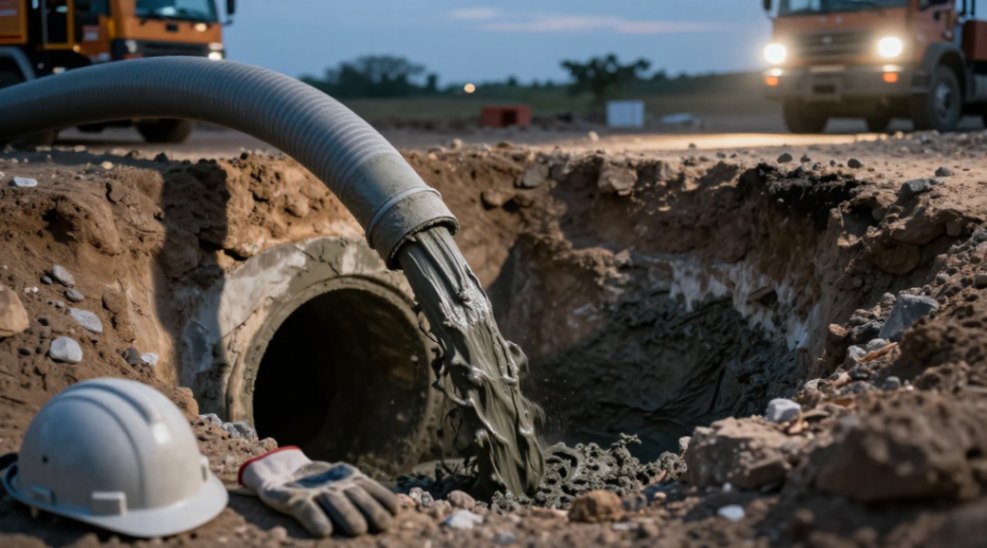
The magic of cellular concrete lies in its intentional emptiness. By introducing stable, microscopic air bubbles into a cementitious slurry, we create a controlled, lightweight matrix. This is the core of its power for trench backfill and void fill. Need a 30 pcf mix to prevent overloading a fragile, century-old brick sewer? Done. Need 50 pcf for strength under a major highway? Also done. The density dial isn’t a guess. It’s a calculation. This precision attacks the biggest hidden cost in construction: uncertainty. A standard backfill section might require imported select material, multiple compaction passes, and weeks of testing. Cellular concrete places in hours, cures rapidly, and requires zero compaction testing. The labor savings are obscene. You replace a small army of laborers and equipment with a pump truck and two guys. The math is brutally simple. The cost isn’t in the cubic yard of material; it’s in the total installed cost and the elimination of future risk. When you run the numbers on a whole project-not just a line item-the traditional method often looks like a nostalgic luxury.
Filling the Unfillable: The Silent World of Voids
Trench backfill is obvious. The more profound application is void fill. This is where conventional methods simply fail. An abandoned fuel tank. A collapsed stone culvert. A decommissioned pipeline. These are subterranean ghosts, leaving cavities that threaten collapse. Try compacting soil into a horizontal void 100 feet long and 4 feet in diameter. You can’t. Cellular concrete doesn’t care. It flows. It fills. It conforms. I’ve seen it pumped hundreds of feet laterally to stabilize an abandoned mine shaft beneath a neighbourhood. Its lightweight nature is critical here-it exerts minimal pressure on the remaining, often compromised, structure. It doesn’t just fill the hole; it becomes a permanent, stable, load-bearing part of the geology. This capability turns environmental and geotechnical nightmares into routine closures.
The Future Isn’t New Tech, It’s Smarter Material Logic
The industry chatter is always about faster, stronger, ‘smarter’ materials. The real evolution is simpler: choosing the right material for the function from the start. The function of backfill isn’t to ‘fill.’ It’s to provide permanent, uniform support and load distribution. Granular soil, even well-compacted, is a collection of points. Under load, those points shift. Cellular concrete is a continuum. It’s a solid mass with predictable engineering properties-controlled low density, measurable strength, and excellent thermal insulation that protects utilities from freeze-thaw cycles. We can even incorporate industrial byproducts like fly ash, turning a waste stream into a performance ingredient. The environmental benefit isn’t a sidebar; it’s inherent to the material’s logic. The long-term performance isn’t a claim. It’s a consequence of eliminating the variables that cause traditional backfill to fail. The data from jobs I’ve monitored for over 15 years shows zero settlement. Zero. That’s not a product pitch. That’s a physical result of a superior system.
What You Should Do Next
Stop comparing cubic yard prices. That’s a trap set by the old way of thinking. Start analyzing total project risk. On your next plan, for a utility trench under a paved area or a complex void fill, run a real cost-benefit analysis. Factor in the labor, equipment, testing time, and-most critically-the projected cost of a future settlement repair. Then, talk to a specialty contractor who truly understands cellular concrete mix design and placement. Their expertise isn’t in pouring slurry; it’s in engineering a fluid structure in the ground. Ask them about density control, flowability, and long-term stability data. Don’t look for a product brochure. Look for a partner who can translate your site challenge into a precise, stable, and ultimately boringly reliable fill solution. That’s the goal. Not excitement. Not tradition. Just permanent, uneventful stability. That’s what changes everything.
We are the global leader in lightweight concrete and advanced engineered foam solutions. Known globally for its commitment to research, innovation, and applied expertise, we have been providing engineered foam solutions since the early 2012’s.
We can supply high-quality concrete admixture and foam concrete related products all over the world.
The company has a professional technical department and quality supervision department, a well-equipped laboratory, and equipped with advanced testing equipment and after-sales customer service center.
If you are interested, please feel free and contact us.