Professional solutions on concrete addtives, Concrete Foaming Agent, Superplasticizer, CLC Blocks Additives, and foaming machine

Cellular Concrete for Trench Backfill: The Data-Driven Case for Superior Performance
The Core Argument for Cellular Concrete
Cellular lightweight concrete (CLC) offers a superior engineered solution for trench backfill and void fill projects compared to traditional granular methods. The case rests on its intrinsic physical properties. Engineers achieve a precise balance of low density and controlled strength by injecting pre-formed foam into a cementitious slurry. This process creates a mass of uniformly distributed, non-interconnected air voids, fundamentally dictating its performance. The advantages are not incremental; they redefine project parameters.
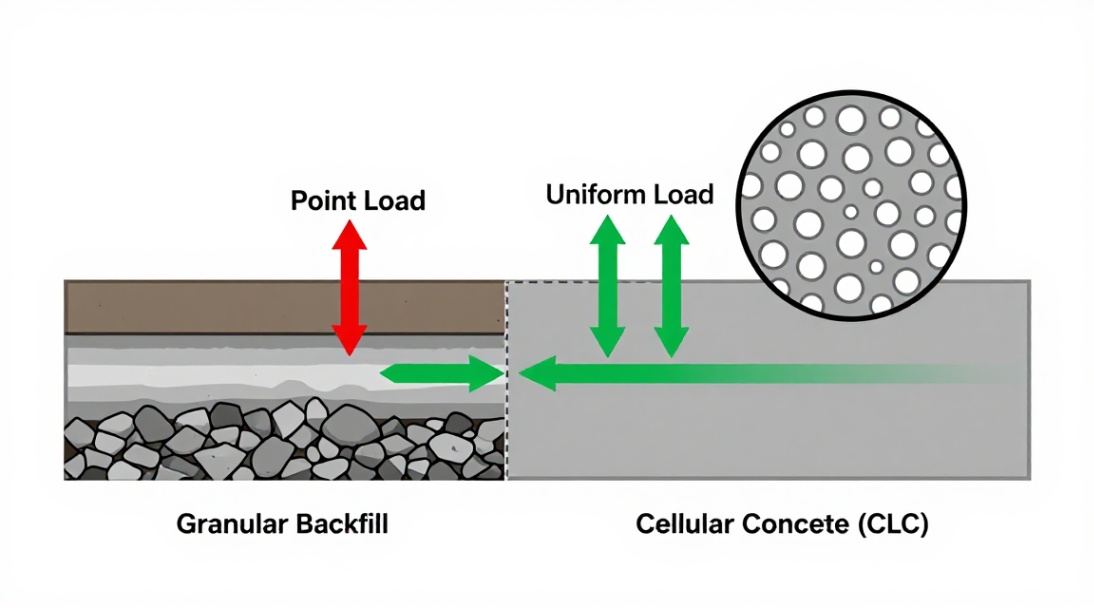
Superior Mechanics for Trench Backfill
Traditional trench backfill with compacted soil or flowable fill presents persistent challenges. Cellular concrete directly addresses these through material science.
Eliminating Settlement and Lateral Pressure
Settlement is a failure of compaction. With cellular concrete, it is a non-issue. The material possesses no fines or gradation to segregate. It cures as a monolithic, cohesive mass with zero slump. This lack of settlement is the primary defense against pavement subsidence and utility line misalignment. More critically, its low density directly reduces lateral earth pressure on adjacent structures and buried pipes. A fill weighing 30-50 pounds per cubic foot (pcf) exerts significantly less force than 120 pcf compacted soil. Engineers can design for reduced structural loading, extending asset life.
Flowability and Installation Efficiency
The material’s flowability is a function of its rheology, not just its water content. A properly designed mix flows like a viscous liquid, conforming perfectly to irregular voids, pipe bedding, and hard-to-reach areas without mechanical vibration. This property translates to speed. Crews can place hundreds of cubic yards in a single day using standard concrete pumps from a remote batch plant. The reduction in heavy equipment-no excavators for spreading, no compactors-shrinks the project footprint, lowers labor costs, and enhances site safety.
Definitive Advantages for Void Fill and Stabilization
Void fill projects demand a material that can stabilize without adding destabilizing load. Cellular concrete is uniquely suited.
Controlled Density and Structural Contribution
The single most important specification for void fill is density. Cellular concrete can be reliably produced from 20 pcf to over 100 pcf. For filling abandoned tanks, tunnels, or mine subsidence, engineers select a density just heavy enough to provide stability but light enough not to overload underlying strata. Despite its lightness, it develops substantial compressive strength, often between 50 and 500 psi. This strength-to-weight ratio allows it to act as a lightweight structural fill, transferring loads across unstable zones.
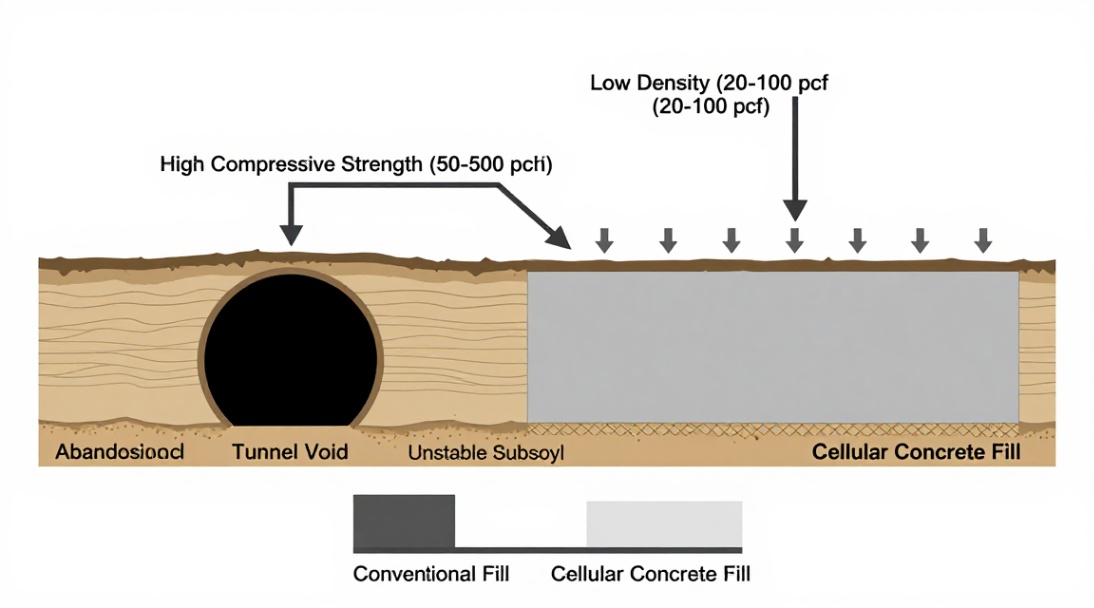
Corrosion Protection and Thermal Insulation
Encasing utilities in cellular concrete provides a passive protective barrier. The cementitious matrix has a high pH, creating a non-corrosive environment that protects steel and ductile iron pipes from electrochemical degradation. Furthermore, the entrapped air cells provide measurable thermal insulation. This reduces heat loss from district heating lines and minimizes frost penetration depth around shallow utilities, preventing freeze-thaw cycle damage.
The Installation Process: Precision and Control
Successful application hinges on a controlled process, not just the material. The sequence is methodical.
- Design & Specification: Determine the required plastic density (pcf) and 28-day compressive strength (psi) based on structural and geotechnical requirements.
- Slurry Batching: Combine Portland cement, supplementary cementitious materials (like fly ash), and water in a high-shear mixer to achieve a homogeneous slurry. Water-cement ratio is tightly controlled.
- Foam Generation & Injection: A dedicated foam generator produces a stable foam from a surfactant-based agent. This foam is injected into the slurry stream at a precise rate (typically cubic feet per minute) to achieve the target density.
- Pumping & Placement: The freshly mixed cellular concrete is pumped through a standard concrete line. Placement proceeds from the farthest point back, allowing material to flow and self-level. Lift heights are managed to prevent hydraulic pressure buildup.
- Curing: The material cures in place. It requires no compaction or finishing. Standard concrete curing practices apply to ensure strength gain.
Lifecycle Cost Analysis: The True Metric of Value
Evaluating cellular concrete solely on per-cubic-yard material cost is a fundamental error. The true analysis is total project lifecycle cost. While the upfront unit cost may be higher than imported granular fill, it eliminates entire cost centers: compaction testing, imported material quality control, repair for settlement, and long-term maintenance of distressed pavements. The reduced installation time lowers mobilization, equipment rental, and traffic control expenses. When factoring in risk mitigation-eliminating call-backs for settlement or utility damage-the value proposition becomes unambiguous for complex or critical infrastructure.
Specification and Quality Assurance
Contractors and specifiers must anchor projects in verifiable data. Key performance criteria must be specified and tested.
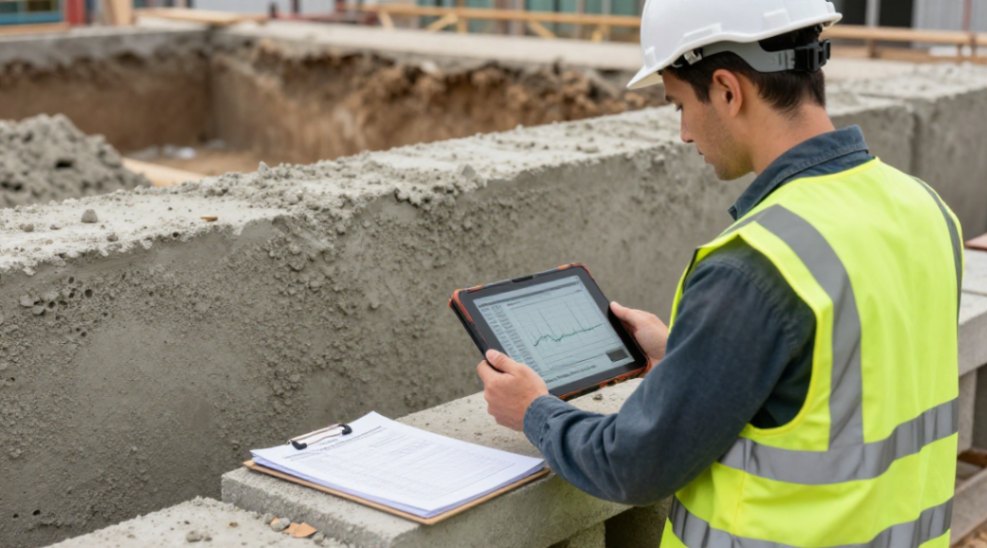
- Plastic Density: Measured in pounds per cubic foot (pcf) using a pre-calibrated weight-per-gallon cup, sampled regularly during placement.
- Compressive Strength: Verified by testing 4-inch by 8-inch cylinder samples cured under job conditions, tested at 7 and 28 days. Strength must meet the specified minimum (psi).
- Flow Consistency: Assessed via a standard flow cone test to ensure proper pumpability and self-leveling characteristics.
- Volume Stability: Confirmed by the absence of bleeding (water separation) and lack of significant plastic or drying shrinkage.
To validate the suitability of cellular concrete for your next trench backfill or void fill project, a detailed geotechnical review is the essential first step. This analysis will define the required density and strength parameters. A qualified cellular concrete producer can then provide a mix design and placement plan to meet those exact specifications, transforming a site challenge into a permanent, high-performance solution.
We are the global leader in lightweight concrete and advanced engineered foam solutions. Known globally for its commitment to research, innovation, and applied expertise, we have been providing engineered foam solutions since the early 2012’s.
We can supply high-quality concrete admixture and foam concrete related products all over the world.
The company has a professional technical department and quality supervision department, a well-equipped laboratory, and equipped with advanced testing equipment and after-sales customer service center.
If you are interested, please feel free and contact us.