Professional solutions on concrete addtives, Concrete Foaming Agent, Superplasticizer, CLC Blocks Additives, and foaming machine

Superplasticizer for SCC: Choosing the Right Polycarboxylate vs. Naphthalene & Lignosulfonate
Why Your Current SCC Mix Formula is Incomplete
Over 70% of initial SCC trial mixes fail to meet specification targets for slump flow, passing ability, and segregation resistance simultaneously. The root cause is rarely the cement or aggregates. The selection and dosing of the superplasticizer for self-consolidating concrete SCC is the decisive variable. This is the linchpin that transforms a stiff, unworkable paste into a fluid, stable, and high-strength material.
The Core Function: More Than Just Water Reduction
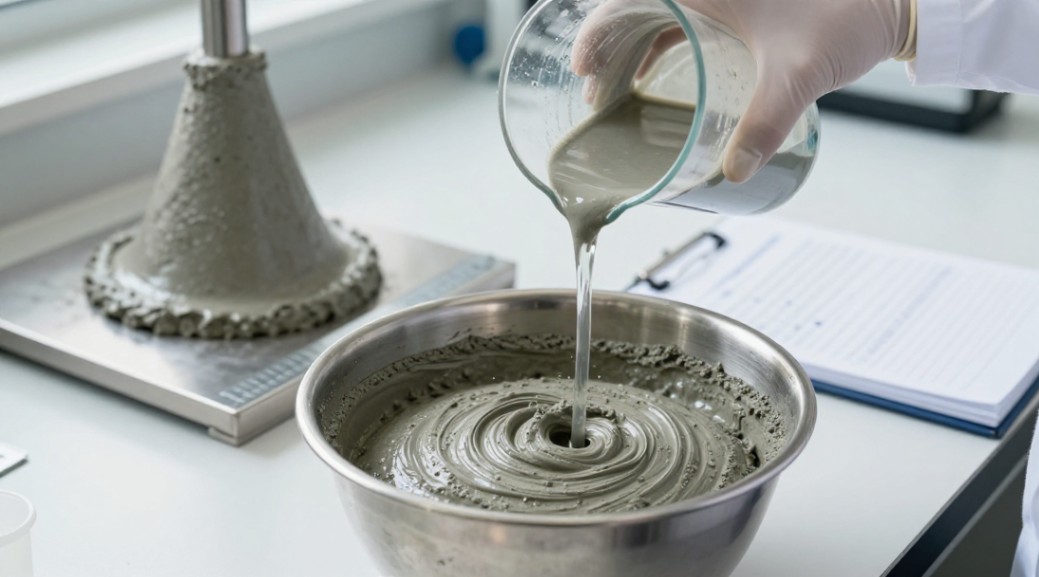
A superplasticizer for self-consolidating concrete SCC is a high-range water reducer. Its primary function is to disperse cement particles. It breaks down flocculation, releasing trapped water. This creates a lubricating effect. You achieve high fluidity without adding excess water. The water-cement ratio remains low. This is the fundamental mechanism for achieving both extreme workability and high ultimate strength.
The Competitive Landscape: A Technical Comparison
Not all superplasticizers are equal. Your choice dictates the concrete’s performance, cost, and ease of use. Here is an objective analysis of the three primary chemical families.
1. Polycarboxylate Ether (PCE) Polymers
PCEs are the modern benchmark for high-performance SCC. They use a comb-like polymer structure. The backbone adsorbs onto cement particles. The ‘teeth’ create steric hindrance, pushing particles apart. This is a more robust and tunable mechanism than older technologies.
- Pros: Exceptional water reduction (up to 40%). High slump flow retention (90+ minutes). Allows for very low w/c ratios and high strengths. Minimal retardation. Chemically tunable for specific cements and applications.
- Cons: Highest cost per litre. Sensitive to clay contaminants in aggregates. Can sometimes cause excessive air entrainment or viscosity issues if not formulated correctly.
- Best For: Architectural precast, high-strength applications, long haul times, and mixes requiring the highest durability and finish quality.
2. Sulfonated Naphthalene Formaldehyde (SNF) Condensates
SNF superplasticizers operate through electrostatic repulsion. They charge cement particles negatively, causing them to repel each other. This technology is well-established and cost-effective.
- Pros: Lower cost than PCEs. Effective water reduction (15-25%). Good initial fluidity. Relatively tolerant of material variations.
- Cons: Poor slump life. Flow loss can be rapid, often within 30-45 minutes. Higher dosage can cause severe retardation or segregation. Can have higher alkali content.
- Best For: Short haul, ready-mix applications where the concrete is placed quickly. Cost-sensitive projects with straightforward geometrics.
3. Modified Lignosulfonates (LS)
Lignosulfonates are biopolymers derived from wood pulp. They are natural dispersants and were the first generation of water reducers.
- Pros: Very low cost. Some water-reducing capability. Can act as a mild retarder.
- Cons: Very high air entrainment. Limited water reduction (5-10%). High variability in performance based on source. Inconsistent quality. Can darken concrete color.
- Best For: Not recommended for true, high-performance SCC. Their use is typically limited to non-critical, low-strength applications or as a secondary component in blended admixtures.
Decision Matrix: Selecting Your Superplasticizer
Your choice is not about ‘best’ but about ‘optimal fit’. Use this logic.
For maximum durability and flow retention: Select a PCE. The higher initial cost is offset by reduced cement content potential, higher strength, and fewer placement issues. It is the only choice for complex forms, deep sections, or long pump lines.
For simple, fast-paced projects with tight budgets: An SNF may suffice. You must have excellent site coordination. The concrete must be placed immediately upon delivery. Plan for potential adjustments with set retarders if delays occur.
For general purpose concrete, not SCC: Consider LS or mid-range water reducers. Do not force a lignosulfonate to perform a PCE’s role. You will encounter segregation, strength loss, and inconsistent air content.
Critical Application Protocols
Selecting the right superplasticizer for self-consolidating concrete SCC is only half the battle. Correct implementation is non-negotiable.
Dosage Control: Never use a fixed dosage. Start with the manufacturer’s recommended range based on cement content. Conduct trial batches. Adjust dosage to achieve a target slump flow (e.g., 24-28 inches) at the time of placement. Over-dosing PCEs can cause segregation; under-dosing SNFs leads to rapid stiffening.
Batching Sequence: Introduce the superplasticizer into the mixing water, not onto dry materials. Ensure a minimum of 60-90 seconds of high-speed mixing after all ingredients are in the drum. This guarantees uniform dispersion.
Compatibility Testing: Always test the full admixture system. The superplasticizer must be compatible with your air-entraining agent, retarder, or viscosity-modifying admixture. Incompatibility can manifest as foam, rapid slump loss, or plastic viscosity collapse.
The Path to Predictable SCC Performance
The data is clear. Modern SCC mix design is a chemistry-driven process. The superplasticizer is the active pharmaceutical ingredient. You would not choose a heart medication based solely on cost. Do not choose your concrete admixture that way.
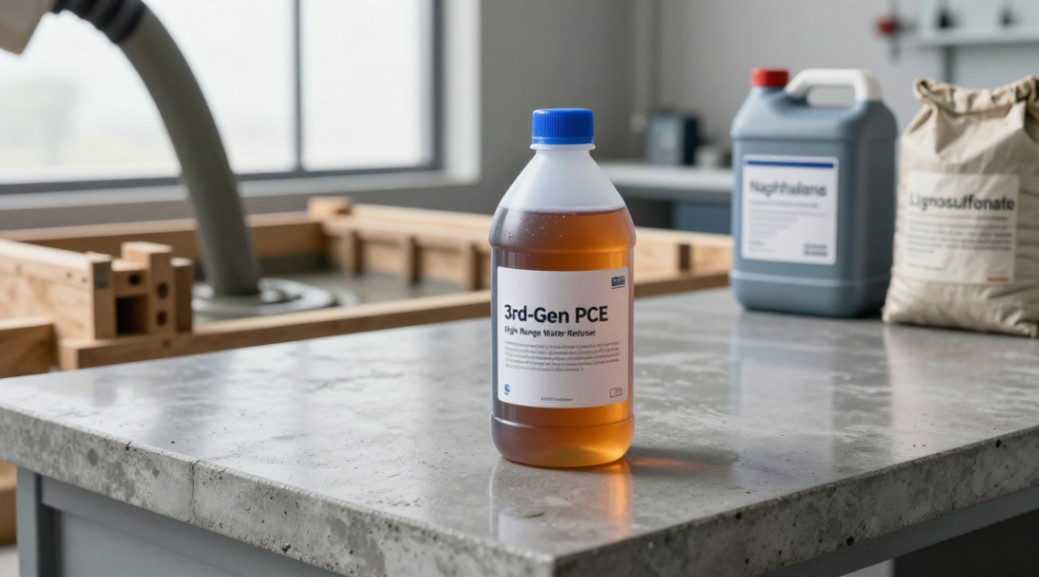
For projects where performance, aesthetics, and structural longevity are paramount, a high-quality, 3rd-generation PCE superplasticizer is the only rational choice. The marginal increase in admixture cost is insignificant compared to the risk of failed placements, remedial works, or reduced service life.
Stop guessing. Demand a PCE-based superplasticizer designed for SCC on your next project specification. Consult with your admixture supplier to design a complete, tested system tailored to your local materials. This single decision will determine your project’s concrete success.
We are the global leader in lightweight concrete and advanced engineered foam solutions. Known globally for its commitment to research, innovation, and applied expertise, we have been providing engineered foam solutions since the early 2012’s.
We can supply high-quality concrete admixture and foam concrete related products all over the world.
The company has a professional technical department and quality supervision department, a well-equipped laboratory, and equipped with advanced testing equipment and after-sales customer service center.
If you are interested, please feel free and contact us.