Professional solutions on concrete addtives, Concrete Foaming Agent, Superplasticizer, CLC Blocks Additives, and foaming machine

Solving Heavy Backfill Problems with Lightweight Concrete
Struggling with Heavy, Unstable Backfill?
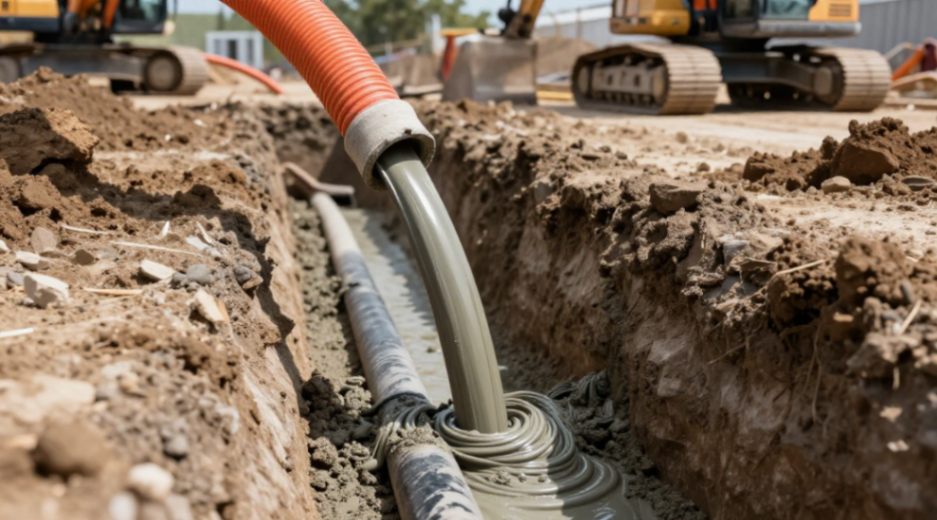
You know the problem. The trench is open, the pipe or conduit is in place, and now you need to fill the void. You haul in tons of compacted aggregate. You vibrate plate after plate, layer by layer, chasing that elusive, perfect compaction. It takes days. The equipment is massive, the site is congested, and you’re constantly worried about damaging the structure you just buried or creating settlement issues for the future. There must be a better way. What if your backfill was strong, stable, and could be placed in hours instead of days? That’s not a dream. It’s non-structural lightweight concrete for backfill.
What Exactly Is This Material?
Non-structural lightweight backfill concrete is a precisely engineered flowable material designed to replace compacted soil or aggregate. It’s not meant to support building columns or bridge decks. Its job is to fill spaces quickly and efficiently, providing uniform support with minimal hassle. The “lightweight” part comes from its aggregate. Instead of heavy crushed stone, we use expanded shale, clay, or slate. These are natural materials heated in a rotary kiln until they puff up like popcorn, creating strong, rigid particles filled with tiny air pockets. Sometimes, recycled glass or industrial byproducts are used. This creates a concrete that is significantly lighter than traditional mixes, often weighing 30% to 50% less.
The mix design is critical. Engineers control the density, typically aiming for 90 to 120 pounds per cubic foot (pcf), and the compressive strength, usually a modest 100 to 500 psi. This is more than enough for backfill duty but keeps the material lightweight and cost-effective. The real magic is in its consistency. This concrete is highly flowable and self-compacting. You pump it directly into the trench or void from a ready-mix truck. It flows around every pipe, conduit, and irregularity, filling every nook without any mechanical compaction. It hardens into a monolithic, uniform mass.
Why Engineers Are Making the Switch
The benefits are transformative. First, consider the reduced lateral earth pressure. A lighter backfill exerts significantly less horizontal force on retaining walls, bridge abutments, and underground structures. This can allow for more slender, cost-effective wall designs or provide a crucial safety margin for existing, aging infrastructure. Second, speed. Traditional backfilling is a slow, labour-intensive, weather-dependent process. Lightweight concrete backfill can be placed in a single continuous pour, often completing a day’s worth of compaction work in just a few hours. This dramatically accelerates project schedules.
The Tangible Advantages on Site
Let’s break down the practical wins:
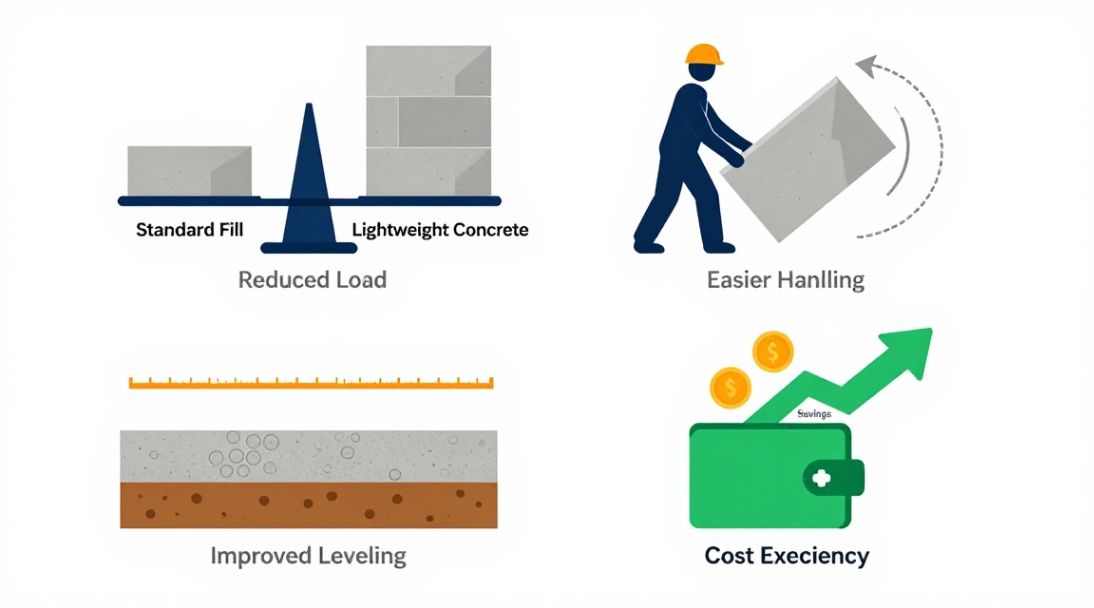
- Superior Performance: It eliminates settlement and associated pavement buckling or utility line damage. It provides excellent load distribution for overlying pavements.
- Labor and Cost Savings: While the material cost per cubic yard may be higher than bulk aggregate, the total installed cost is frequently lower. You save massively on equipment time (excavators, compactors), labor hours, and inspection overhead.
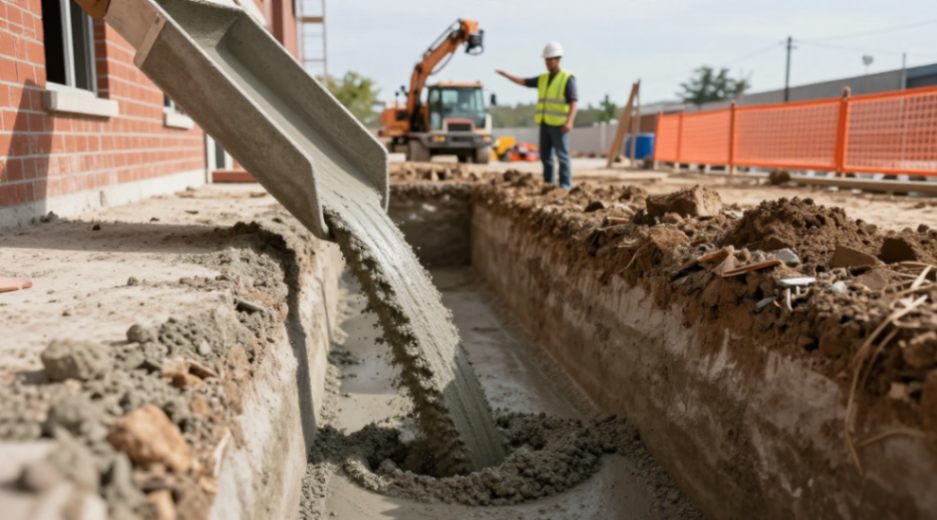
- Access in Tight Spaces: You can pump material hundreds of feet horizontally, making it ideal for congested urban sites, trenches under roadways, or areas behind tight retaining walls where dump trucks and compactors can’t reach.
- Environmental Edge: Using industrial byproducts (like fly ash) or recycled materials aligns with green building standards. The reduced need for excavation and import of virgin aggregate also lessens the project’s environmental footprint.
Putting Lightweight Backfill to Work
This material isn’t a niche product. It’s a mainstream solution for specific, common challenges. Its primary applications are utility trench backfill for water, sewer, and electrical lines, especially under high-traffic roads. It’s the go-to choice for backfilling around bridge abutments and behind retaining walls where load reduction is paramount. It’s also used to fill abandoned underground structures, old tanks, and mine workings, providing a stable, predictable fill.
Specification is straightforward. ASTM and ACI standards, such as ASTM C330 for lightweight aggregates and ACI 229R on controlled low-strength materials (CLSM), provide clear guidelines. A proper mix design specifies the target density, compressive strength (often tested at 7 or 28 days), and flowability. Placement is simple: ensure the subgrade is prepared, and pump the material in. Curing is typically just protecting it from rapid moisture loss for a day or two.
Your Next Step is Clear
Stop wrestling with unpredictable soils and slow compaction. Non-structural lightweight concrete for backfill is a proven, engineered solution that saves time, reduces risk, and protects your infrastructure investment. The data supports it, and the experience of countless project engineers confirms it. If you’re managing a project with challenging backfill conditions-tight spaces, sensitive structures, or an aggressive schedule-you need to evaluate this option.
Talk to a specialist. Don’t just order a generic “lightweight concrete.” Consult with a ready-mix supplier or a civil engineering firm experienced in CLSM and non-structural backfill designs. Provide them with your project details: the application, the required strength, and the access limitations. They can develop a mix design that meets your exact needs, ensuring you get all the benefits-reduced pressure, faster placement, and long-term stability. Make your next backfill operation your easiest one yet.
We are the global leader in lightweight concrete and advanced engineered foam solutions. Known globally for its commitment to research, innovation, and applied expertise, we have been providing engineered foam solutions since the early 2012’s.
We can supply high-quality concrete admixture and foam concrete related products all over the world.
The company has a professional technical department and quality supervision department, a well-equipped laboratory, and equipped with advanced testing equipment and after-sales customer service center.
If you are interested, please feel free and contact us.